The fourth race of Zwift Racing League 2026/27 happens on Tuesday, October 13, and it’s our first team time trial of the season.
The race takes place on Watopia’s Figure 8 Reverse, one of the oldest routes in game and a popular racing route due to its varied pitches. This is a very technical course for a TTT, so you’ll want to do your homework before hopping into the pens on Tuesday.
With key TTT rule changes in effect and Zwift releasing a pile of new TT frames and disc wheels this week, there’s a lot to process as we prepare for this event. So let’s get into it!
Looking at the Route: Watopia Figure 8 Reverse
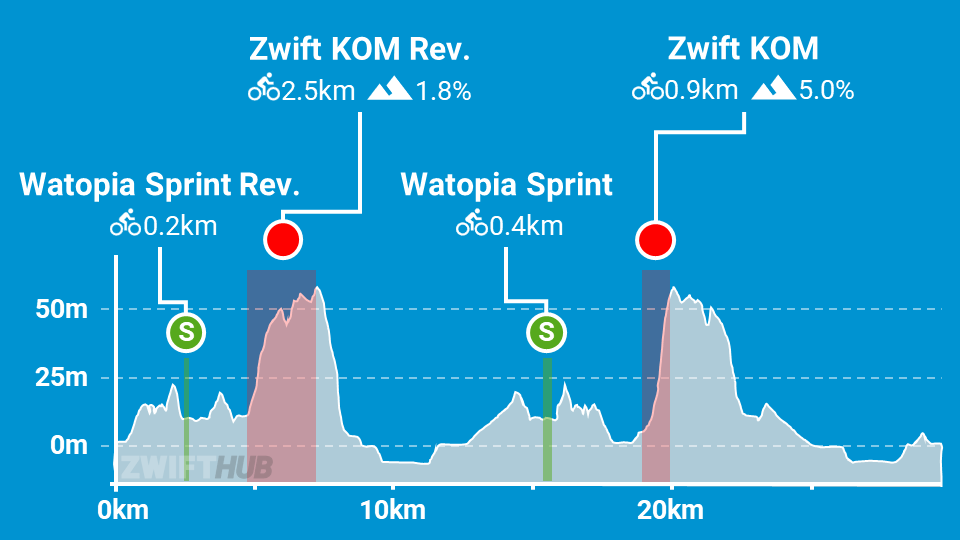
All categories will race 1 lap of the course, which totals 29.9km (18.6 miles) with 254m (833′) of climbing:
Here’s a complete breakdown of this route into logical sections:
- Start to base of Hilly KOM Reverse (0-5km): This is a technical start to a TTT, as we quickly hit a ramp up to The Esses, then ride The Esses rollercoaster down to the JWB Sprint. It’s a rolling, twisting route for most of this section, and your team will struggle to hold an efficient paceline.
- 250 XP bonus at lap arch (0.1km)
- Powerup at Sprint arch (2.8km)
- Hilly KOM Reverse (5-7.5km): If you thought the first 5km were tricky, hold on to your helmets! While this climb averages just 2%, it’s really more of a stair-step climb with three steeper bits broken up by two flat (and even downhill) bits. To keep your time fast, you’ll want to attack the first climb hard, as it’s by far the steepest/slowest portion. Then regroup on the flat/descent that follows, and hold a steady paceline on the rest of the segment, which is quite draftable.
- Powerup at KOM arch (7.5km)
- Hilly KOM Descent (7.5-8.4km): The descent from the KOM banner is short and steep. Keep pedaling to keep the blood flowing, but go easy and let your legs recover.
- Ocean Boulevard Express (8.4-11.4km): Keep your speed up from the KOM descent as you regroup into your paceline and knock out the next few kilometers cleanly. This section is fast and flat, so it’s a good place to catch your breath, regroup, and get back into the flow.
- Marina Dirt and Snaking Climb (11.4-14.5km): Starting with the ramp up and out of the Ocean Boulevard tunnel, things get a bit tricky. First the ramp requires a micro-sprint to keep speeds high, then the stretches of dirt around the Marina require a bit more power as well. And once you’re done with that, it’s the snaking climb up toward the Italian Villas that stretches your team out!
- Italian Villas + JWB Flat (14.5-16km): Here’s a mercifully simpler bit, descending past the waterfall through the JWB Sprint and across the bridge. Regroup and refocus for the next technical section.
- Powerup at Sprint arch (15.7km)
- The Esses (16-17.5km): This portion begins with a short, steepish kicker where you’ll want to pour on the power to keep speeds high. Then it’s about holding formation and modulating your power to keep your speed high over the rollers of The Esses.
- Downtown Regroup (17.5-19.3km): Catch your breath and regroup if needed as you descend from The Esses into downtown Watopia. You’ll continue across the bridge to the start of the Hilly KOM for your last significant climb of the day.
- 250 XP bonus at lap arch (18.4km)
- Hilly KOM (19.3-20.2km): This is the shorter, steeper side of the Hilly KOM (averaging 5.5%). As with any TT effort, you want to push hard here (go hardest when speeds are lowest). But you also need to consider that you’ve still got 10km left in your race, so you can’t really afford to drop a rider (particularly this season, when teams only have one spare rider!)
- Powerup at KOM arch (20.2km)
- Hilly KOM Descent (20.2-23.3km): Our longest descent of the day, and a good place to catch your breath and steel your mind for the final push up ahead. Be sure your team hammers up and over the kicker at 21.4km to keep your speed high, then get into formation as the road flattens so you can stay aero and carry speed across the bridge to the first rise.
- Lock It In (23.3-29.9km): Everyone will be feeling the fatigue as you head down to the Marina and into the glass tunnel of Ocean Boulevard for the final minutes of the race. This is probably where teams will be caught, if they’re caught at all. Focus on tight formation and rotating pulls to keep your speed high. Hit the ramp out of Ocean Boulevard hard, then go all in to finish strong!
Read more about the Watopia Figure 8 Reverse route >
Powerups
This race includes powerups given at all sprint and KOM arches, as noted above. Riders have a 50/50 chance of getting either the draft boost or aero boost at each arch, while the lap arch in downtown Watopia will give out 250 XP bonuses (but only if you ride through it without a powerup in your pocket).

Draft Boost (van): increases the draft effect you are experiencing for 40 seconds.
Use at higher speeds (flats and descents) when you are already drafting off another rider (since this powerup only helps when you are drafting).

Aero Boost (helmet): makes you more aerodynamic (reduces your CdA by 25%) for 15 seconds.
Use at higher speeds (flats and descents), especially when no draft is available (although it is still useful when drafting).
Teams should discuss how best to use these powerups, as you’ll each receive 4 during the race. I see “offense” and “defense” approaches to powerups in this race:
- Offense: Leverage the powerups to maximize your speed on the front. That means triggering your aero boost as you come around the front rider and take your pull, or triggering your draft boost ~45 seconds before your turn on the front, so your legs are as fresh as possible and you can pull a bit harder. Note: I’d recommend warning your team over the radio that you’ll be taking a harder pull, so they’re ready for the speed increase.
- Defense: Leverage the powerups to minimize your effort so you can stay in touch with your team without slowing them down. If you’re one of the weaker riders on your team, you may want to use either powerup while you’re sitting in the wheels to grab a bit more recovery so you can stay in formation and help your team all the way to the finish.
Bike Frame + Wheel Choice
Zwift released several new disc wheelsets this week, and you may want to buy one for this race. I recommend the CADEX 4-Spoke/Disc, as it’s only 0.7s slower than the most aero disc wheelset in game (the new Reserve Infinity Disc) while climbing 10.7s faster. It’s also 2.8s faster on flats than the good ol’ DT Swiss 85/Disc we’ve all been using since last summer.
Which frame is best for this route, given the rolling terrain? Zwift also released 10 new or updated TT frames yesterday, so I tested three different top TT setups on a full lap of Figure 8 Reverse at 4 W/kg. Here are the unsurprising results:
- Factor Hanzō with CADEX 4-Spoke/Disc: 43:39
- Canyon Speedmax CFR with CADEX 4-Spoke/Disc: 43:40
- CADEX Tri with CADEX 4-Spoke/Disc: 43:44
The heavier Factor is the most aero frame in game, and turns in the fastest time (just barely). The Canyon is a faster climber, so it performs a bit better than the Factor on climbs, but loses a bit overall due to the Factor’s superior aero performance. The CADEX comes in a few seconds later, showing just how fast these new TT frames are!
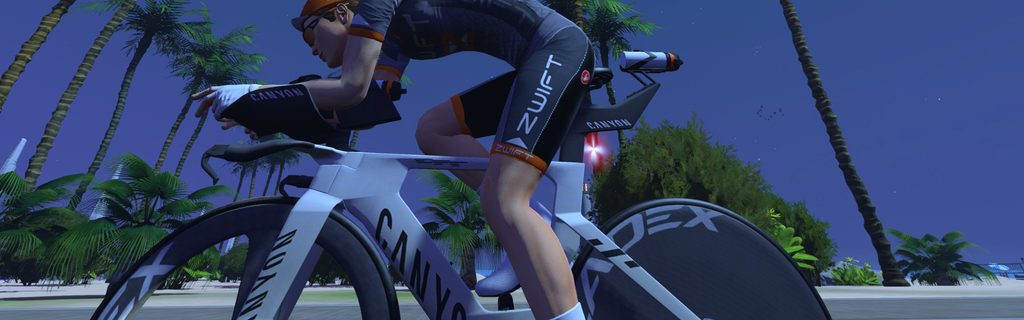
But here’s the thing: very few riders will have a fully upgraded Speedmax or Hanzō, as we simply haven’t had time to upgrade these frames. And Zwift’s TT bike upgrade scheme is such that the final upgrade step (to stage 5) is a massive one in terms of aero performance, making the bike ~26.5 seconds faster across an hour of flat riding. That’s huge, and completely eclipses the performance differences between the top TT frames. Read all about the performance improvements you receive from upgrades >
So despite Zwift releasing a pile of fast TT frames, we’ll see most racers rocking fully upgraded CADEX Tri bikes this week. Because it’s by far the fastest TT weapon most riders have in their garage.
Dive deeper into TT frame and wheel performance:
More Route Recons
Many recon rides are planned each week on the upcoming ZRL route. If you’re unfamiliar with this course, jump into an event and familiarize yourself with the route! Find a list of upcoming ZRL recon rides at zwift.com/events/tag/zrlrecon.
Additionally, riders in the Zwift community do a great job every week creating recon videos that preview the courses and offer tips to help you perform your best on the day. See those below…
John Rice
J Dirom

TTTips
Successful team time trialing on Zwift requires mastering a challenging mix of physical strength, proper pacing, precise positioning, and Zwift minutiae like picking the fastest rig, understanding drafting in a TTT context, and fully upgrading your frame. On top of that, this is our first-ever ZRL TTT with two key rule changes:
- 5-Person Teams: Time is still taken based on your fourth rider across the line, so you can only lose one rider! This means teams must be extra careful to stay together longer, and “mechanicals” can really mess up your race.
- Steering Enabled: We’ve never had steering enabled in a ZRL TTT before. Will riders use steering to come off the front? Cut corners? Position themselves in the pace line? Or let the game auto-steer because it gets too messy otherwise?
Mixed courses like this week give valuable seconds to “balanced” teams with two strengths:
- Big pure-power riders who can keep their watts high on the front while staying in single-file formation to conserve in the draft behind
- High W/kg riders in that 2-4 minute window, to deliver the needed punch up the Hilly KOM in both directions
On a course like this week’s, I recommend all team members set their Trainer Difficulty to the same value, and make sure that value is at least 50%, so you feel slight gradient changes and increase power to compensate. This will help you automatically punch on the uphills, keeping your overall speed high.
Your goal in a ZRL TTT is to get four riders across the line in the shortest time possible. That means every team’s pace plan will differ based on each rider’s abilities. I highly recommend having an experienced DS on Discord directing your team, especially if your team contains inexperienced TTT riders.
Lastly, if you want to go further down the TTT rabbit hole, I highly recommend Dave Edmond’s Zwift TTT Calculator tool.
Questions or Comments?
Share below!