

It’s been seven days since Zwift announced their acquisition of Rouvy, and since that time I’ve been pondering Zwift’s big move while reading community comments and talking to various leaders at ZHQ.
Today, let’s take a deeper dive into Zwift acquiring Rouvy. Why is Zwift making this move? How do users feel about it? What does it mean for the future of both platforms and indoor cycling as a whole?
Let’s dive in…
A Quick Comparison
Not familiar with Rouvy or perhaps Zwift? (Then how did you get here?) Seriously, though, here are two good videos from GCN that introduce you to the ins and outs of each platform:

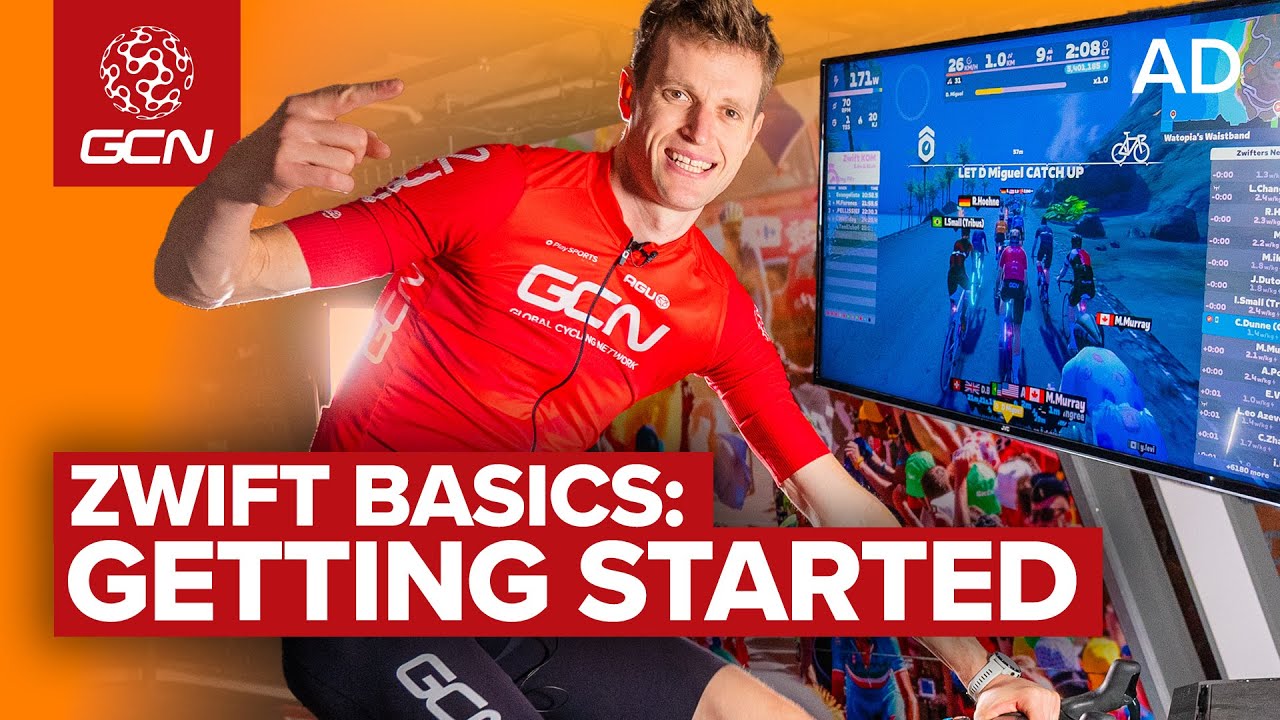
A few more comparisons:
- Locations: While both companies have multiple offices, Zwift’s official HQ is in Long Beach, California, while Rouvy is based in Prague, Czechia.
- Subscribers: Zwift has around 1 million subscribers, while Rouvy has around 300,000
- Employees: Zwift has around 325 employees, while Rouvy has around 125.
- Core Business: Both companies see subscription income as their main source of income, but Zwift has the additional revenue stream from its hardware, most notably the Zwift Ride.
- Core User Experience: Zwift is a video-game like virtual environment with strong social features, while Rouvy uses real-world videos of routes with augmented elements (rider avatars, etc) and an emphasis on realism.
Community Sentiment
Put your finger on the pulse of Zwift/Rouvy community sentiment by looking at comments on the videos below, and these links:
- Official Zwift forum thread
- Reddit threads like this, this, this, and this (started by a Rouvy employee)
- DC Rainmaker’s blog post
Here’s how I would summarize community sentiment:
- It’s largely negative, with users voicing:
- Concerns stemming from reduced competition
- Distrust of the “nothing will change” message
- Fear of Rouvy eventually being shut down
- The quieter positive sentiments include:
- Official, less buggy Zwift hardware compatibility with Rouvy
- Possibility of a combined subscription
- More and shared resources between companies leading to faster development of core features
The Big “Why?”
Everyone’s speculating on exactly why Zwift made this move, and your take on it will be largely based on whether or not you trust the official messaging from Zwift and Rouvy. Here it is, from paragraph one of Zwift’s official press release:
The acquisition aims to accelerate growth in the indoor cycling category through strategic cooperation between the two companies, while maintaining their independent operations.
While Zwift and Rouvy are both saying this is a friendly acquisition made with the goal of growing indoor cycling while both companies remain independent, it’s clear that many in Zwift and Rouvy’s communities don’t believe what’s being said. And that’s a fair take, because it feels more common than not for corporations to say one thing in these touchy situations, yet eventually do another.
I chatted with Mark Cote, VP of Product at Zwift, who said, “It’s of course easier to say things will improve for both platforms from the inside than to be trusting from the outside – most Rouvy riders don’t know me or our leadership team.” Zwift CEO Eric Min had a similar tone when I chatted with him, acknowledging the community’s concerns without deviating from the message: this is about both companies working together to grow “the whole pie” while remaining independent.
Some users have been comparing Zwift buying Rouvy with Wahoo buying RGT four years ago, noting that Wahoo initially invested in RGT but eventually shuttered it a year and a half later. But is that a fair comparison?
I would submit that the Wahoo+RGT situation is nothing like Zwift+Rouvy. RGT was a very small platform, and nowhere near profitable. Wahoo is largely a hardware business, and they bought RGT as a strategic move to bolster their smaller software/subscription business. Zwift, on the other hand, is the leader in the indoor cycling space, and they’ve acquired Rouvy, a profitable company and the second-strongest in the space.
Perhaps a better comparison is Facebook’s acquisition of Instagram in 2012. While Insta users saw the move as anti-competitive when it happened, and many mourned the loss of their beloved platform before any changes were actually made, Facebook kept Instagram going as a separate app as promised. And grew it to a massive scale.
While longtime Insta users may argue that they prefer the Insta of old (fewer ads and commercialization), what’s undeniable is that the acquisition gave Insta access to a massive pool of engineering talent, global data centers, and growth expertise that led to Insta exploding from ~30 million users to billions today.
So, what happens next?
In the short term, let’s say the next 6-12 months, Zwifters and Rouvy users (Rouviers?) probably won’t see much change on their respective platforms as a result of this acquisition. Rouvy riders can now use Zwift hardware reliably in the game, which is a quick win for both companies. And I would bet we’ll see Rouvy activities begin to count toward Zwift Fitness Metrics soon, as that’s a fairly easy change and a no-brainer to encourage use of Zwift’s growing training ecosystem.
The bigger question, of course, is what happens long term? How does last week’s news change things in the indoor space 3, 5, or even 10 years from now?
Unfortunately for Zwift’s PR department, the potential for negative outcomes increases as the timeline is pushed out. It really boils down to three potential long-term negatives for customers:
- Price Increases: Rouvy’s pricing is friendlier than Zwift’s, with family and duo plans much lower than Zwift’s single-user pricing model. With Zwift now benefiting from subscribers on either platform, there is less pressure to stay price-competitive. The logical eventual result? Increased subscription prices.
- Reduced Options: Rouvy is a strong alternative to Zwift, with both platforms providing very different indoor environments on compatible hardware. But Zwift now owns Rouvy, and could choose to shut it down at any time.
- Closed Standards: Rouvy had reverse-engineered connectivity to some of Zwift’s hardware, and the move was forcing Zwift to evaluate their proprietary approach with Zwift Protocol. That pressure to open up their hardware standard no longer exists, which means Zwift can continue to leverage hardware compatibility to drive subscriber growth, making it much harder for competitors to launch and grow in the indoor space.
I’m generally a Zwift optimist, though. I believe their leadership team genuinely wants to keep Rouvy healthy and running and growing, and to see Zwift do the same. To continue investing in making the hardware simple and affordable, while offering engaging indoor riding experiences. My take on the three potential negatives above is thus:
- Price Increases: It wouldn’t surprise me to see Rouvy and Zwift increase their prices a few years from now, but that’s only because prices are increasing everywhere. I wouldn’t see this as a direct result of the acquisition, but the result of a myriad of market factors that drive subscription prices for every other app we use.
- Reduced Options: Zwift has no plans to shut Rouvy down. It wouldn’t make sense. Rouvy is a sizeable, profitable business serving up an experience (real video rides) that subscribers clearly want. Zwift wants to keep it this way, and so do Zwift’s investors. (As DC Rainmaker commented, “If you disappear Rouvy, then you disappear those gained 300-500K+ users.”) In fact, I bet we’ll see Zwift refering people to Rouvy and vice-versa in the future as some sort of suggested alternative.
- Closed Standards: I’d love to see Zwift “do the right thing” and open up their hardware standard to other platforms (Training Peak Virtual and MyWhoosh, for example). But that’s really a “community goodwill” move and not a “smart business” move at this point. Holding proprietary protocols is an advantage for Zwift today, so I think they’ll keep it that way.
Time will tell, of course. None of us has a crystal ball. But it’s not as simple as, “Less market competition is never good for customers” (a comment I’ve seen in various forms from hundreds of people in the past few days). Yes, this acquisition reduces competition for Zwift. But it can also lead to a sharing of knowledge and other valuable resources between the two companies, to broader hardware compatibility between the platforms. Perhaps the net result will actually be a positive for consumers? A few potential positives:
Hardware/Functionality Expansion
Rouvy now supports Zwift Ride and Zwift Click controllers (but not Zwift Play). Steering and braking aren’t yet supported, though, since Rouvy doesn’t have steering or braking in game. My guess is you’ll see those features arrive eventually, though. New game features driven directly by Zwift’s acquisition of Rouvy.
Subscription Changes
Yes, Zwift says subscription pricing won’t change on either platform any time soon. But wouldn’t it be great if it did? Zwift has never had a family plan, but they can now use Rouvy’s subscriber data to predict how a family plan might increase or decrease subscriber counts or revenue. That’s valuable information that’s hard to come by in this industry.
Shared Learnings
Zwift does a better job of creating a social environment, while Rouvy, by some accounts at least, does a better job of onboarding new users. The two teams could share this knowledge, helping both products improve in areas of weakness. Hardware teams could also collaborate to work on stubborn problems like connection reliability and simplifying device connections at startup.
Your Thoughts
Well, there you have it. Community opinions, Zwift’s messaging, and my own take on it all. Who is correct? Unfortunately, we’ll have to wait and see.
Share your thoughts below.


I wish they could make Rouvy available through a “Rouvy portal” (similar to a Climb portal) so that race courses can include some famous segments. But that would require them to set it up in a bulletproof way, not quite like they did in “Power to the portal” where people were sent to different climbs 😉
a rouvy ‘climb of the day’
I was hoping maybe Zwift could work on a streamlined way to code IRL GeoData route info into graphical Zwift routes and then use the Rouvy IRL route data to regularly convert and add in a big new route every X months or something
In the review above, the total indoor riding market includes gyms, cycle bar, software like Velocity – that Zwift + Rouvy could seek to compete in . Merge is always about (1) market growth (professional training software) or (2) business survival if the competitor is too similar. In my observation, Zwift had the largest business volume to loose to Rouvy and both have failed to grow outside of the home & professional training market. This was a merger of survival.
Yeah it is kinda surprising that Zwift seems to have never attempted to team up with large gym chains and have Zwift Cycling Workout classes etc where a live instructor (instead of on-screen workout info) takes a whole class through a Zwift Workout with it all on-screen ahead of them all or something like that but with the option to also join remotely from home – basically try and eat into Peloton territory
I think one of the first integrations Zwift should pursue is to actually adapt the Zwift platform rather than adjust anything on the Rouvy side, by adding Rouvy style augmented reality to their Climb Portals. I’ve always found the graphical approach to the climbs odd, although logical from a rate of climbing route generation. Switching to the Rouvy approach creates a natural introduction to Zwifters to the Rouvy platform (as I’m sure in the 1 Million subscribers there are several that either don’t know about Rouvy or have avoided switching do to compatibility concerns).
Similarly, I’d think Zwift could use this to encourage Rouvy users (once the subscriptions merge) to try Zwift to access climbs not offered in Rouvy.
“Possibility of a combined subscription”
I’d probably add Rouvy for another $10 a month
That’s exactly what I pay for my Rouvy subscription thanks to a “grandfathered” deal I got from them about six years ago. If, like me, you get bored riding the same Zwift roads over and over and over and over again, Rouvy is quite a change. You can go a year or more and never do the same route.
I’m not interested in your Rouvy “marketing” and everything you’ve described after your first sentence I can, and have, gotten on Mywoosh for free.
Everything is a matter of personal preference. I was singularly unimpressed when I tried My Whoosh. My own “hot take” was that it was worth what I paid for it. To each his or her own…
Not for nothing are Zwift and Rouvy the two biggest players in the virtual cycling market. They’ve both invested a lot in improving their respective platforms and ask their users to fund that—which I think is an entirely acceptable tradeoff. Also, it’s worth remembering that folks in technology have been telling us for years now that if you’re not paying to use a platform, then you are the product.
Because the 2 environments are so different it makes no sense to purchase Rouvy just to close it down as they aren’t really a competitor even though they both exist in the indoor cycling space.
Zwift have gained a profitable business which can help offset their losses and this looks good to future investor as they now have a bigger business in terms of subscribers and revenue.
Zwift could expand the climb portal as Rouvy has tons of accurate GPS coordinates for climbs all over the world. Zwift could choose to add these climbs in the same format as currently in Zwift or convert the Climb Portal to video based routes which already exist on Rouvy.
I’m guessing that Zwift might have decided that its animated platform simply isn’t sufficiently scaleable. As we all know, adding roads to Zwift requires a major investment of programming time and takes quite a while to complete. In Rouvy, all you need is a high quality film of the route, shot from a first person perspective, and you’re in business.
I don’t think there is a problem with Zwift’s scale using the animation.
I used Rouvy along side Zwift before Rouvy was called Rouvy and it has its positive and negatives. The biggest problem with video routes is they look jittery unless you ride at the same speed the video was recorded. Its also annoying having cars, bikes and people all moving at the wrong speeds as a result. At least on Zwift everything thats moving is moving at the correct speeds.
I was hoping Zwift bought them for their programmers. Get Zwift onto a standardized gaming platform. Doesn’t Rouvy run on the Unreal engine?
They run on Unity, so yeah maybe a switch to a more structured video gaming platform for Zwift might be a good longterm goal
Having the app run interoperably across all the supported platforms (Windows, Mac OS, iOS, Android) is a notable accomplishment of the Zwift engine. While this is supported with Unity, I can imagine that porting Zwift to Unity is a very big lift, which will really slow down feature development.
Regarding the “positive” of “Official, less buggy Zwift hardware compatibility with Rouvy,” this would be better accomplished by Zwift using or creating open protocols for all companies to use. If I want to use Zwift Ride with Kinomap, for example, do I need to wait for Zwift to buy them too? Or at Wahoo SYSTM, most things can be done in ERG mode, but occasionally there’s sections where ERG mode needs to be turned off, and I don’t think Zwift Ride can be used there either?
Regarding Wahoo and RGT, didn’t RGT get closed down as an effect of a settlement with Zwift? Wahoo and Zwift settled litigation September 2023 and RGT got closed down October 2023, with RGT people getting vouchers for Zwift.
Looking at things from Zwift’s perspective, what’s the upside for the company using an open protocol? To generating goodwill with people using their competitors, which include the heinous UAE government behind MyWhoosh?
Apparently, Zwift created the Ride to drive subscriptions, not to generate lots of profit by selling hardware. If that’s the case, who can blame them for not using an open protocol and making it harder to use their hardware with the competition.
Just another perspective.
I’ve been through three different acquisitions in my software career. In each case, there was a promise that the acquired company would be permitted to operate more-or-less independently.
And in each case, that promise was broken within a year or two. Within three years, two of the acquired companies were completely subsumed, and the other was sold to private equity and promptly dismantled.
I don’t like contributing to the negativity around this acquisition, but my sense of this — given that Zwift is a US company with ambitions to go public eventually — that what we know as Rouvy today will not exist, at all, in a few years. From Zwift’s point of view, this will be a win, since they have removed a competitor. When you start seeing on-ramps for Rouvy users to get into Zwift but somewhat less the other direction, you’ll know where this is all headed.
Thank you! That’s what will happen eventually unfortunately. Get the knowledge from relevant Rouvy employees, reduce cost overall (so also not really a positive for zwift employees) through scaling and standardising and cut a lot of cost in the middle and long term. i am only a little scared if they know what they got themselves into when they maybe find out that zwift and rouvy codebase is completely different and it will be very hard to scale from the aquisition.
Having a couples/family plan on Zwift would be good. I’m too invested in Zwift ft after 3 1/2 years and I love it but I admit my hubby uses my account every now and again as he refuses to pay another full subscription, and that messes up my ZRS/Cat etc. so Zwift, please do a couples subscription. (Note: he doesn’t race so he’s not cheating, just means that when I race I’m last as he’s put my cat up)
All he has to do is not save his rides and it shouldn’t affect your stats. Since he’s borrowing your account theres no point him saving his rides anyway as he won’t have viable stats either, so no advantage at all for that, unless you’re using his rides to boost your drops and XP (aka cheat).
My thoughts on these mergers or acquisitions havent changed much. We have seen a lot of them in every line of work and most of the times they dont end up well for the customers. No matter the history, the wahoo RGT and Rouvy and BKool were simular. They were bought for a reason and vanished pretty soon after.
Although I think this will impact us Zwifters less than it will the Rouvy customers.
My thought on it that in due time Zwift will take the best things from Rouvy and uses it at Zwift along with their best employees that will be moved to Zwift. Rouvy gets the minimal attention and after a while we get the message that it is no longer sustainable and will be shut down but that they can all join Zwift.
But that might just me my negative look on things like this. Have seen too many go wrong after great PR and promises it wont change.
I’m just happy that they decided to invest in killing the competition rather than improving features or the user experience. As a long time user (>8 years), this is exactly what I’ve been hoping for. Can’t wait for the subscription price to go up next season to help pay for other acquisitions. Great work Eric Min.
Zwift has lost its way. I am not sure what happened, but they seem to have abandoned innovating virtual cycling, and are just lazily treading water in that area, relying on reputation and nostalgia as the best virtual cycling platform (and now, buying competitors). It was such a bad sign when they came out with the fitness tracker and the Up Next and now the Plan, all of which do not work well, are useless, and are not what we asked for. I cannot believe this is what they are wasting time and resources on. The features and expansions as of late are boring and lack creativity (example: the Big Spin prizes and themes this year were the worst, I didn’t bother to do many Big Spin rides other than trying to acquire older prizes I didnt get before, and I noticed a huge drop in participation this year in the people that I follow vs previous years Big Spin events). The Fondo series was a joke, it was just all of the old fondo routes I have already completed multiple times in group rides. Zwift could not even make a new France fondo incorporating the expansion, and make one new 2025/26 Fondo kit? Or a new Watopia fondo with Jarvis or the Grade, etc? Infinite leveling was introduced, but there was no new routes or features introduced to acquire more XP, no unlocks or benefits other than a red stripe that I can’t opt out of displaying; we are supposed to be happy riding the same routes over and over for XP and watch the number go up? We cannot even get a ROTW that is outside of Watopia. I could go on and on but you get the point.
At the beginning of the year, I converted my subscription to monthly, and I am really glad I did. After riding 900 or so miles for my last Tron upgrade I can cancel my subscription, use MyWhoosh exclusively, and save some money. I am not going to pay $20/month for the SOS.
What is missing in the conversation so far is recognition of the fact that Rouvy also owns FulGaz – a smaller “real world rides” app – there has been little discussion about the future of FulGaz
I’m curious, I heard that Rouvy bought Fulgaz about 18-months ago. What did they say at the time, and what then actually happened? (I genuinely don’t know either of those things, I just thought it might be an interesting comparison of PR talk vs reality in cycling app takeovers) I assume Fulgaz was also included in Zwift’s purchase of Rouvy?
The Fulgaz routes are all still there—and labeled as such.
What about Garmin trainers and accessories like the Alpine which works on Zwift but not all work on ROUVY.
Have to use Tacx app which I’m guessing not many use because it isn’t mentioned much. Only for garmin users, but I found the realistic ride routes and videos good.
Connect your Neo/Smart trnr/cadence in ANT mode in rouvy and the Alpine works perfectly fine.. been using that combo since I got my Alpine/3M last fall…
The Alpine works perfectly fine on Rouvy if you connect via ANT mode.. I think theres still reverse engineering stuff going on in the programming because the Alpine receives the singal from the Neo, not the app… so somewhere in the code the communication between the Alpine and the Neo is lost.. Connect everything in ANT mode and it works fine.. Ive been doing that since I got my Alpine last fall…
The outcome that I would like to see from all of this would be that the two platforms are merged, upon launch the user would choose what “world” to enter (Zwift or Rouvy), all equipment (bikes, wheels, etc.) would be fully transparent between the two worlds, all user earnings (XP, drops, etc.) would be transparent and earned equally in both worlds, whatever racing scoring system would be fully portable between the two worlds. On the Rouvy side specifically, I would love to see the real-world versions of all of the cool routes and climbs that Zwift has been able to add (Ventoux, AdZ, Spring Classics climbs, etc.). There should be one single subscription for the entire system. This merger could end-up being the best of everything under one platform.
That’s exactly what I’m concerned about. They force us to pay more for our subscription and say well now you get Rouvy too. I don’t want Rouvy and don’t want an increase in my Zwift price.
If they really wanted to give the customer options, they would do this like the “Sling” model – Zwift “Orange” (just Zwift), Zwift “Blue” (just Rouvy), and a Zwift “Orange+Blue” option for a slightly higher price for those who want to use both…the colors track pretty well!
What I enjoyed on Rouvy was their connection with the Vuelta. There were various challenges, including the full Vuelta version with 21 stages. I earned a speedy special Madone frame and enjoyed it immensely. All the videos were top quality. They have great Mallorca rides as well as France and Italy. Most rides have a few short Live Strava segments that get addictive and get you pushing hard. Search for a Rouvy Groupon and you may find three months for the price of one, an excellent summer choice especially if you ride outdoors and pause your indoor riding or only ride on rainy days.
Do we think the emergence of UAEs MyWhoosh has anything to do with this decision?
what is happening there? I am curios?
I have no concerns with Zwift buying Rouvy, they are different and complimentary. I think it is a great move and we may all benefit. If Peloton bought Zwift/Rouvy, then I would worry.
The why shouldn’t be explained from a user-perspective. Looking at the evolution of Zwift over the last years, lots of cool and really appreciated features have been introduced. however, most of the new things seem to be trivial, e.g., home screen, extension of levels. one may get the impression, Zwift stuck in legacy code for years. Zwifters want new roads. but Zwift needs to build environment. roads are the easy part as climb portal proves. So what are the specific costs of roads? in comparison to Rouvy? that’s, IMO, the really essential question & maybe the reason of this acquisition.
How great would it be if Zwift had a rotating Rouvy world or route you could access through Zwift. I wouldn’t even mind a small extra Rouvy fee or combo subscription option to be able to do it if everything was still tracked and accessed through Zwift. That would be the best of both virtual worlds, with fully virtual and real world footage options.
its hilarious to see how upset some people are getting, like its their livelyhood being ruined. those people need help. wompwomp attract mode one ~ thumbs down away.