

The second race of Zwift Racing League 2026/27 Round 1 happens on Tuesday, September 29, and we’re in Innsbruck for a scratch race on the popular Innsbruckring.
Let’s dig into the course layout, powerups, bike decisions, and strategic options for teams.
Looking at the Route
Each lap of Innsbruckring is 8.8 km, and A/B teams will race 4 laps (35.4km, 309m elevation) while C/D will race 3 laps (26.6km, 232m elevation).
Innsbruckring is popular for races and has featured twice in ZRL: as a points race in 2022/23 and as a scratch race in 2023/24. While the exaggerated route profile below looks lumpy, it’s quite flat and uneventful for most of the lap. Especially in a scratch race, where only your finish position matters, the Leg Snapper climb will be the key selection point on each lap:
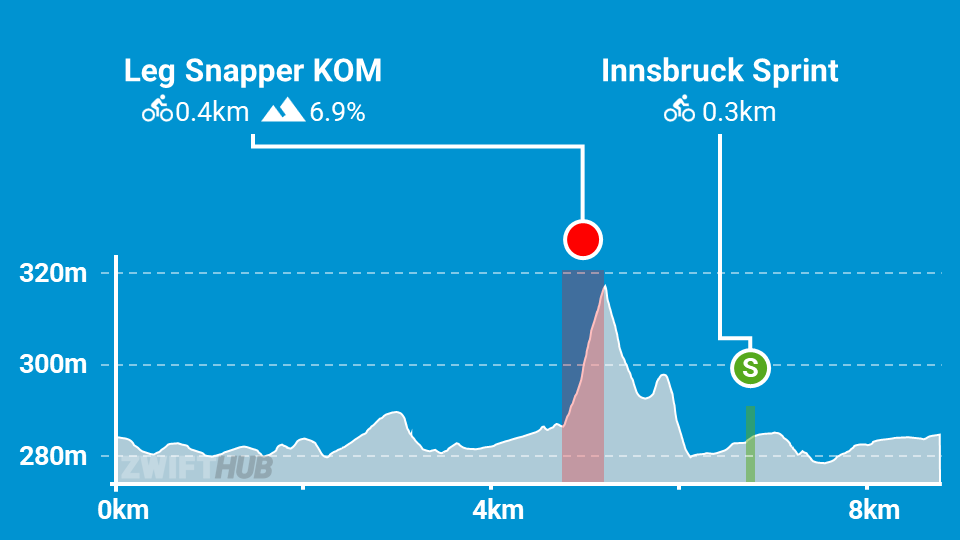
The Leg Snapper KOM begins when you cross the short bridge and the road tilts sharply upward 5km into your first lap. At 430 meters long with a steady average gradient of 6.9%, this climb will force a selection each and every lap! Be prepared for an all-out 50 to 75-second effort to stay in touch.
Keep hammering over the top of the Leg Snapper to get back up to speed on the descent immediately following. You can even use the aero powerup you got at the banner if you’d like, then recover a bit on the descent and even through the sprint (where you’ll get a feather powerup) if you’re in the front pack, as riders won’t be pushing hard since this is a scratch race.
The pack will be strung out, and gaps will have formed thanks to the Leg Snapper. This is where riders face a decision. If you’re in the front group, do you keep pushing to hold the gap? If you’re in a chase group, do you try to bridge up? Typically in multi-lap scratch races on Innsbruckring a group of riders is dropped over the Leg Snapper, then rejoins the front pack a few minutes later after the front pack eases. This is especially true on the first lap, and becomes less true as the race drags on through subsequent laps.
On the last lap, you commonly see the front pack keeping the pressure on after the Leg Snapper, so dropped riders stay dropped all the way to the finish.
Speaking of the finish: this finish always feels like a drawn-out sprint. Riders often try to go long, but are unable to hold it. Patience is crucial here, and you’ll want to maximize the use of your powerup. Holding an aero will be crucial for the finish!
Read more about the Innsbruckring route >
PowerUp Notes
Specific powerups are assigned to each arch: a 250 XP bonus at the start/finish arch, the aero boost at the Leg Snapper KOM arch, and a feather at the sprint arch.

Aero Boost (helmet): makes you more aerodynamic (reduces your CdA by 25%) for 15 seconds. Use at higher speeds (flats and descents), especially when no draft is available (although it is still useful when drafting). This is the powerup you want to be holding going into the finish.

Lightweight (feather): reduces your weight by 10% for 30 seconds.
Use on climbs, when weight matters the most. This is a handy powerup for the Leg Snapper, and it’s long enough to last for the majority of the climb. The downside is, you’ll have to forgo the 250 XP bonus at the start/finish if you want to hold onto it for the Leg Snapper!
Bike Recommendations
Bike recommendations for this race are simple, thanks to how Zwift has set up the current crop of in-game road bikes. You’ll want to pick one of the top “aero all-arounders”, the best of which are:
- Specialized S-Works Tarmac SL9 or SL8
- Cannondale Supersix EVO Lab 71 (Team Edition is even faster)
Wheel choice feels a bit trickier here, because it seems like we need to choose between the most aero wheels (disc wheelsets) or better climbing wheels (to help you survive the Leg Snapper). Lucky for you – I tested it! Here are the Leg Snapper times for three of the top contenders, using the Specialized S-Works Tarmac SL9 frame at 6 W/kg (450W):
- Shimano DURA-ACE C99/Disc: 56.50 seconds
- Princeton CarbonWorks Wake 6560: 56.25 seconds
- SwissSide HADRON Ultimate 650: 56.23 seconds
My take is: go with the disc wheelset. (And the DT Swiss 85/Disc or Swiss Side 850/Disc will also work just fine, as they perform essentially the same as the Shimano disc.) You’ll lose a quarter-second on the Leg Snapper, but you’ll be faster on the flats and in that final sprint.
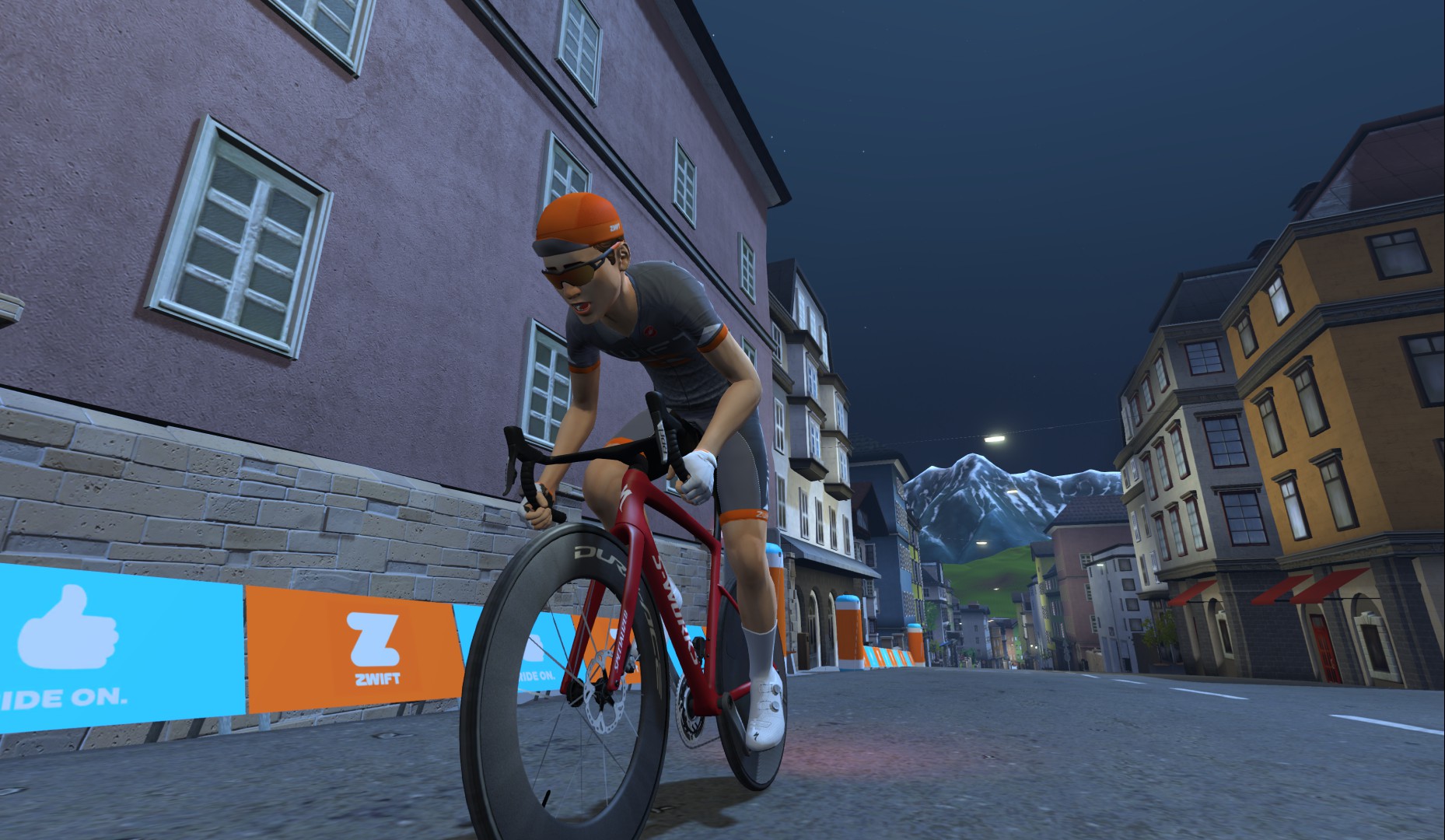
Halo upgraders: your Tron bike is also a good option on this course. It’s as fast up the Leg Snapper and around the course overall as the fastest road bike combos.
Of course, your frame’s upgrade status should impact your decision.
Related: All About Zwift’s New “Bike Upgrades” Functionality >
For more info on bike and wheelset performance in Zwift, check out:
- Speed Tests: Tron Bike vs Top Performers for head-to-head comparisons of various frame and wheel combos.
- Fastest Bike Frames and Wheels at Each Zwift Level: Determine the fastest setup available to you.
- Bike Frame Charts: For precise performance data on all road frames.
- Wheel Charts: For precise performance data on all wheelsets.
More Route Recons
Lots of recon events are scheduled on upcoming ZRL routes, led by various teams. See upcoming ZRL recons for this race at zwift.com/events/tag/zrlrecon.
Additionally, riders in the Zwift community do a great job every week creating recon videos that preview the courses and offer tips to help you perform your best on the day. I’ll add them below as I find them!
J Dirom
Nathan Krake
John Rice
TacticalWatts
Strategic Options
How will these races unfold, and what strategies will riders employ in the second race of round 1? Here’s what I predict:
- Hold On To Your Aeros: Riders wanting to contend in the final sprint will 100% want to hold onto the aero powerup they receive the last time up the Leg Snapper.
- Close the Gap: In typical Zwift races, the pack breaks up over the Leg Snapper + Sprint, but chase groups will often rejoin the front group in the “uneventful” 6.8km that follows. I predict this will happen on laps 1, 2, and 3, with few riders rejoining the front each lap. But on that final lap, I bet the front riders will push to stay away!
- Four Hard Kilometers: Lighter riders and anyone who lacks sprint power may want to attack on the final Leg Snapper to drop the pure sprinters, then try to stay away to the finish. Teams may strategically execute attacks, with one rider going off the front while the rest sit in. The ensuing chase will make the final 4km of the race difficult for everyone.
- Survive and Sprint: This is what most riders will be doing. The goal is to do minimal work to stay in touch with the front pack over the Leg Snapper (“sagging the climb” helps), then be in contention on the final sprint.
Your Thoughts
Any insights or questions about this race? Share below!

Oh good, another gut-punch short climb that I’ll get dropped on and can’t keep up with the sub 88 kg people on 🫠 When will there just be a sprint fest?
Its a short hill that suits punch riders better than climbers. ZRL is also limited by wkg as well. Its not a rice for climbers
When will we finally get Alpe du Zwift, instead of everything being for the sprinters.
What hurt most thus far is knowing that ITT bikes were allowed and still our score got revoked. First they shouldn’t have messed up and than they should’ve either gone directly for cancelling. This was a massive bottlejob.
You’re still welcome to join the Dirt Racing Series.
Dirt needs to start a ladies category!!!
can we use TT frames?
Too soon?
The answer will likely change over the course of the race day….
Is anyone still actually riding ZRL? Ok, so the results were annulled, shabby decision at best. The race itself showed though, that we were placed in a league where we have no chance at all and are basically just making up the numbers. Wheres the fun in that? The set up of the series is simply not geared to it being fair and competitive and basically encourages sand bagging… Sorry, “effort management”…. DRS does this better, sorry to say.
Not sure what you mean. Isn’t that the nature of bike racing, some teams (individuals) win, some lose? I am sure there are some sand baggers, but I think most ZRL riders are legitimate. I have raced ZRL for 6 years and not won a single race. Who cares!!!, it’s still fun, social and a great workout. Your team being in the wrong league, may not be the fault of WTRL/Zwift. BTW, I am a DIRT rider and raced the DRS (and won in my category) and yes, it is a good series but cannot match ZRL for start time options.
“I think most ZRL riders are legitimate”. LOL the legit riders race on MyWhoosh, which actually enforces cheating.
Have you looked at the updated divisions? Are you still in the same one? If so, a team needs to finish last, if it increases sandbagging.. wasnt the race of truth the true showing of what some of those riders were capable of? So the truth was, your team was at the bottom of the group in the TT format, who is to say thats the same when it comes to scratch races or segments. Also DRS format still isn’t perfect, the higher categories is a mess, the division breakdown still has work to do (hopefully V2 will work better with Zwiftracing.app) And while I would have loved to race DRS, I think the competing with Tuesdays is a recipe for disaster, Monday or Wednesday or Friday would have been better options. Not everything has to happen on Tuesday. Trying to force other teams to choose, but yes ZRL is phoning it in somewhat, but it still has one of the more competitive sides of Zwift.
DRS DRS DRS
Fully upgraded Aethos versus SL9 – not upgraded yet