

The sixth and final points race of the regular Zwift Racing League 2021/22 Season 1 happens Tuesday, November 16nd (Monday the 15th for Premier Division racers). And it’s the Queen Stage, really, since it features the longest climb of the season tackled multiple times!
The race takes place on Makuri Islands’ Countryside Tour route, a first for ZRL. With a significant dirt section, this is also the only route of the season that has racers wondering if they should swap bikes mid-race. But more on that later…
Let’s dig into the course, including tips for bike choice/swaps, strategic options, and the crucial pinch points where riders will get dropped each and every lap.
Looking at the Route: Makuri Islands’ Countryside Tour
One lap of this route is 15.8km (9.8 miles) long, with 185m (607′) of climbing. A/B categories will race 2-2/3 laps (43.2km), making it a decently long hour+ effort similar to the last few races points races. C/D will only be racing 1-2/3 laps (27.4km).
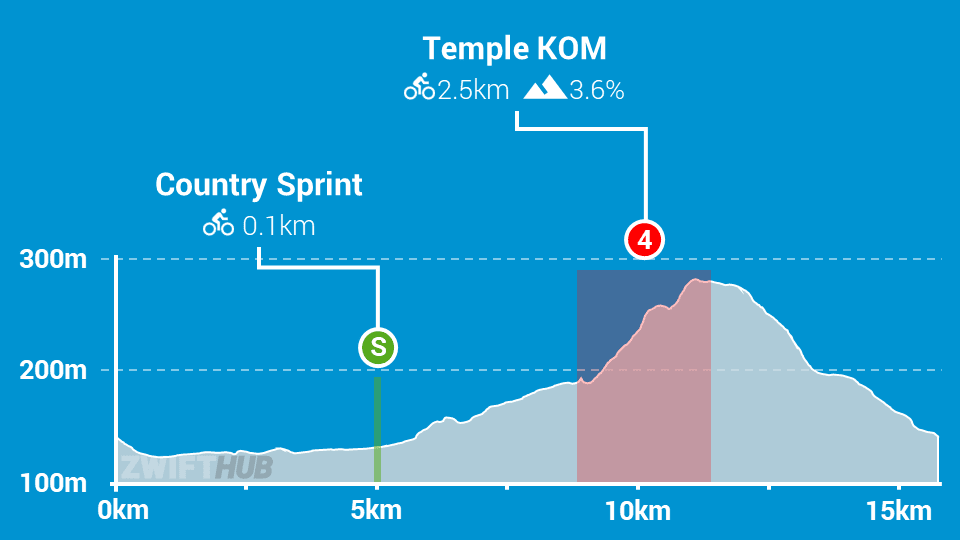
The race begins at the “main” Yumezi start pens near the lap start/finish banner. This is a downhill start, so riders will get up to speed quickly as we descend to the farmland flats. Hit the watts quickly to get up to speed, but don’t overpower it as you go through the lap banner and grab your first powerup.
The first 5km would normally be quite docile, as there’s no real benefit to pushing the pace yet – but roadies may be pushing to drop riders on gravel bikes. Near the 5km mark things will get spicey as the group hits its first points intermediate, the Country Sprint. Look for all 10 FTS times to be set here on the first lap, when legs are freshest and the group is largest.
After the Country Sprint the road tilts upward as we climb into Village Onsen and beyond. This is where any riders who chose to start with a gravel bike will really begin to regret their decision, as the overall effort required to hang onto the pack will increase. And this is where the first selection of the day will happen, as the pack strings out over the draggy climb. (That said, we don’t expect riders to push too hard here, as the big selection point is just up the road.)
After this long, draggy climb up to the Fishing Village we hang a left onto the route’s main pinch point – the Temple KOM.
At 2.5km and 3.6% average gradient it may not seem daunting, but since it’s mostly dirt it’s extra slow. It’s also not consistent in its gradient, so be mindful of your power in order to keep your speed as high as possible.
If you’re wondering, “Should I swap bikes to a gravel or MTB setup for this section?” – that’s a great question. We’ll discuss that more below…
Once you ride through the KOM banner in the giant mystical tree it’s a twisty dirt descent back to the pavement of the Castle/Marketplace area, then more descending to the lap start/finish line. Then you get to do it all over again!
A Note About Finish Lines
This race uses a custom finish line, which Zwift has historically not been good at placing accurately (see the Casse-Pattes race earlier in the season).
So we asked, and ZwiftHQ has assured us that this week’s finish lines will be accurately placed directly at the KOM banner on the third lap (for A/B) and second lap (for C/D). Still, it wouldn’t hurt to check recordings of earlier races to see where that line ends up. That’s what we’ll be doing!
Read more about the Countryside Tour route >
PowerUp Notes
Riders will be awarded powerups through each segment banner, meaning we’ll get 3 powerups per full lap for a total of 8 powerups for A/B and 5 for C/D. Three powerups will be randomly given out at each banner:

Steamroller: reduces Crr for 30 seconds so you roll as fast as a road tire on pavement regardless of wheels or road surface.
Best used on dirt, although it also helps you a bit on other non-paved roads. Definitely helpful on this route’s dirt climb. Curious about how rolling resistance (Crr) works on Zwift? Read this post.

Draft Boost (van): increases the draft effect you are experiencing by 50% for 30 seconds. Use at higher speeds (flats and descents) when you are already drafting off another rider (since this powerup only helps when you are drafting.) Very handy to increase recovery in high-speed sections.

Lightweight (feather): reduces your weight by 10% for 15 seconds.
Use on climbs, when weight matters the most. The steeper the road, the more this helps.
Bike Frame + Wheel Choice
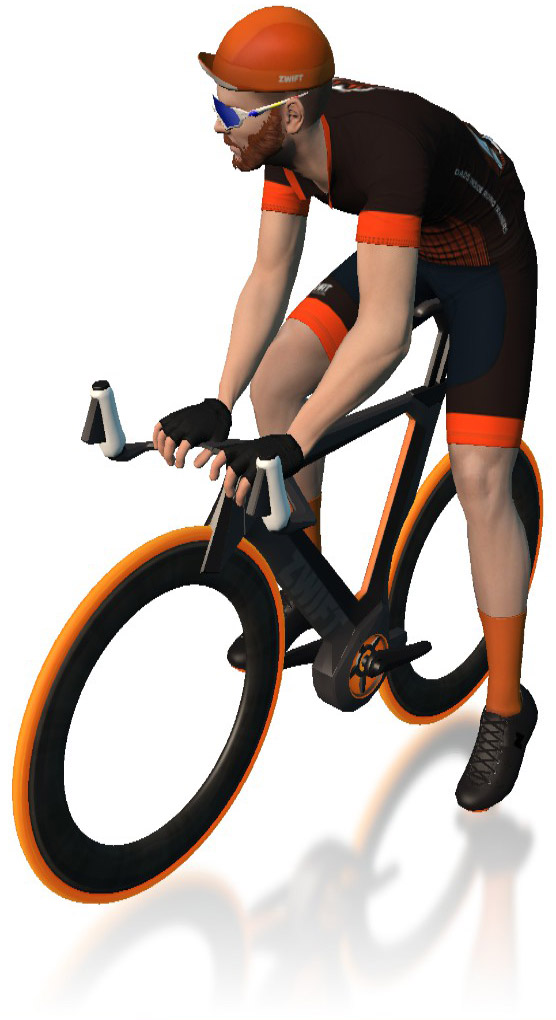
The Tron bike is a solid pick for this route – but it really depends on what you’re targeting. Is it sprint points, or finish position?
Sprinters may want to go with the super-fast Cervelo + Disc option, while climbers may want a more lightweight setup for that crucial final KOM. The Tron is a good all-arounder.
See Tron vs Top Performers for a look at the relative performance of various bikes and wheelsets.
To Swap or Not to Swap?
This is the only race of season 4 where swapping bikes to gain an advantage may be a good idea. Zwift has different road surfaces (including pavement and dirt) that have different rolling resistance depending on the bike you use. And the key KOM segment of this race is dirt!
For a complete look at Crr in Zwift, read “Crr and Watt Savings of Zwift Wheel Types”
It takes several seconds to swap bikes in Zwift (here’s how to do it quickly), so you have to weigh the advantage gained from a new bike with the cost of stopping for a bike swap.
We ran a pile of tests just for this post. They include the Canyon Grail and Cervelo Aspero gravel bikes, plus the Trek Supercaliber mountain bike. Here are the hard numbers:
KOM Climb Times
This shows how long it took four popular setups to ascend the Temple KOM from the Fishing Village side. These were 75kg riders holding steady power.
| Bike + Wheelset | Power | Time |
| Zwift Concept (Tron) | 300W | 7:37 |
| Canyon Grail | 300W | 7:11 |
| Cervelo Aspero | 300W | 7:12 |
| Trek Supercaliber | 300W | 7:12 |
| Zwift Concept (Tron) | 375W | 6:22 |
| Canyon Grail | 375W | 6:02 |
| Cervelo Aspero | 375W | 6:03 |
| Trek Supercaliber | 375W | 6:03 |
As you can see, the gravel and MTB both cut 25-26 seconds off of the climb time at 300W (4 w/kg), and 19-20 seconds off at 375W (5 w/kg).
KOM Descent Times
This shows how long it took four popular setups to descend the Temple KOM toward the Castle. These were 75kg riders holding steady power.
| Bike + Wheelset | Power | Time |
| Zwift Concept (Tron) | 300W | 2:24 |
| Canyon Grail | 300W | 2:22 |
| Cervelo Aspero | 300W | 2:22 |
| Trek Supercaliber | 300W | 2:20 |
| Zwift Concept (Tron) | 375W | 2:14 |
| Canyon Grail | 375W | 2:14 |
| Cervelo Aspero | 375W | 2:14 |
| Trek Supercaliber | 375W | 2:12 |
As you can see, the MTB descends fastest. But on a descent where most riders will be looking to recover, we don’t see this time advantage as being terribly important.
Power Required to Sit In on Flat Paved Sections
Some riders will be asking if it makes sense to just stay on a gravel or MTB setup for the entire circuit instead of swapping. To test the wisdom of this approach, we had two riders holding constant power on a basic road race setup (Zwift Aero + Zipp 808 wheels), then we rode behind these riders with the lowest wattage possible to remain in their draft.
This simulates sitting in during a race, where other riders are poking their nose into the wind and pushing the pace while you simply ride smart. This is what you’ll be doing on the paved sections of the course if you choose a gravel or MTB, because (as you’ll see below) it’s plenty of work just sitting in the draft!
| Drafting Bike + Wheelset | Riders Pulling At | Minimum Wattage Required To Sit In |
| Zwift Aero + 808 | 300W | 236W |
| Canyon Grail | 300W | 260W |
| Trek Supercaliber | 300W | 300W |
| Zwift Aero + 808 | 375W | 272W |
| Canyon Grail | 375W | 320W |
| Trek Supercaliber | 375W | 375W |
Two riders pulling at 300W resulted in a pack speed of around 42kph, while riders pulling at 375 results in a speed just above 45kph. So 300W is comparable to a C/D race, while 375W is comparable to a B/A race.
As you can see, the extra wattage needed to sit in on a gravel bike is significant (24W at 42kph, and 56W at 45kph). And the extra wattage needed to sit it on a MTB is a bit silly – 74W at 42kph and 103W at 45kph.
Do you have the power to sit in on a gravel bike so you don’t have to swap heading into the KOM? Some riders near the very top of their categories may be able to do it, but we’re not convinced their legs will be fresh for the key KOM once they arrive. Read more about bike swapping in the “Strategic Options” section below.
More Route Recon
Plenty of rides are now being consistently planned each weekend on the upcoming ZRL route, which is quite handy. If you’re not familiar with this course, consider jumping into another event to do some recon! Here’s a complete list of upcoming Countryside Tour events.
Zwift’s vibrant race community continues to up its game when it comes to course knowledge and recon videos. Here are our two favorite recon videos this week:
Si Bradeley

Sherpa Dave

Strategic Options
This week is the most complex one of the season in terms of strategic options for teams. You’ve got a sprint segment, a KOM segment, powerups, and varying road surfaces to consider. With all of those factors in mind, here’s our take on what you’ll see in the race:
- Final KOM Bike Swaps: this is the approach that makes the most sense to us. Try to hold your best pack position until the final climb, then swap to a gravel or MTB for that last big effort. If you switch quickly it should shave 5-10 seconds off your final climb. You just have decide: do you swap before the KOM start line so you can go for FTS, or do you swap after it, once the climb begins, for a slightly faster overall time?
- Climbers On Gravel Bikes at the Start: some climbers will attempt to sit in on gravel bikes so they can go all-in for FTS/FAL points on the first KOM. The question is, will the roadies let them get away with this cheeky move?
- KOM Swap: some riders may attempt to swap just before the KOM, then hammer the climb and swap back at the top after crossing the line. The time it takes to swap will basically eat up any overall time gains you may make, but it will reduce your climb time (see numbers above). This is a tricky strategy, because if you lose the group draft, you’re out of the race in terms of finishing position. But it’s a smart strategy if you’re only going for FTS times on the KOM.
- Sprinters Going All-In on Lap 1: the first lap will be the sprinters’ lap for sure, so watch for a battle the first time through.
- Clawing It Back: with a long descent followed by a flat section after the climb, riders who get off the front on the KOM in a small pack may very well be brought back by larger groups of wattage workhorses thirsty for those sprint FAL points. Teams will need to communicate well to decide if they want to work to bring things back together, or keep things apart.
- Playing It Straight: most riders won’t swap bikes at all – perhaps because they’re on AppleTV and it takes too long, or because they don’t realize it’s an option, or because they think it’s silly. And that’s fine. You do you.
Watch the Premier Division Race
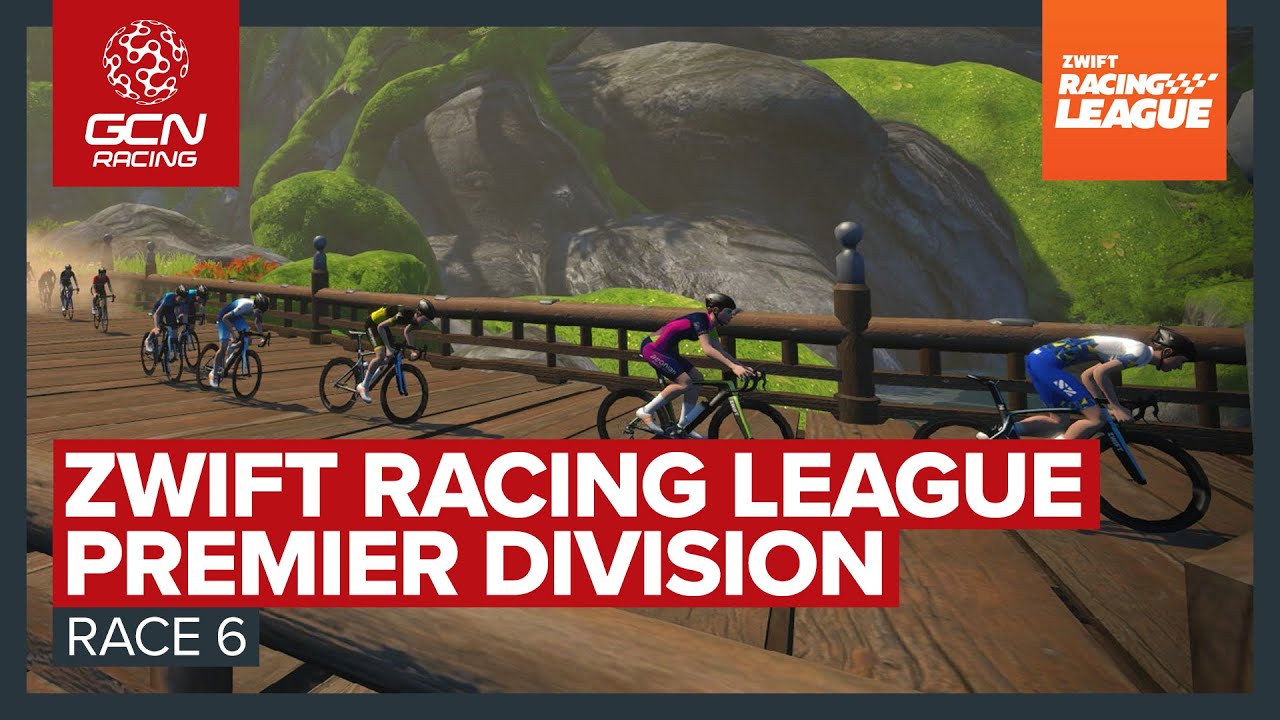
Zwift’s top racers will take on 2-2/3 laps of Countryside Tour Monday. Here’s the stream:
Your Thoughts
Any insights or further thoughts on the last big race of season 4? Share below!

Love the article!!!! But you added to my swap or not to swap headache instead of helping with it!!
I will let my wife flip a coin and decide for me!
Solid strategic choice.
Would it be fair to say the lower the grade the more significant the bike change will be – 4w/kg was 25s, 5w/kg was 20s – if that’s linear then C/Ds potentially going up at 3/3.5 could be saving 30s+
Also heavier riders would find it easier to sit in the draft in the early part so for a higher end heavier C/D rider going for finishing position perhaps Gravel all the way is the best choice?
Definitely. I’m a heavier rider at the bottom end of C cat and according to the Strava segment have been up this climb on a gravel bike at 275W avg and on a road bike at 274W avg – my gravel time was almost 50 seconds faster. Now neither of these efforts were in races but there were a lot of other riders going up the climb on their own free ride at the same time, so there might have been a draft effect, but I doubt it was worth much.
Thanks for this data point. I was wondering if the numbers were linear and we could just extrapolate out to 3 W/kg, but it almost sounds like the savings are even more than that as we go slower (at 2.51 after catting up last Saturday, I’m probably the lowest C there is). It also looks like the penalty for sitting in the draft on a gravel bike might be less for us as well (assuming there is a group to sit in with).
Yes, Ricky. But that’s true with ALL the time gaps we talk about. The lower-powered the riders, the bigger the time gaps, bigger the savings of faster bikes in terms of time.
Random thought, does the steam roller used on a dirt section make the mtb/gravel bike slower? I know it helps on a road bike when you go on dirt but what if the friction is the thing that makes a mtn go faster?
MTB and gravel bikes will also go faster. See https://zwiftinsider.com/crr/
With MTB and gravel bike your crr will be 0.014 or 0.018, respectively. But when using the steam roller it will be reduced to 0.004 regardless of the bike you are riding. So the benefit will be smaller than from the road bike’s crr of 0.025 but it will still be a significant boost to your speed.
Basically the steamroller will ALWAYS make MTB or gravel bikes roll faster, regardless of surface. But it’s most beneficial on dirt, where Crr is highest.
https://zwiftinsider.com/crr/ answers all questions…
Hi Eric! Great post! I wonder if the steamroller powerup is beneficial to the gravel bike on the dirt or on the road? have you tested that?
See https://zwiftinsider.com/zrl-s4-w8/#comment-78692
Copy/paste from above:
Basically the steamroller will ALWAYS make MTB or gravel bikes roll faster, regardless of surface. But it’s most beneficial on dirt, where Crr is highest.
https://zwiftinsider.com/crr/ answers all questions…
just A heads up that you have to turn left onto the temple KoM not a right. Had me thinking that we had to ride the dirt road right after the village Onsen. But On the route page it says to turn left onto temple kom. Just a typo I’m sure.
Thanks, fixed!
So the really big wildcard in all this is whether the finish line is just after the KOM gate, or before it 🙂
Definitely! I told ZHQ that, too. They assured me it’s in the right place… but we’ll see for sure on Monday with the Premier League for the A/B route.
Does bringing up the pairing screen still trigger the brakes for your rider? I thought that was no longer the case after a recent update.
Yes. That was a temporary bug that Zwift hustled to fix. It’s now fixed.
The current course distance will need to be altered. Currently, 42kms finishes about 2/3 of the way up the KOM. I’ve ridden this distance in two events this past week. They’ll need to add just under 1km to get it close to the KOM banner.
Zwift tells me the route distances are as follows:
PD, A, B – 43.2km
C,D – 27.4km
Steamroller is probably crucial for FTS. As a back marker I think my strategy will be to start on a road bike and then swap to the Grail if I get it. Definitely worth swapping back to a Tron and then back again, unless, as the article points out, there is a stable group that you can draft of.
Eric, what do you think about swapping each lap? So start on road bike -> gravel bike when you hit the dirt -> back to road bike after the descent and repeat.
My argument is that (in B at least) you should have the time to swap back, before the road bikes catch up to you. And this will of cause make even more sense, if you are an entire team doing it.
As a fat D, I’m considering switching at the bottom (probably to the Trek mtb because it’s the closest alphabetically to the Tron in my garage) and then going back to the Tron at the top after the banner on the first lap (and then back to the MTB on the second lap). If I were faster than a D, I’m not sure I would consider it (and it’ll probably depend on where I am and how big the group I’m with – or chasing, or chased by – is) but I’m really slow going up so I have more time to save even if I switch back. I look at those 7 minute times to climb and just dream. On the other hand, I may not change at all (or at least not on the first one). It might depend on whether Ihave a steamroller (might convince me to stay on the Tron) or if I’m with a big group that’s not stopping. The thing is, you sort of have to decide whether or not to stop before you see what other people are doing or you end up on the KoM segment when you do the change and that’s less than ideal for FTS.
Very good article Eric. Is the first table (Kom Climb Time) for lonely rider or for rider sitting in the draft ?
Estimating that the aerodynamic loss @19-24kph is around 25-60 watts for a single rider; benefits from reduce CdA of Tron bike, while sitting in the draft, will be really marginal. On the other hand, estimated rolling resistance difference on dirt of Tron vs MTB of 50-60 watts is much more significant.
So… Extra power of 60 watts on Temple climb with Tron or 100 watts on flats with MTB?
So, after racing it today, what are your thoughts?
My thought is – swapping to gravel at the bottom of the KOM, then swapping back at the top… is pretty much a wash. Too much time spent swapping.
So I’ll be swapping to gravel at the bottom of the FINAL KOM, and that’s it. Otherwise, I’m staying on a road bike so I can contest the sprint points.
Think doin it “similar”, only swap probably before first KOM
I think, there will be lots of usin gravel from the start and so you can go all in at first sprint for FTS/FAL with fast road bike and then swap and concentrate on KOM and stayin in first bunch (will be mostly gravels) for rest of the race
Difficult decision to be made before the race really starts 😉
I may have missed it but I’ve not seen anywhere a discussion of how different road-bike / wheel combinations compare going up the gravel climb. I’m not a realistic contender for either sprint or QKoM points and my only realistic ‘strategy’ is to finish in the top half of the finishing list. It’s the hill that’ll really hurt me and I’m definitely not going to change to a gravel bike each lap, so the best all rounder, until that last climb, is what I need to know. I’m going to stick with my trusty Tron bike, in the absence of any clearer idea which road bike would be best up that gravel hill, yet good enough on the flat.
Cheers for a great web site. My first post…
The only thing stopping me from taking a gravel bike from the start as I am quite a heavy rider more powerful on the flat and rubbish at climbing is that first sprint segment. Did 8s24 training in a race on a gravel and I have no idea if this is any good or not as the segment might be too short to be on strava.
Gravel bike is definitely slower on the sprints. If you want to get points there, it’ll be tough on gravel.
thanks Eric! I think I might do the sane thing and take a road bike to concentrate on that first sprint 😀-tempting so!
I’m wondering if a light climber race bike equals a gravel on the gravel climb?..