The first race of Zwift Racing League 2025/26’s final round happens Tuesday, April 7, and it’s a team time trial with a spicy finish!
Hell of the North was named in a nod to Paris-Roubaix, my favorite one-day race on the cycling calendar. The name is perhaps a bit dramatic, given that this is a flat route with a “petit” climb at the end. Be that as it may, it’s one of France’s newer routes, hasn’t been raced yet in ZRL, and should make for an interesting opening TTT.
Let’s dig into the course, look at bike selection, and more!
Looking at the Route: Hell of the North
All riders will race 1 lap of France’s Hell of the North, for a total race length of 20.1km with 241m of elevation gain.
Broadly speaking, this is a simple route: 17km of flattish roads, finishing with the Petit KOM, a 2.7km climb averaging 4%:
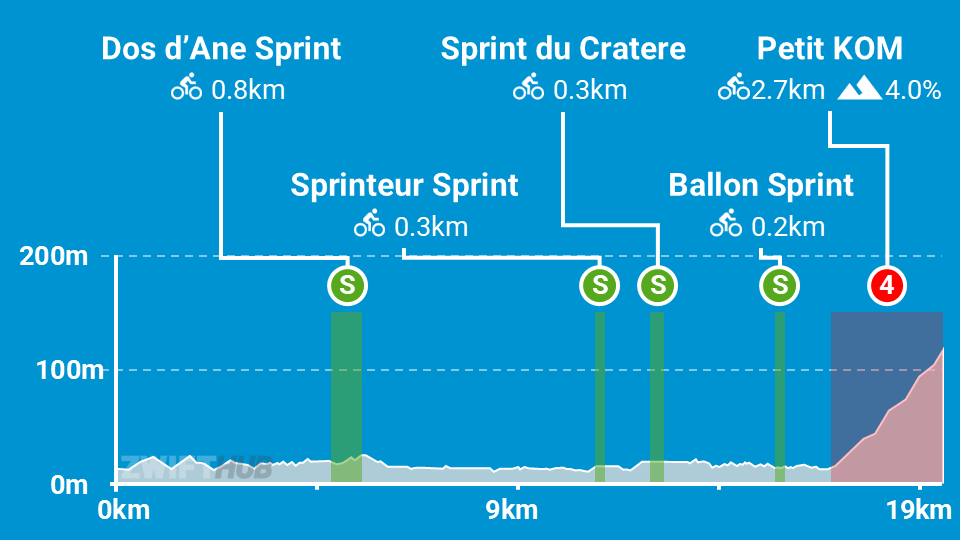
But let’s drill down a bit into key sections and waypoints:
- First Draft Powerup given in the start pens
- Flat Start + Les Intestins (first 3.6 km): Get up to speed quickly on the flat lead-in, then rotate pulls in a way that keeps you fast over the three peaks of Les Intestins. This may be the most technical portion of the route.
- Ramps Up Dos d’Âne Sprint @5.6 km (600 meters long, 2-3%): Two short, cobbled ramps up to the sprint arch will reward teams who raise their power to keep speeds high.
- Dos d’Âne Sprint Arch and 2nd Draft Boost Powerup @6.1km
- Sprinteur Sprint Arch and 3rd Draft Boost Powerup @11.9km
- Ramp after Sprinteur Sprint @12.6 km (300 meters, 2.5%): Another slack climb you’ll want to power through.
- Sprint du Cratère Reverse and 4th Draft Boost Powerup @13.4km
- Ballon Sprint and 5th Draft Boost Powerup @16.2km
The Petit KOM is, of course, the standout feature on this route. In a scratch race, it’s where the pack breaks up as riders with high w/kg drop the sprinters whose wheels they’ve been borrowing thus far.
In a TTT, though, the Petit KOM requires a different kind of strategy. While it’s a sub 5-minute climb for A riders, and sub 6 minutes for B, it’s not just about the best effort you can put in. Because at only 3.9%, this is a very draftable climb, particularly in the flatter bits. (This climb zig-zags its way to the top, and the “zig” portions, when you’re traveling roughly toward the start pens, are much flatter than the “zags”.)
You may also want to sacrifice a rider or two, particularly on the flatter portions of the climb, since your time is taken based on the fourth rider to finish.
Read more about the Hell of the North route >
Powerups (?!)
A few years ago, powerups were announced for a ZRL TTT… but as I recall, it never actually happened.
I always thought that would be a fun addition, though. And it sounds like it’s going to happen for this stage! WTRL says we’ll get a draft boost (van) powerup in the start pens, and at every arch. See notes above under “Looking at the Route” for arch locations.

Reminder: the draft boost increases the draft effect you are experiencing for 40 seconds. It’s best used at high speeds (flats and descents), and only helpful when you’re drafting!
Teams would be wise to discuss how to best use these powerups, as you will receive a total of 5 during the race. I see “offensive” and “defensive” approaches to powerup use in this race:
- One smart “offensive” approach would be to trigger the powerup ~45 seconds before you’re slated to take a pull on the front, making it easier to sit on the wheel(s) near the front so your legs are as fresh as possible when it’s time to take your pull. This may allow you to take a slightly harder pull than usual, and if everyone on the team does this, it could trim valuable seconds off your time.
- Alternatively, if a rider is struggling to stay in the wheels, they could use the powerup to ease their effort wherever they’re at in the pull order. This is the “defensive” approach. It’s also sort of the default/bailout approach, because some sprint arches come within a minute or two of each other, so you’ll want to trigger the powerup regardless of where you’re at in the pull order, just so it’s not wasted.
Bike Frame + Wheel Choice
Bike choice here is simple, assuming you have access to everything: go aero.
The math is straightforward: a lighter frame like the Scott Plasma RC Ultimate only saves half a second on the Petit KOM at 5 W/kg. And the fastest lightweight wheels (ENVE SES 4.5) don’t save any time over the DT Swiss ARC 1100 DICUT 85/Disc on the climb, given how aero the disc is.
That scant savings from a lighter frame will be wiped out on the flats, where the disc wheel drastically outperforms climbing wheels. So full aero it is.
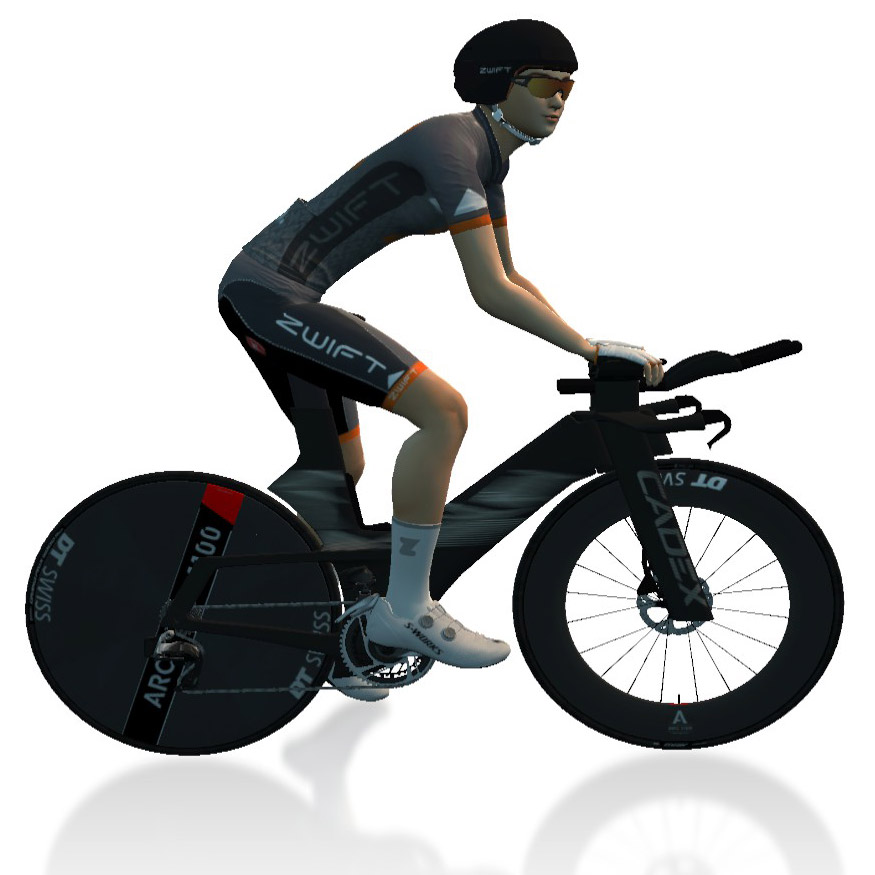
If you don’t have access to this setup, check out “Fastest TT Bike Frames and Wheels at Each Zwift Level” and use the fastest TT frame and wheelset available at your level.
One more note on bike choice: upgrading your frame makes a big difference. A fully upgraded frame saves around 13 watts, or ~48 seconds per hour of riding. Read all about the performance improvements you receive from upgrades here.
More Route Recons
Many recon rides are planned each week on the upcoming ZRL route. If you’re unfamiliar with this course, jump into an event and familiarize yourself with the route! Find a list of upcoming ZRL recon rides at zwift.com/events/tag/zrlrecon.
Additionally, riders in the Zwift community do a great job every week creating recon videos that preview the courses and offer tips to help you perform your best on the day. I’ll add recons below as I find them, but please comment if you find a useful one that isn’t yet listed!
TTTips
Successful team time trialing on Zwift requires a challenging combination of physical strength, proper pacing, and Zwift minutiae like picking the fastest bike, understanding drafting in a TTT context, and getting your frame fully upgraded.
Mixed courses like this week give valuable seconds to “balanced” teams with two strengths:
- Big pure-power riders who can keep their watts high on the front while staying in single-file formation to conserve in the draft behind
- A set of four riders who have a high W/kg in that 4-6 minute VO2max window, to deliver the final punch up the Petit KOM.
On a course like this week’s, I recommend all team members set their Trainer Difficulty to the same value, and make sure that value is at least 75%, so you feel slight gradient changes and increase power to compensate. This will help you automatically punch on the uphills, keeping your overall speed high.
Your goal in a ZRL TTT is to get four riders across the line in the shortest time possible. That means every team’s pace plan will differ based on each rider’s abilities. I highly recommend having an experienced DS on Discord directing your team, especially if your team contains some inexperienced TTT riders.
Lastly, if you want to go further down the TTT rabbit hole, I highly recommend Dave Edmond’s Zwift TTT Calculator tool.
Questions or Comments?
Share below!

 wpDiscuz