

Your body is kitted with a ticking time bomb, a developmental weakness in the masterlink of your neurological chain, its detonator set to go off anywhere, at any time. Lying dormant in the recesses of your brain, without any warning or clue of its presence, allowing no opportunity to prepare, plan, or process its arrival. The explosion signaled by a silent shockwave of fright, you tremble as you realize your basic physical abilities are being stripped from you.
It was December 22, 2020 at 8:58am.
The Day Began Like Any Other
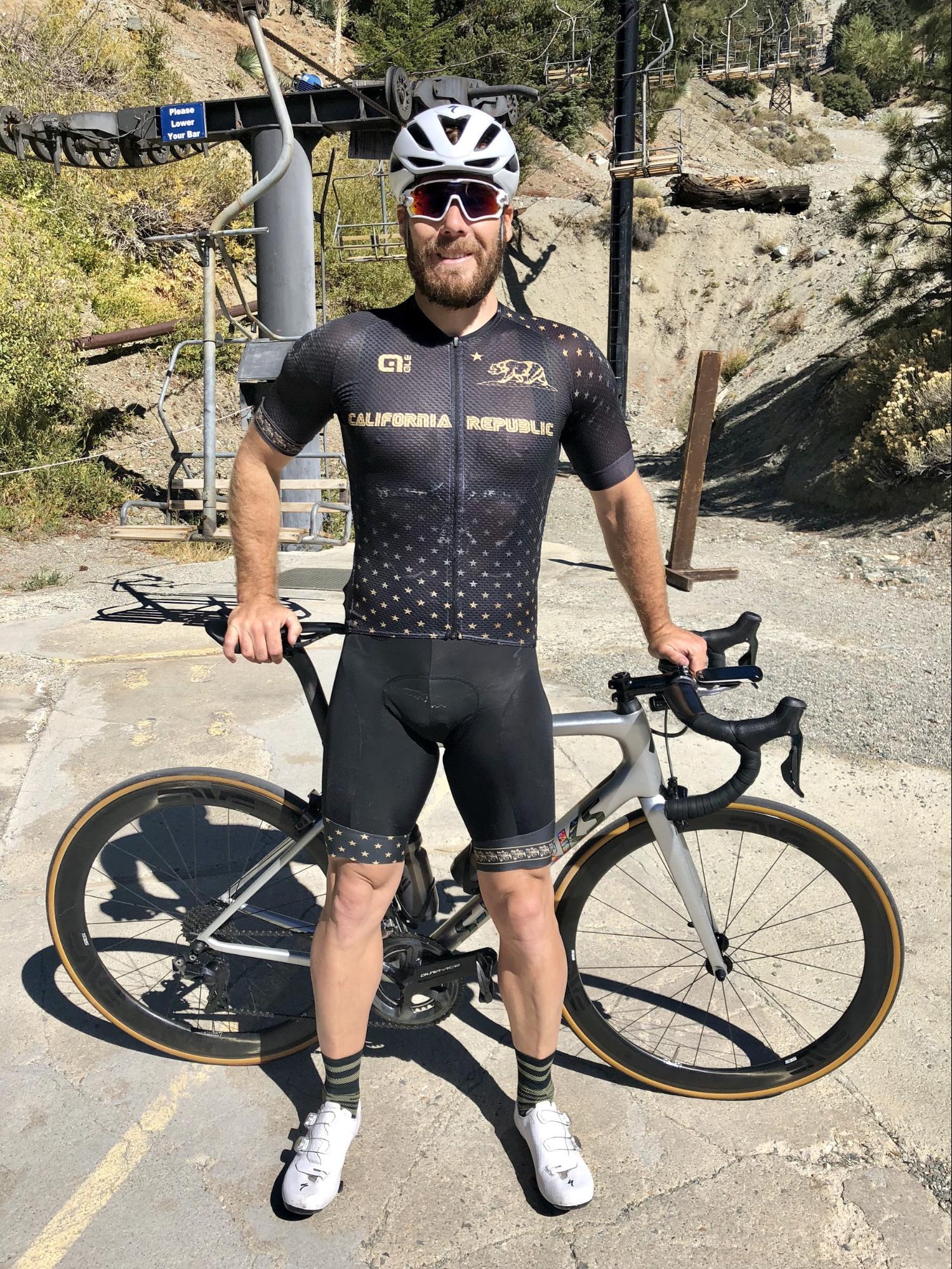
The day began like any other for 39-year-old Steve Curran. Stepping from the shower following his normal morning routine, he dismissed a minor slip by blaming it on the wet floor. Wrapped in a towel, he dried himself as he started towards the bedroom, but with each step his feet met the floor with less surety until both his legs collapsed and he lay unable to move with his arms cramped in pain.
“I looked at my watch at 0900,” the trauma having etched the detail in his throbbing head. He recalls thinking to himself, “In two minutes I have gone from feeling absolutely fine to paralyzed from the waist down.”
Steven’s wife of 8 years was in shock as she watched him flail around upon attempts to stand. He refused the assistance of the paramedics as he crawled to the stairs and slid himself down to meet the trolley, determined to get out of the house on his own, grasping at the last bit of control he still had left. Due to Covid restrictions, Steven’s petrified wife could only watch as the ambulance sped away from their home in Poole in Dorset, UK.
The Day Ended Like No Other
Shortly after arriving at a neuro specialist hospital in Southampton, Steven received a myriad of diagnostic tests, including a CT, CT angio, MRI, and an MRI angio. Then a cerebral angio (a surgical procedure whereupon a camera is inserted via catheter pushed from the femoral artery to the brain while dye is injected to visualize the blood vessels) confirmed that Steven had experienced a hemorrhagic stroke, the result of an arteriovenous malformation (AVM).
An AVM is an abnormal tangle of blood vessels connecting arteries and veins in the brain which disrupts normal blood flow and oxygen circulation. The vessel walls become weak and rupture, causing bleeding into the brain, stroke, and brain damage. AVM cause is poorly understood, and may be genetic, hereditary, or congenital in nature. In Steven’s case, the malformation was in the portion of the brain which controlled the motor and sensory function of his right side.[efn_note]”Arteriovenous malformation – Symptoms and causes – Mayo Clinic.” 1 Jan. 2021, https://www.mayoclinic.org/diseases-conditions/arteriovenous-malformation/symptoms-causes/syc-20350544. Accessed 22 Mar. 2021.[/efn_note]
A Holiday He Will Never Forget
For the next few days Steven was monitored to ensure the brain bleed remained stable while he lay sleepless, wondering, “Am I going to die, and if not will I ever walk again, let alone cycle?” Once stable, he was discharged on Christmas Eve and scheduled to undergo brain surgery on January 5th, 2021 to remove the damaged malformation. After allowing himself Christmas day to rest, he immediately began the journey to recovery on the 26th.
By that time, Steven had regained full movement of his left leg but remained unable to move his right from the knee down. He was given a series of exercises and advised to start at 20 and work his way up, but he saw little point in that and used 100 reps as a starting point. He also refused to use the assistive devices he was given to walk. In stubborn satisfaction Steven states, “I had a constant headache, didn’t sleep properly, and worried constantly, but pushed on with rehab and achieved my goal of 3 sets of 100 reps and balancing for 30 seconds on my right leg the day before surgery.”
The Shocking and Disappointing News
It had been determined that the AVM affecting Steven spanned the length of the main artery supplying oxygen to a large region of the brain. He was informed that the entire vessel would have to be removed in surgery. The surgeon detected Steven’s shocked disappointment on hearing the news and stated frankly, “Waking up unable to move your right side is better than dying.”
The choice wasn’t as clear-cut for Steven who tearfully responded, “I don’t know, actually, my life revolves around being active.” Steven spent the next hour preparing for the life-changing procedure by stroking his leg, one final effort to stimulate it to move and squeeze out the last drop of feeling he was soon to be without.
Surgery With a Smile

Steven awoke in recovery after the 9.5 hour surgery to see his surgeon, who smiled as he told his patient he was able to remove the AVM without sacrificing the main artery. The surgeon’s smile grew wider as he performed the initial post-surgical neuro tests and detected traces of movement in Steven’s right foot. “It only moved like a millimeter,” Steven gleefully recalls, “but I was elated and at that moment told myself that I will recover and ride my bike.” Steven was discharged 18 hours later.
The first morning home Steven walked down the stairs without help. He went for a half mile walk two days later, and three days after surgery noticed that he was able to do a calf raise. On the eighth day post-surgery, he awoke to the sense of movement in his toes and knew it was the day. “If I can flex my toes then I can clip into my pedals,” he recalls telling himself.
The First Zwift Ride Back
Steven describes the 13km in 31 minutes on Zwift as “the best and worst ride of my life.” A four-year Zwift subscriber (see Steven’s Strava profile) who predominantly utilized the Zwift platform (see Steven’s ZwiftPower profile) as a poor weather riding option prior to Covid, Steven gained a greater appreciation for Zwift when UK lockdowns were imposed in 2020. “I found it addicting completing the challenges and earning the badges and was on the trainer even on sunny days,” he says.
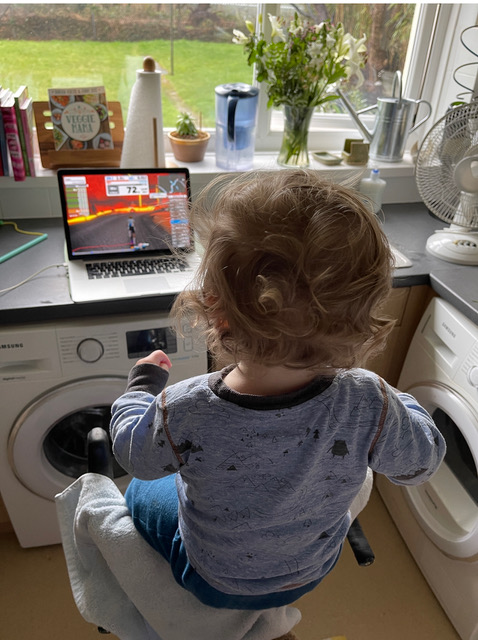
Steven’s appreciation for Zwift became immeasurable and its worth invaluable to his rehabilitation. “It would have been impossible to get on my bike on the road without movement in my leg and foot,” he says. Steven would clip his right shoe into the pedal prior to climbing onto the saddle, then with his wife’s help put his foot in and tighten the closure. “Zwift enabled me to focus purely on my leg and how it was feeling and moving,” without the stress, distractions, and dangers of training on the road, which Steven admits would have surely deterred him.
It Hasn’t Been Easy, but Zwift Helped Him Get His Nerve Back
Approximately 10 weeks after surgery Steven had full range of movement in his right leg, foot, and toes. While he felt that his right leg wasn’t ‘doing anything’ during the first few rides, Steven recalls, “I genuinely think the pedal stroke woke up the nerves and helped me relearn the pathways to get my foot moving again.”
Although the speed and degree of Steven’s recovery has been remarkable, it hasn’t been easy, mentally or physically. “It’s unbelievably hard looking at your leg and telling it to move and getting nothing,” he says when describing the trauma he experienced. (This also explains the importance of the treatment he receives for PTSD symptoms.) Steven credits the ease of accessibility to Zwift and the ability to ride in the nurturing comfort of his home with helping him to cope.
Healing by Giving Back
Steven’s next goal is to do his part to raise awareness of AVM and help others in his situation to cope. He is planning a century ride to support the life-saving neuro ward of Southampton Hospital (if interested in donating please designate Neuro and mention Steven and this article). “I will leave home at 0858 22 Dec, the moment my life changed, and ride to the hospital and back to symbolize my journey.”
A journey which would have been difficult to start, and which continues strongly today, with appreciation to Zwift. Ride ON Steven!
Steven’s Goals for the Future
- Raise £100,000 for the neuro ward that looked after me by turning my hospital 100 miler into an annual event.
- Live to see my 100th birthday and don’t waste the second chance I’ve been given.
- Teach my son how to ride a bike, surf, ski, and play football.
- Never ride in the back of an ambulance again.
- Raise awareness for AVM and other rare brain conditions.
- Complete all the route badges and challenges on Zwift (including getting the Lightweight wheels) before autumn.


Absolutely amazing story. Great stuff. Bravo mate and RIDE ON. 👍👌👍🤗🤗
Thank you 🤙🏽🤙🏽🤙🏽
So proud at what you achieved in such a short time, and will be forever grateful to all the staff at Southampton hospital. I will forever ride with you Steve!!
Awesome story, ride on!
I will 🤙🏽🤙🏽🤙🏽
What an inspiring story, about something that could happen to any of us. Thanks for sharing.
Good to get the word out, I had never heard of an AVM before. Took a brain haemorrhage to know about it!
What an inspiring man – good luck with your recovery and hope to be able to give you a ride-on in Zwift!
Thanks, I’ll keep my eyes peeled for you 🧐
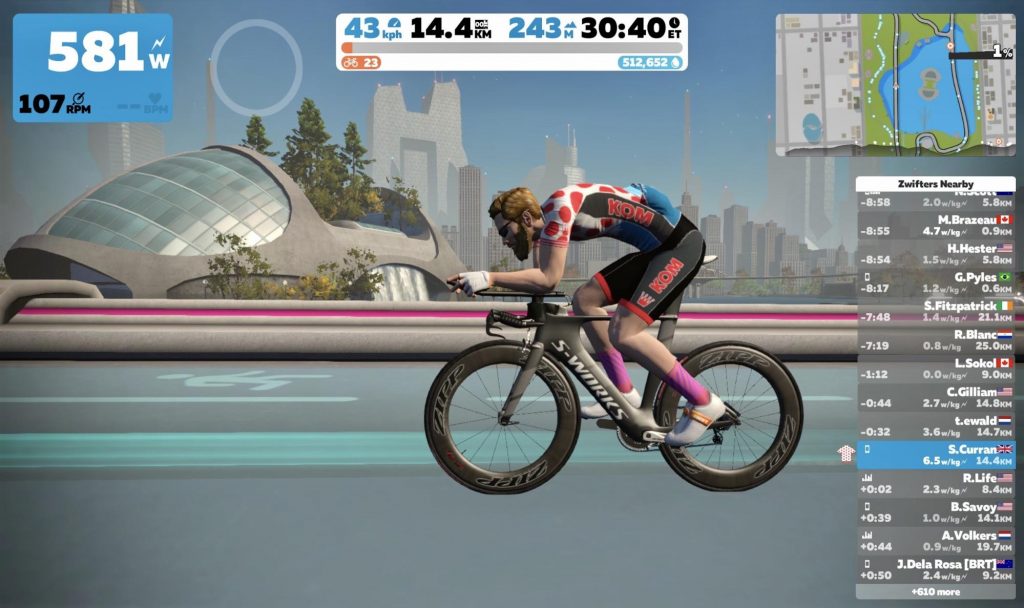
Having close ones affected by AVM was terrible, meaning I’ve tried to be next of kin, but luckily, I haven’t experienced it. So good to hear that you recovered and someone needs to say this: You’re pushing 581W (6.5W/kg). If I can average half of that on my next time trial, I will probably be dancing in the street afterwards.
Guess you have a target to train for now ..290w on a TT by the end of the year 😜
Amazing story and so pleased to hear you are on the road to healing. Work in the NHS and spent several years in Southampton on my travels. All crossed for your future.
Thank you for your dedication and work.
Remarkable story of resilience and determination to recover from such an episode in your life. Good luck to you and the family !
Thank you John.
thanks for sharing your story. All the very best for the future.
Thank you David. It’s good to get the word about AVM spread a little. Also give me something to look back on.
Truly an honor highlighting the inspirational life of this incredible Man! Humbled with the opportunity Steven!
Steve,
this story really resonated with me on a number of levels. 4 weeks ago I was struck by an automobile while out on a training ride and had my neck broken in 2 places. While I’ve struggled with nerve pain in my right side I was incredibly fortunate to have no paralysis, but would have to spend a minimum of 10 weeks in a neck brace. After training hard through the winter on Zwift and eagerly looking forward to the spring weather this was horrible news. For the last four weeks I’ve been using the zwift platform to stay active and keep riding when I would otherwise be unable to and similarly have been knocking out route badges (even got the lightweights during an everesting effort this past wednesday).
It’s humbling to see that there are others like myself pedaling along on the platform right now who are struggling with potentially life altering injuries only recently in the rears who would be otherwise unable to go out on the roads. Having my spouse and son close by who can know I’m safe while riding is a comfort that can’t be underated.
best of luck, hope you get those wheels soon, ive sent a request to follow
Thanks for the follow, I’ll follow back. Good luck on your journey, you’ll make it no question.
Amazing! I understand the recovery procedure as I was a stroke survival and get into zwift too
Awesome, I hope you are doing well.
Amazing story of resilience and persistence. Good luck and ride on!
I’m currently recovering from spinal avm surgery and it’s awful! Fair play to Steven for being back on a bike so soon I’ve got a long long way before I’m that fit!
Keep fighting, stay determined and work hard Will and you’ll get there quicker than you think.
Wow. So inspirational! Such fierce resilience and determination. Well done Steven.
Congrats on recovering brother!!!