

Zwift is constantly evolving to be better, faster, more expansive, and more fun. But better also must mean safer.
A recent monologue on Saturday Night Live by Shane Gillis stopped a lot of us cold: a misogynistic ‘joke’ that he “didn’t know women just dress like whores now” at the gym.
He said it as a punchline. For many women, it landed as something depressingly familiar. The idea that what a woman wears, how she shows up to train, or simply her Zwift or Strava profile image is an invitation for public sexual commentary. That a space that should be about effort, fitness, and fun becomes about being judged, sexualised, and belittled.
Zwift Is Incredible, But Not Immune
Consensual, cheeky chatter is one thing. But talk privately to almost any woman who rides Zwift regularly and you’ll find they either know someone who has been impacted, or have been the recipient themselves of repetitive, direct, unwanted in-game messages.
Comments about their appearance, insinuations about what they are wearing on screen or while riding, or how sweaty they might be. Rude, sexualised chat in a public group ride that is meant to be for everyone, including minors. Not to mention persistent DMs after a polite “no thanks.”
Most are so embarrassed, or so determined not to make a fuss, that they don’t report it. They change their username to something generic, make themselves invisible to avoid being targeted, or simply log off. That’s not enjoyment – it’s endurance.
But we know what happens when just one brave woman does speak up. More stories come out of the woodwork. The same names come up again. What felt like a one-off personal awkwardness turns out to be a pattern.
This isn’t about being overly sensitive. It’s about a training platform remaining what it was built to be — a place to suffer, to laugh, to chase a PB. Not to be harassed.
Shifting the Culture
The sisterhood is strong on Zwift, with many understanding that you don’t need to start a fight — you just need to break the silence that lets it continue. And there are a lot of good men on Zwift who also get this.
When someone makes a rude or suggestive comment in public chat, they don’t laugh along; they call it out. That matters hugely. It shows that normalizing this behavior is not okay, and that allyship is part of the ride. If we leave it to women alone to police this, we put the burden on the people already being targeted.
Making Zwift Safer
So what can we do to make Zwifting safer and more enjoyable? Zwift already has tools, and we can all use them better:
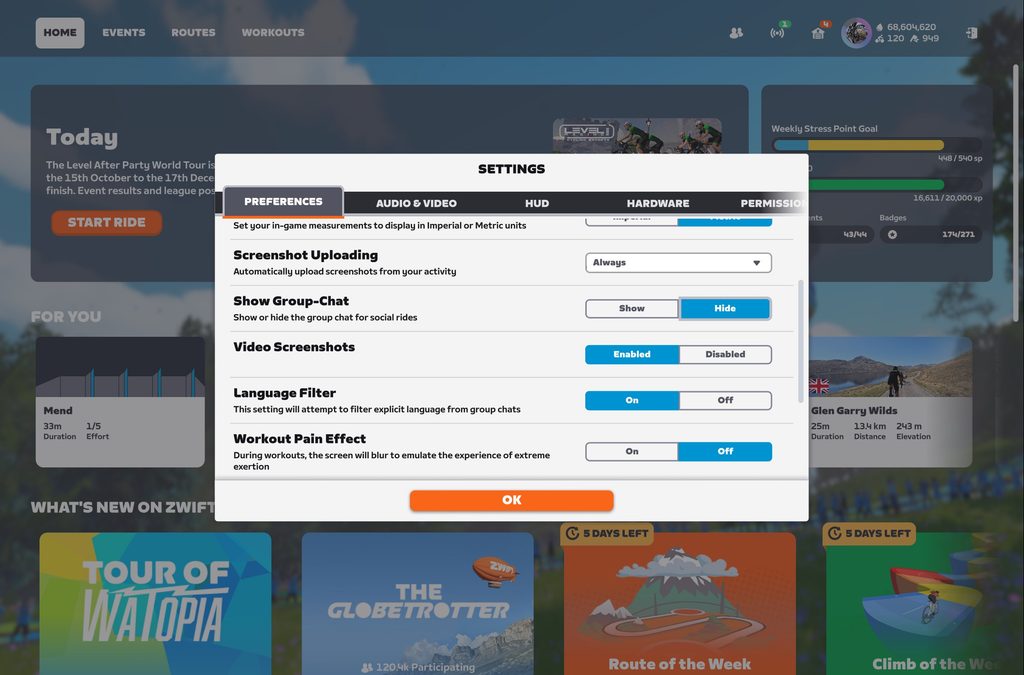
- In Zwift Settings, for example, enable the language filter to filter explicit words and hide group chats.
- In the Companion app, find the unwanted Zwifter, click the three dots at the top and choose from Remove Follower, Report User, and Block User options.
- If you’re linked to Strava, review your personal info – from location to privacy – to prevent this being a breadcrumb trail for the perpetrator.
Ride and club leaders: Set the tone at the start. A simple “This is a respectful, inclusive ride – zero tolerance for harassment” in your ride description helps. And act quickly if you see something in chat. Listen to your club members and escalate issues to Zwift HQ promptly.
Zwift HQ: Continue to make reporting easy, transparent, and trusted. Show that reports lead to action, while protecting the privacy of those who report. The link is: https://support.zwift.com/en_us/reporting-another-zwifter-Bk7_B0FNB
A non-threatening environment is not a “women’s issue”, it’s a community standard, and a safeguarding one.
So, let’s make sure the next time someone talks about what women wear to train in their pain cave or on Watopia, the joke doesn’t land — because our Zwift community has already moved on.

