Interview with Eric Min, Co-Founder and CEO of Zwift (Never Going Pro Podcast #5)
In this episode, Shayne, Ken, and Chris have the honor of discussing all things with with Eric Min. Topics include how Eric balances family and work life, how Zwift may get more people on bikes, the startling inspiration behind the naming of “Watopia”, and much more.
Show Transcript
Ken: Welcome to the Never Going Pro podcast by Dads Inside Riding Trainers, featuring GC Coaching. It’s a podcast about riding bikes and parenthood, and trying really, really hard at both. I am your host Ken “The Badger” Nowell, and with me is Shayne Gaffney, owner of GC Coaching.
Shayne: Hey everybody. How you doing?
Ken: And Chris Gorney, fellow DIRT teammate, passionate cyclist and outstanding dad.
Chris: How’s it going?
Ken: And with us, we are excited to announce our special guest. Welcome Eric Min, fellow dad and CEO of Zwift. Hello, Eric!
Eric: Hi, thanks for having me.
Ken: So where are you joining us from today?
Eric: I’m sitting in my car in New York, so I can keep the noise level to a minimum. I’ve got three kids in the house running around, so I thought I’d spare all that noise for you guys.
Ken: Oh, that is so awesome. The CEO of Zwift has to park in the driveway to do a podcast. I’m out here in my shed trying to keep the fan running at a quiet enough level not to disturb the podcast because it’s hot out here. So yeah, sounds like a Dad Inside Riding Trainers candidate for sure. Well Eric, each week we like to take a few minutes to catch up with everybody, and we’ll start off with Shayne. Shayne, you had a wedding you went to. You were cutting the rug.
Shayne: Yes, sir.
Ken: And you also celebrated your own anniversary.
Shayne: You got it, yeah. So we had a wedding two weeks ago now. Cut a little too much rug at the wedding, but everything went pretty good. And then yeah, it was our six year wedding anniversary, and our 15 year of kind of dating anniversary, if people still track that. She was my high school sweetheart and we married, so it’s pretty cool. Two kids later, and here we are, you know?
Ken: Fantastic.
Shayne: We’re good. Chris, how you doing man? I heard business is taking you from one end of the country to the other in the last 10 days. That sounds pretty crazy, man.
Chris: Yeah. I was texting you guys. It’s been Kansas City to LA, to Kansas City, to New York, and back home tomorrow. So, I forget what my family looks like, but I hope they still recognize me when I get home tomorrow. But it’s good, I’m doing good. Still nursing a pinched nerve in my neck from riding that bike, that ill-fitted Pinarello that we talked about.
Shayne: Uh-oh.
Chris: So keeping my doctor happy and paying for his kid’s college, but other than that I’m doing okay.
Ken: For me, I’ve been nursing an injury as well. Hurt my lower back and that’s been a little bit of a nag, and I’m just trying to do some stretching and some other stuff that I don’t do very often. Had a bike race that was scheduled for Sunday and that got canceled, unfortunately. But it’s always kind of a relief to get a cancellation, so I just ended up doing some yard work that day instead. And so Eric have you had a pretty busy week?
Eric: Yeah, so I was in Long Beach actually all of last week. Flew in late Friday night. My oldest son had his SATs so I had to get up at like 5:30 in the morning the next day. Got that out of the way, and then did an outdoor ride yesterday. It was fantastic, because the weather was just amazing, so-
Ken: In Long Beach?
Eric: No this is in… yeah Long Beach for a week and then I’m in New York now. And did an awesome ride outdoors actually in Connecticut with a bunch of guys. They actually called the ride “In Real Life Watopia Slam”. It’s a Slam group-
Ken: Really?
Eric: Out of Connecticut. They’re all Zwifters, but they created a nice route for me. They said it was flat, but I swear it was not flat.
Ken: So I’m just curious, where did the name Watopia come from? Is that your brain child?
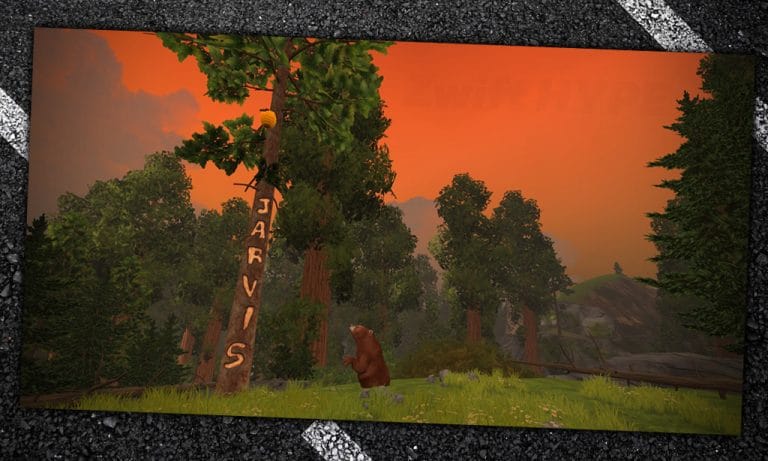
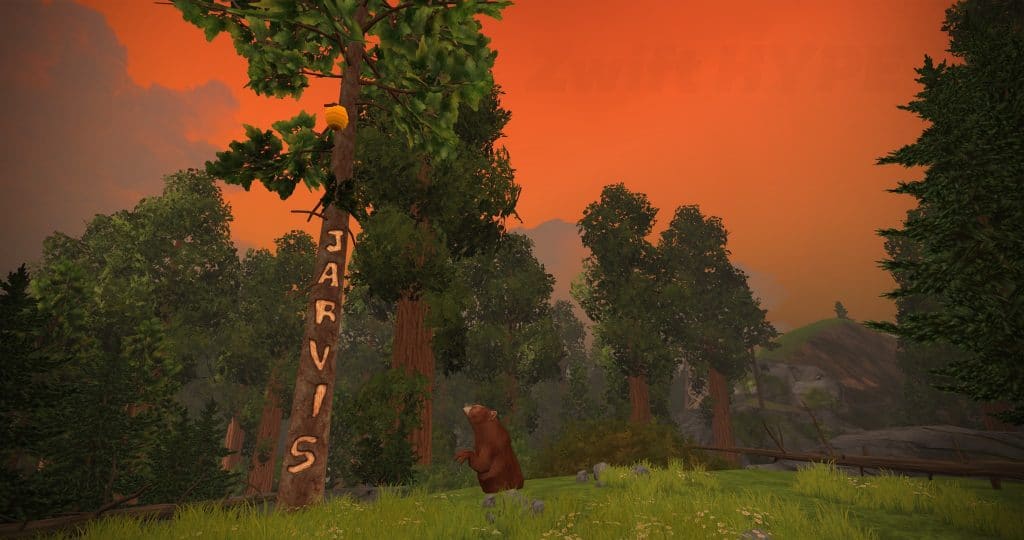
Eric: No, actually it wasn’t. It was the game team came up with the idea together. We had started, we had set the company with an island called Jarvis. And Jarvis happens to be a real name, right? A real island, South Pacific. But the gaming team, they’re pretty creative. And they wanted to come out with a name that we could really own, and they had Utopia, Watopia, Watts, that’s how it was formed pretty early on. And we created a pretty expansive island that extends into the ocean if you noticed.
Chris: Can I be honest? Am I just getting this? Is it Watopia as in watts? Like a bike-
Eric: Yes. Yes.
Chris: Wow. I am, I’m here now guys. I’m on board.
Shayne: Well you’re a little late to the party.
Chris: Okay. I’m here, I’m awake, I’m on board.
Ken: All right, cool. Well Eric we’re going to loosen you up a little bit, Shayne’s got some rapid fire questions for you, and then we’re going to dig in.
Eric: Okay.
Shayne: All right. So KOM or Sprint jersey?
Eric: Oh, Sprints. Every time.
Shayne: Ooh. Every time.
Ken: Ooh, we got a Sprinter on our hands.
Shayne: I’m a Dots man myself, but it’s okay.
Shayne: Lightweight meilenstein or disc wheel?
Eric: Disc wheel, because I can’t ride those in the real world.
Chris: You could, but you get blown –
Eric: And they’re pretty fast in the game.
Shayne: They are very fast in the game.
Shayne: All right. Watopia or a guest course?
Eric: Oh, it’s always Watopia. The guest courses are always an acquisition marketing tool, but everyone loves Watopia.
Shayne: Oh, me too.
Ken: Did you guys know that Watopia is like watts? It’s like a utopia for watts?
Shayne: I just found that out, actually, that’s amazing. That’s so weird.
Chris: Yeah, thanks for sharing.
Shayne: All right. Safety bike or tron bike?
Eric: Oh, it’s going to be tron bike. It took me over a year to earn that thing.
Ken: Oh, you had to earn it too? I would’ve just told them to give it to me.
Eric: The team does not give me anything for free. I have to earn it for real. I get respect in return, though.
Ken: Okay, gotcha.
Shayne: What’s your favorite Zwift training plan?
Eric: You know, I like FTP Builder because it doesn’t matter what condition you’re in. It’s just going to keep kicking your ass, every time.
Shayne: I love it man, I love it. That’s it. Thank you for that.
Chris: Shayne, is that one of yours?
Shayne: It is not. The Build Me Up is mine, but it’s okay. I still love him.
Ken: Oh man, that’s a awkward moment, that he picked somebody else’s training plan, not yours.
Shayne: I still love him, it’s okay. Don’t worry about it.
Ken: All right, well. Let’s get into some questions, some little long-form stuff and get to know you a little bit better, both as a cyclist and as a dad just trying to make it all work. I know Chris has got one he wants to start off with.
Chris: See, now that I know that your son just took the SAT, I feel like had we known that, we could have included some SAT questions and made this a lot more fun. Math questions, literature questions.
Chris: Okay, no, for real Eric, thank you. I know we’ve been emailing back and forth for a couple weeks. We’re really grateful for you giving us some of your time. At Never Going Pro, we kind of presume our listeners are both parents and Zwift users. So we all love what you’ve created, we all love Zwift, it helps us be great parents and not sacrifice fitness. That’s kind of why we’re all on board with this. It’s created community for us, which you and I were talking before here and you said that you guys were kind of surprised that the community just popped up out of nowhere. So we’ll probably ask you about that here in a second because that’s super interesting.
Chris: We know everyone wants to talk to you about Zwift, but we actually want to start talking about you as a dad. A working guy who started something who’s still trying to be a dad of three kids and be part of a family, so tell us. How do you balance this? What’s your big fight right now? What’s it like to be a super busy dad and still stay on the bike?
Eric: It’s tough because I have to travel so much. I live in London and our headquarters is Long Beach so I’m out there every two to three weeks. My usual schedule is leave first thing Monday morning, come back by Friday afternoon. Every other week, nearly, I’m gone, so it’s tough on my wife to have to take care of three teenage – even though they are teenage kids. But I make sure that I am home on the weekends and I make sure that I don’t do any long rides on the weekends. This is where Zwift comes in. I don’t have that pressure of having to ride outdoors, the kind of pressure we all used to experience when the only place you really considered riding was outdoors. I’m free of that. That was one of the reasons why we decided to start this, because it was just, all of us who are cyclists are just very short on outdoor riding and this was just a way to make that part, indoor riding, something that we can all look forward to.
Eric: Interestingly enough, all the traveling I do, the balancing I have to do with family, I’m probably in one of the best shape in the last ten years. The proof of that was I guess it was yesterday, did a nearly 70-mile ride and I had no problem keeping up with the fastest guys. These guys were 25 years younger than me. So that’s always good evidence that something like Zwift, or anything that you do regularly, integrated into your daily lives can really have an impact both physically and mentally.
Eric: That was long-winded, sorry about that.
Shayne: No, it’s great. I’ve seen that too, just from a coaching perspective. It’s revolutionized what I can do with my athletes. I can make a 6-10 hour a week availability and turn that athlete into somebody that can ride 70 miles fairly easily, even though they might have only ridden for 90 minutes tops the past four months. Because the quality on Zwift and everything about it is just so good relative to what you used to do, was stare at a wall or stare at your Garmin for two hours, just watching your watts go up and down. It’s amazing the differences that indoor training has made over the past couple years, obviously as you know.
Eric: You know, I only ride one hour and I can do long endurance rides with one hour rides. I do one hour rides five days a week. It’s amazing. It’s all about fuel management after that when you go out and do endurance efforts.
Chris: You know Eric, I have a two-year-old daughter and the month she was born I bought a smart trainer and got signed up on Zwift.
Ken: I should have done that.
Chris: I know. Because she was born in the winter, and the only time I could ride essentially, I’d put her down for the night and my wife would usually go to bed pretty early and I would get on the trainer. What’s funny is, I totally understand what you’re talking about because I am now busier than I’ve ever been and exponentially stronger than I have ever been. So much so that the group of guys I ride with curse Zwift regularly because none of them get on Zwift, I’m there doing workouts like the FTP plan or the build, I’m doing that. I get onto the road with them and just want to burn it, so they kind of hate you and everything you stand for because it makes them suffer.
Eric: Yeah, well, I hear stories about the spring races getting faster and faster. People don’t want to admit, some of them don’t want to admit that they’ve been on Zwift all winter. We call them closet Zwifters in New York.
Ken: I want to share a little story. When I first moved into my house, before I got my shed, I had a traditional trainer and a power meter. In the winter, I’d have my baby monitor sitting on the hood of my wife’s car with my iPad on the hood of my wife’s car, and I’m watching Global Cycling Network YouTube videos and looking at my power meter. This is the wintertime in full winter kit and it was awful. Maybe a couple years after that, two, three years after that, I had been putting off trying Zwift because I didn’t think my inexpensive laptop could take it. But I plugged in a cheap ANT+ dongle and it worked perfectly, and it changed everything.
Eric: That’s great. That’s awesome. I’ll tell you another story. We support this training series called the El Dorado Crit in Long Beach. It’s one of the oldest crit races, training races, in the U.S. It’s been going on for about 40 years now. They needed a little bit of support so we decided to go in and support them the last six weeks. So I actually went to do the race on Tuesday. It’s my first race in five years. Admittedly, I was a competitive junior when I was a kid. The racing blood is still in me. For some reason, we’re four laps to go, there’s a breakaway, I get away with this with a few other guys. For some reason, I thought I could actually win the race. This is without any racing for five years. And it just goes to show. I thought I was going to win, I got second in this sprint, but it just goes to show the general fitness you get from Zwift. Literally, that was the last race I did, five years ago.
Chris: Incredible. That is incredible.
Eric: Particularly, if you were an ex-racer, Zwift can get you back into shape really fast. Really, really fast because you have the years of experience. The one thing that Zwift can’t teach you is all the race craft that you get only from racing, the bike-handling skills. And I don’t know how to combat that because that’s also the fun part and distinguishes a good racer from just the strong rider. But it is what it is. I always thought, if we could get Zwift to be 85% of what outdoor cycling is, then that’s a home run. So we’re not trying to simulate outdoor riding, we’re trying to emulate. In many cases we’re trying to make it different, and it some cases even better.
Ken: Thanks for sharing your input on that. I found a similar situation last year where I’d always been a mid-pack mountain bike racer, and I jumped in my first mass-start race of the season last year, and I was in front and I was like, I’m doing something wrong. I’m over-pacing it, I’m over-clocking it, I’m gonna blow. And I then never saw anybody else again and I took my first win. That was the first winter I had been on Zwift. It’s just like, whoa, you know? It’s just something that the mountain bike community, they’re starting to get on board with it, but I think that they maybe haven’t had the same adoption rate as the road bike community.
Eric: Yeah, it’s funny you should say that. It’s true. We have not done any marketing to off-road community. And that is probably half the cycling community out there, and certainly the faster-growing segment within cycling. If you think about Zwift, what is the difference between cycling and triathlon? It’s all the messaging and the content, and of course assets in the game, tri assets versus road cycling assets. For us, we of course need to go after that larger segment that we haven’t been speaking to at all. That’s our plan, is to speak to the mountain bikers and the off-roaders and the cyclo-cross community, so expect to see more of that coming this winter.
Ken: Oh, wow.
Shayne: That’s awesome.
Eric: Yeah, and I think even in the game you’ll see assets and you’ll see perhaps things that just, I think off-roaders would identify with. Not just tarmac, for example.
Ken: Right. Well, you know, I do have kind of a personal question for you. Before this, I was a crossfit instructor, and my wife and I ran a gym for a number of years. One thing that I found was when I was in charge of running this business, I would come in and people would leave their barbells laying out, their plates on the floor, chalk everywhere, or they’re doing things that are unsafe. I had a hard time relaxing and enjoying when I just went in for my own workout. I always felt like I was on, I never felt like I was off work even when I was trying to take care of my needs for exercise. When you’re on Zwift, is that ever a problem? Are you ever not able to disengage from work and you’re always looking at things from the eye of a CEO and what could be different and what could be changed, or are you still enjoying it?
Eric: It’s a good question. I’ve told John Mayfield, my co-founder, I will let him know when I get tired of Zwift.
Ken: Okay.
Eric: I’ve been at it for five years and it still amazes me, how engaging it is and how motivating it is, how much I look forward to the work. Because when I tune into Zwift there’s so many things I could do, and there are things that we’re already thinking about in the future, how we could even bring more content to the fore and just give you the choices that you would see for example, from Netflix. What is that for Zwift? On-demand, in real time, whether it’s competitive to social, we need to make sure that you can find all that content in a much more intelligent way, the way Spotify serves me content or Netflix serves me content. So there’s a lot more we can do with the platform, with Zwift, to make it even more engaging.
Ken: That sounds great. And I know Shayne, you’ve got some questions for Eric.
Shayne: Yeah, kind of similar to where Chris was going. For me, my setup is in my office so if I have a spare hour I can just hop on the bike and be going on a Zwift workout or a group event very quickly. How does your setup look? Is it in your office? Is it a traveling setup? What does your usual setup look like?
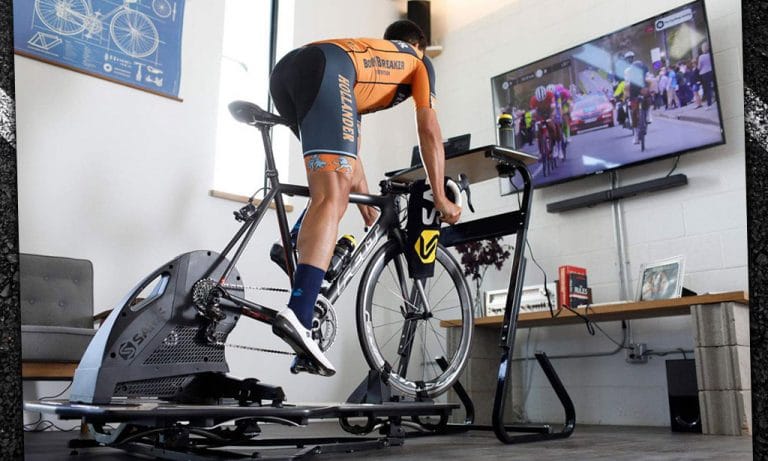
Eric: I have a setup at home. I have the luxury of having a treadmill, and my bike with a smart trainer and then a smart bike, I’ve got a Wattbike Atom. And this way, any member of my family can join me as I work out. So that’s a great setup, it’s in the basement, I can get there anytime I want. I usually do my workouts in the morning, and then I’ve got pretty big screens in front, and this is the perfect setup. But, I have a nice setup in New York and then of course, in each of our offices we have what we call labs. They’re effectively gyms. They’re set up pretty nicely and we encourage certainly everyone to work out. The sessions are pretty amazing, and to answer the question from before, when I get on Zwift I am another customer, just like you guys. I’m happy about some things and when I’m unhappy about what I see and areas of improvement, I’m pretty vocal internally about making sure that those things are addressed, until they tell me all the other important things that they have to do first.
Eric: This is typical of a software company where they make you choose what’s more important.
Chris: I would like to say though Eric, one thing I never want you to fix is the glitch, I’ve said this before on this podcast, when all of a sudden someone will just pop out of a mountain or a bike will just [crosstalk 00:20:43]. It just makes me laugh every time I’m riding, because I’m just wondering what is that person thinking? Like, they’re just lost and I love it. Whatever that is, don’t fix it. I think it’s perfect.
Eric: You know, I’m not so sure the person that’s actually in the air is seeing what you’re seeing. Just so you know, that kind of, of course it’s a bug, at the end of the day it’s a bug, but what happens often is that you’ve got someone who’s got an outdated version of the app and it doesn’t sync up with the current version. That’s often the culprit for that. Because on iOS, you have to manually update in some cases. Whereas on PC and Mac, we kind of force that.
Ken: Are your kids into riding?
Eric: So my kids. I have to say that my kids, I’ve taken them on bike trips in the past, they are just buried in school work right now. My oldest son has just finished his SATs and now he has to start thinking about college. He does a sport that requires the least amount of time and it turns out to be ping pong at school. But my second and my youngest, they’re fencers. My youngest is actually nationally competitive and she’ll use Zwift to stay fit. So she’ll do one-hour rides from time to time just to keep herself fit when she’s not training for fencing.
Shayne: That’s really cool.
Eric: Yeah, yeah. There was a time when I thought, how can we get them on a program? But the truth is that they have far less time to play. When I was a kid, I used to play quite a bit. There was an interesting article in the New York Times a couple weeks ago about how children’s behavior and the way they socialize with one another have changed, and the article pointed to the fact that parents don’t let their kids out of their sight like they used to when I was a kid. My parents would just say, “Just come home before dinner.” I would never say that to my kids now, right? At this point, they stay home, they probably end up playing video games or doing their homework, and they have to connect with their friends on social media. These are all things that are replacing what used to happen in the parks or in the neighborhoods. Kids don’t ride bikes anymore. This is an area that I’m most concerned about, and one of the reasons why we give away Zwift to kids, because we want to encourage kids to be active at home with parental oversight, right?
Ken: Well, one of the things that I’m sure has come on your radar is NICA, National Interscholastic Cycling Association. I started as a NICA coach with a high school team this year, and so we’re starting to see… our motto, or our mission, is “more kids on bikes.” It’s starting to work, but the amount of things that compete for a teenager’s time are unbelievable. Everything from video games to school to girls to sports, it’s a lot.
Eric: No, absolutely. It’s not limited to cycling. I mean, it’s I think sports across the board. It’s not just video games, it starts with the parents not feeling safe about letting their kids out of their sight. And then because of that, video games fills a vacuum and so does social media. And I don’t know what the consequences of that is in 20 years time, right? I’ve no idea. But it’s going to be different from today.
Ken: Yeah, it’s an experiment for sure. And one we’re playing out every day.
Eric: Yeah.
Chris: As I hear you talk, Eric, I’m thinking I’ve always loved cycling. As a kid, we just had bikes and my parents would say exactly what you just said, like “hey come home before dinner.” And we would just go out into the neighborhood and ride our bikes for hours, build jumps, and as long as we stayed in the neighborhood we were fine. I’m sitting here thinking, I would never let my daughter do that.
Eric: As a nine-year-old, I used to roam the streets of the Bronx back in the ’80s. I mean, can you imagine any parent doing that? No freaking way.
Chris: Well, your kids are fencers, your kids are just walking around with swords. So I mean, they’d probably be okay.
Eric: But, getting back to NICA, that’s an interesting topic. There’s a part of Zwift that’s focused on CSR. One of that is programs like this El Dorado Criterion, we want to support the local community, how do we get inner-city kids into sports, and how do we integrate even the sport of esports, Zwift esports, into schools? I think NICA would obviously be the natural place to try to form that kind of collaboration. To try to get more kids into the sport and of course they’re going to extend into the track or the off-road or the road, but a great way to start could potentially be indoors.
Ken: I agree with that, and just speaking from experience I think one of the biggest challenges for the kids is the equipment and the things and just making it simple for them to get set up inside. It’s already hard enough, one of our missions is obviously, when you think of getting more kids on bikes there’s a lot of youth out there that it’s not an option to spend $1500 on a entry-level hardtail. So those are some of the things the league is working around. And they’re doing a good job, so it’s a lot of fun to see it unfold.
Eric: So what’s going to happen is, and this is before we announce anything formally, but there will be sanctioned national championships around the world this March. So coming up in six or seven months, sanctioned by the federations. We’re working hard to announce a partnership with the UCI to host the World Championships in September, a year from now, in Switzerland. So all of this will be announced in the next two or three weeks, but what we want to do is try to get more kids on the platform so that they can compete in these big events. You’re going to find talent and they will be picked up by federations or trade teams, but that’s our goal. Our goal is to have programs, invest in programs, where we can have a pipeline of more people coming into the sport.
Eric: Because if we don’t do anything, this is just bad news for the whole industry. How many ebikes to I need to buy? I only need one right, I don’t need five. The number of customers are declining every year. I’m hoping that with the support of the industry, whether it’s the state and of course Zwift, we can create a whole new pipeline, even if they start virtually and indoors.
Ken: What’s interesting is you say that, and you’re both in the States and the U.K. and back and forth. The U.K., particularly in the last ten years, has just ruled to a large degree, particularly the Tour de France. The U.S. has struggled for decades for talent development. I haven’t really thought about it until now, but Zwift, you guys have positioned a really, especially with video game culture and how pervasive that is, this could be an amazing boost to the potential of developing American talent in cycling, whether it’s in road cycling or mountain biking.
Eric: You can quote me on this, but in the next ten years, a Tour de France winner will have been found on Zwift.
Shayne: Yes! Love it.
Chris: Ken! Probably talking about you, Ken.
Ken: Hey, I’m there. If they have a 50+ Tour de France in ten years, I’m taking it.
Chris: I think you’re right, Eric. I think you’re 100% right.
Eric: I stopped at the World Championships. But we are vying for the 2024 Paris Olympics. We are vying the 2028 L.A. Olympics. That is the ten-year vision, is for us to at least achieve the L.A. Olympics, but I think we can achieve far more before that.
Chris: That’s amazing.
Ken: That is amazing. I mean, who would’ve ever thunk. I can see this synergy of these different elements of indoor training and also the viral explosion of the youth leagues is coming together to make our country a powerhouse of cycling. It’s about to explode in ways that I think that a lot of people that aren’t straddling into these different worlds of cycling, they don’t really understand. But it’s happening and it’s a lot of fun to be in the center of it.
Shayne: So Eric, just to summarize here, you guys are pushing really hard into youth leagues and development, getting kids on bikes and having fun, getting kids off couches. You guys are doing that. You guys are developing things to get mountain bike and gravel riders more engaged in the platform, that sounds exciting. You guys are vying for Olympics, you guys are partnering with UCI, I mean, dang, man.
Eric: And I’ve got my 85-year-old dad on Zwift every day.
Eric: I think the perfect example, and I’ve used this before in other interviews, which is you can have tennis at the highest level. But then you can have two people just playing tennis, right? How do you turn Zwift into something that’s highly competitive with a professional league, with amateur development, and allow people like you and I just to have fun Zwifting? That’s what we want Zwift to be. It’s all of those things.
Ken: Yeah, I definitely agree. You know Shayne is a trainer, so he has all kinds of certifications. I think he has a few questions for you about how you structure your, you said five hours a week?
Eric: Yeah, so I ride generally five, sometimes six. It’s one hour, that’s all I have time for. In one hour, you can do a lot of damage in one hour. But most of my riding is probably just right below threshold. I’m not training for anything in particular. In fact, I would say that I’m more of a fitness person than I am a bike racer. So managing weight and just having enough fitness where I feel like I can go out and do a three-hour group ride. That to me, I’m a 52-year-old. General fitness is probably more important for me than anything else. I suspect that there’s a pretty big cohort of our community where Zwift is really just about general fitness and wellness and weight loss. That’s sort of where I fall in.
Ken: The weight loss stories, we’ve seen you hanging out on the DIRT Facebook page a little bit. If you see some of the success stories of guys that have lost 10, 20, 40 pounds, there’s just so many of them.
Eric: That’s life-changing stuff. It’s great and it’s inspiring, because it’s not easy losing that kind of weight.
Shayne: I have a guy that’s lost over 100, believe it or not. 100 pounds in three years, just riding Zwift.
Chris: Wow.
Eric: That’s amazing.
Shayne: Pretty cool man, what you’re doing over there, for sure.
Chris: That brings up something we talked about earlier in the podcast, and Eric and I spoke before about. You mentioned that you guys didn’t really foresee the huge community aspect, like groups like DIRT popping up. To me, I thought you guys planned it, but you said it was kind of a happy surprise.
Eric: You know, I think it was probably a good idea that we didn’t have social media features set within the game. It went off-platform to places like Facebook, where if you were to a search, there are probably over 200 Facebook groups right now dedicated to all sorts of purpose, from kids to masters to racing to fighting depression. We could never have imagined that. Then of course, then there’s all the international aspect. The U.S. is only 30% of our overall business. We’re super international. We had no idea that was going to happen. I’d be lying to you if I said we did.
Chris: We’ll be sure to edit the podcast, say both that you won the crit that you raced, you didn’t second, and that you planned Zwift to fight depression, [inaudible 00:34:51] obesity, voter fraud.
Eric: It’s really interesting, if you look at virtual cycling, it’s been around since the late ’80s, early ’90s. People have been talking about virtual racing. There were a couple of other platforms that did a little bit of this. But what they didn’t have back then was social media, they didn’t have the mobile, they didn’t have internet or they didn’t have broadband penetration that we have today in the homes. So much has changed, they had the right idea but they were 25 years too early.
Ken: Yeah, I’d definitely agree with that. And one of the things that has kept me so engaged is once I discovered a way to engage with the Zwift community while I’m not on the platform, throughout the day on work, we have a really active Discord channel, the Facebook page, the Strava group, and it’s just this sort of motivational ecosystem that we’ve created for each other and it’s just been way more engaging that just being on Zwift alone. I think that’s been one of DIRT’s success stories, but also the Zwift success story.
Eric: Absolutely. It’s people that keep people accountable. Machines can’t do that.
Ken: Definitely.
Eric: So the community and the social accountability, these are all things that are highly motivating. Although it failed me today. I was so tired, I couldn’t get up. I got up two minutes before the start of my Zwift academy group training ride, and I just can’t do it. I can’t do it.
Chris: And you’ve got that social pressure, people are like “Oh, that’s Eric Min.” And then if you skip, they’re like “What the hell, Eric? Where you at, man?”
Eric: Yeah, when I commit to something I have to show up. I was doing a free ride this morning just because I was tired from yesterday’s ride, and then someone messaged me saying, “Hey, our group is about to go off in 20 minutes, can you join?” And I joined and it was fantastic. It was a recovery ride, and I think 160 people, the Ascenders recovery ride. Those guys are great. There’s so many good clubs out there. It’s amazing that these are just virtual clubs, right. And we haven’t even created the tools for clubs like yourselves.
Eric: One of the things that we want to do is curate all the tools that we create for our own content and make that open and available to the community. In many ways I think we’re holding back the growth of our community because we’re not giving you the tools to make it easier to organize yourself.
Eric: So I just gave you something big. That’s a big, big feature set for this coming winter.
Ken: Very cool. Mountain biking and team pages.
Chris: It seems like you guys are developing slowly, because everything you’re developing comes out really well and strong. I mean, it seems really-
Eric: I appreciate that. I really appreciate. Some of the things take a lot of time because we’re trying to build it in a way that’s scalable. And also, we have technical debt. I don’t know how many of you guys are software developers, but when you’re trying to do things rapidly you take shortcuts. These shortcuts amount to technical debt that you have to repay. So when we do work, we’re not only putting out new features or new maps, but we’re paying down the debt. And that’s why it feels like it’s going slower than it should. For us, it feels slow, but we know the heavy lifting that’s happening behind the scenes so that we can do things in a more scalable way in the future.
Ken: That sounds good. Well, Eric, we really wanted to say thank you for taking your time today. We’ve got one more question, which is: is there a question you have always wanted to ask Zwift users but haven’t? Now is the chance.
Eric: Yeah, I’ll tell you. We have a highly engaged community, and some people, for many Zwifters is what they’re looking for. For others, it’s not. And I just wonder, where do they go? Because if they’ve committed, they’ve got the smart trainer, they can’t possibly be going back to staring at a wall. I try to convince myself, it’s like me in the old days when I probably turned from Netflix several times and eventually I said okay, Netflix is my go-to content for on-demand video. And I’m hoping that is what’s happening because we’re trying to understand why people sometimes do leave, and trying to learn from that, but it’s hard to learn from that if they’re no longer part of the community.
Eric: To the extent when people feel like there’s something, that Zwift isn’t for them, we need to really understand that and try to address that, because I can’t imagine they’re going back to staring at the wall. That can’t be. Or watching YouTube. As a consumer myself, that’s not engaging, there’s no community there, but nevertheless it does happen to some people who try Zwift, and then they like it or at some point they move on to something else. And I want to understand better what’s going through their mind so that we can solve that problem.
Ken: All right, so Zwifters, there you have it. Those are some great questions for Eric. I just wanted to say to everybody, thank you for joining us this week, I know everyone has a busy schedule ahead of them. I know for me, my daughter starts kindergarten tomorrow, so I’m a little bit emotional right now. That’s a big deal.
Shayne: That’s awesome, man.
Eric: Wow, congrats.
Ken: Thank you very much. Anyway, for all of our listening audience, thanks for tuning in today and joining the Never Going Pro podcast. Ride on, and we will see you in Watopia.
About the Podcast
Never Going Pro is a new podcast about riding bikes, being parents… and trying super hard at both. Hosted by Shayne Gaffney, Ken Nowell, and Chris Gorney. See all episodes on Soundcloud. Also available on Sticher and iTunes.
Related Posts
Related Posts