How did you get into cycling? All started in 2016 when my journey through triathlon and teaching spinning classes at the gym led me to being a sucker for cycling.
How many years have you been racing on Zwift? 52 levels ago (HAHAHA)
Are you part of a Virtual team? A part of the all-fierce Wahoo Le Col!
What do you love most about racing? Seeing how far I can push myself. It’s ever-evolving and so rewarding.
What is your favourite style of race (e.g. points, scratch, iTT, TTT, Chase, duathlon)? Points race makes it spicy because I can break away solo and that makes it a TT too!
What is your favourite Zwift women’s race series? Current best race series is for sure the Iceni race series p/b Aeonian!
What is your most memorable racing experience, inside or outside or BOTH? Most memorable moment I’d say is just starting… and from there seeing my growth along the way.
What is your favourite food to eat post race? Post race food if I win is a burger… if I don’t then I usually eat regrets.
What advice would you give to a woman entering her first Zwift race? Best advice is to just be calm. It’s not always about the numbers so don’t let that scare you. It’s a tactical game, different to the outside world but in most cases very similar. Sit in the bunch, relax, follow the moves because trust me, the easier you make it for yourself, the more you enjoy it. The more you enjoy it the easier it is to smash your limits.
Any upcoming race are you looking forward to? Looking forward to possibly being in the World Series team and wrecking some races with my team!
Results-based categorization… it’s finally coming to Zwift!This weekend hosts some of the first races ever to use Zwift Racing Score for categorizing riders.
Along with scored events, we also picked some popular group rides and races…
It’s the final ride of the L’Etape du Tour series! Complete one lap of France’s Petit Boucle (62 km/38.5 miles, 430 m/1,411′) with friends. You’ll also unlock the virtual Santini L’Etape du Tour de France official event kit!
It’s also our 100th weekend of Tiny Races, so to celebrate we’re doing a throwback race and taking on the same four race courses that we started with in the very first Tiny Race events.
Looking for a long group outing? Join the USMeS Monthly Century Ride! This month they’re on Watopia’s Eastern Eight route, meaning you will cover a little over 3 laps during the 162km event.
This ride generally has two leader beacons. One will ride at a 2.5w/kg pace, and the other at ~3.0w/kg plus. Pro tip: check out the Discord channel for some voice chat, which can help pass the time on longer rides.
We choose each weekend’s Notable Events based on a variety of factors including:
Is the event unique/innovative in some way?
Are celebrities (pro riders, etc) attending/leading?
Are signup counts already high, meaning the event is extra-popular?
Does the ride include desirable unlocks or prizes?
Does the event appeal to ladies on Zwift? (We like to support this under-represented group!)
Is it for a good cause?
Is it just plain crazy (extra long races, world record attempts, etc)?
Is it a long-running, popular weekly event with a dedicated leader who deserves a shout out?
In the end, we want to call attention to events that are extra-special and therefore extra-appealing to Zwifters. If you think your event qualifies, comment below with a link/details and we may just include it in an upcoming post!
How the (Scored) Race Was Lost: Testing Zwift Racing Score on France’s R.G.V.
When I saw the news that Zwift was rolling out their new Racing Score metric in various test events, I knew I had to give it a go.
My first thought was to jump into one of the 5-category ZRacing events that were using Racing Score. The prospect was especially appealing because my initial “seed” score was 570, putting me right at the top of the middle category, which was for racers scored 400-575. Maybe I could find my way onto the podium!
But it wasn’t meant to be. Zwift reset the seed scores to fix a bug soon after launch, and mine went up to 588. Plus, schedule constraints put me into the race starting at 10:10am PDT, and this race was using Zwift’s experimental 10-category setup. In this scheme, there are actually two events – a “high” and a “low” – due to Zwift’s current (and silly) limitation of 5 categories per event. Each event has 5 categories, and my score put me in the lowest category of the “high” event, with riders between 550-600.
So I was still near the top of my category. On paper, at least.
The cool thing about results-based rankings, though, is that when done right, they reflect your race craft, not just your pure power numbers. Everyone was initially seeded based on their power numbers, but in theory, someone like myself with (*checks ZwiftPower*) 1141 races under their belt should have the smarts to outperform others who have the same physical capabilities but much less experience.
So how would I perform in my first-ever scored Zwift race? There was only one way to find out…
Warmup
I chewed two pieces of caffeine gum as I jumped into the Maria Robopacer group which had recently been relocated from Makuri Islands to France as part of Zwift’s big TdF July focus. After warming up a bit with Maria it was over to Coco to ramp up the effort a bit, put in a few harder pulls, and generally break the ice so my heart and legs wouldn’t be surprised by the race effort.
Then I headed to the pens for one lap of France’s R.G.V. route. We had 43 riders ready to go.
The Start
The start was rather tame, with nobody pushing hard from the line.
The attacks would come soon enough, though. One of my DIRT teammates (Captain Diogo) went early, moving to the front for a hard pull, ramping the group up from 40kph to 46.
Another one bites the dust.
The Middle
This pattern would repeat itself throughout the race. Someone would move to the front and push hard, others would chase, and our speed would ramp up to 46-48kph. Eventually everything would come back together, we’d catch our breath, and a few minutes later another attack would go.
The group wasn’t thinning much, though. This was a flat course, and as long as you stayed in the draft, you could stay in the group holding around 3.3 W/kg. Still, every attack dropped a few riders, which meant we had gone from 43 to 33 by the time we rode through the Pavé Sprint.
The biggest push (other than the finish) came, unsurprisingly, up the Aqueduc KOM Reverse. It’s really more of an uphill sprint than a climb, and while I’ve been dropped here before in mixed-category races (*shakes fist at A-cat*), I can usually hang with a group of B’s up and over this rise.
Hitting the Aqueduc KOM
The same was true today: I stayed well-positioned mid-pack, triggered my draft boost powerup, then recovered on the descent that followed. We went from 33 to 31 riders, and everyone settled in for the final push through Les Intestines to the line.
The Finish
Les Intestins are always a tough push at the end of a race: 3km of twisty, rolling road, followed by an all-out sprint! I stayed in the draft, steered as much as possible to shorten my lines, and generally tried to save my legs as much as possible for the final sprint.
With 500 meters to go the road flattened, the twisties ended, and 31 riders were tightly packed into the front group.
I triggered my draft boost as we turned right onto the main road and avatars got out of their saddles. Then I dug deep, pushing with all I had to the line. Riders just ahead took the corner wide, so I chose to stay in the draft on their wheels instead of cutting the corner with steering.
My legs struggled to hold high power, though. I crossed the line in 8th.
The in-game results screen (shown above) didn’t reference Racing Score in any way. But I could see my Racing Score result on the event’s page on zwift.com, as well as in the Companion app. Here’s are the zwift.com results:
My score heading into the race was 588. Finishing 8th earned me a score upgrade to 594. (It’s worth noting that this isn’t like ZwiftPower, where your ranking is derived from your 5 best results in the last 90 days. With Zwift Racing Score every race counts, and your score is calculated at the end of each race based on that race history.)
Checking the results on zwift.com, it appeared as though every single rider in my race got a Racing Score upgrade from their result. That is, they all had an up arrow beneath their result! I reached out to Zwift to ask how that could be possible, and it turns out… it’s not. The wrong arrow is showing some cases, so while some rider’s scores did decrease, it’s only showing up arrows for everyone on the web results. Companion app results show the arrows accurately.
One thing I did note when browsing results in Companion is how startlingly accurate Zwift’s seed scores seem to have predicted the results. In my race, in all 5 categories, there isn’t a mix of up and down arrows as you scroll down the list. Instead, all the upper finishers get up arrows, and all the lower ones got down arrows. This would only happen if people finished right around where their seed scores would have predicted them to finish.
(I did find one rider in the highest category who had an up arrow instead of a down. But just one rider.) Zwift says they’re checking into this, because they noticed the same pattern and think it’s a bit suspicious.
Takeaways
What was my actual experience in the race? It was good. It felt like I was pushing at a typical B-category pace, but it also felt different than a typical B race, because riders were putting in digs that forced us to chase. It was less of a boring, steady effort and more like several hard efforts with recovery in between. It felt (and I’m too lazy to do the homework to confirm this) like we had several riders with high FTPs but poor sprints who were trying to get away off the front, or at least stretch out the group to thin the herd before the final push. And that’s good, straight-up bike racing.
In the end, our starting group of 43 became a finishing pack of 31 sprinting for the win. That seems like a sensible level of attrition for a flat route like R.G.V.
One final takeaway: I forgot the draft powerup now lasts 40 seconds instead of 30. This change was made over a year ago, so I really should have it locked in by now. It’s a crucial mistake, because I could have triggered the powerup 10-15 seconds sooner and enjoyed its benefits heading into my sprint effort.
Your Thoughts
Have you tried a scored race yet? What do you think of Zwift’s new Racing Score? Share below!
Elite Announces Three New Indoor Products at Eurobike
The Eurobike show is in full swing in Frankfurt, and manufacturers are unveiling new products which will start shipping in the next few months. Today, Italy-based Elite has announced three new products: an update to their top-tier Justo smart trainer, an entirely new smart trainer model, and a new smart frame. Learn more below!
Justo 2 (Smart Trainer)
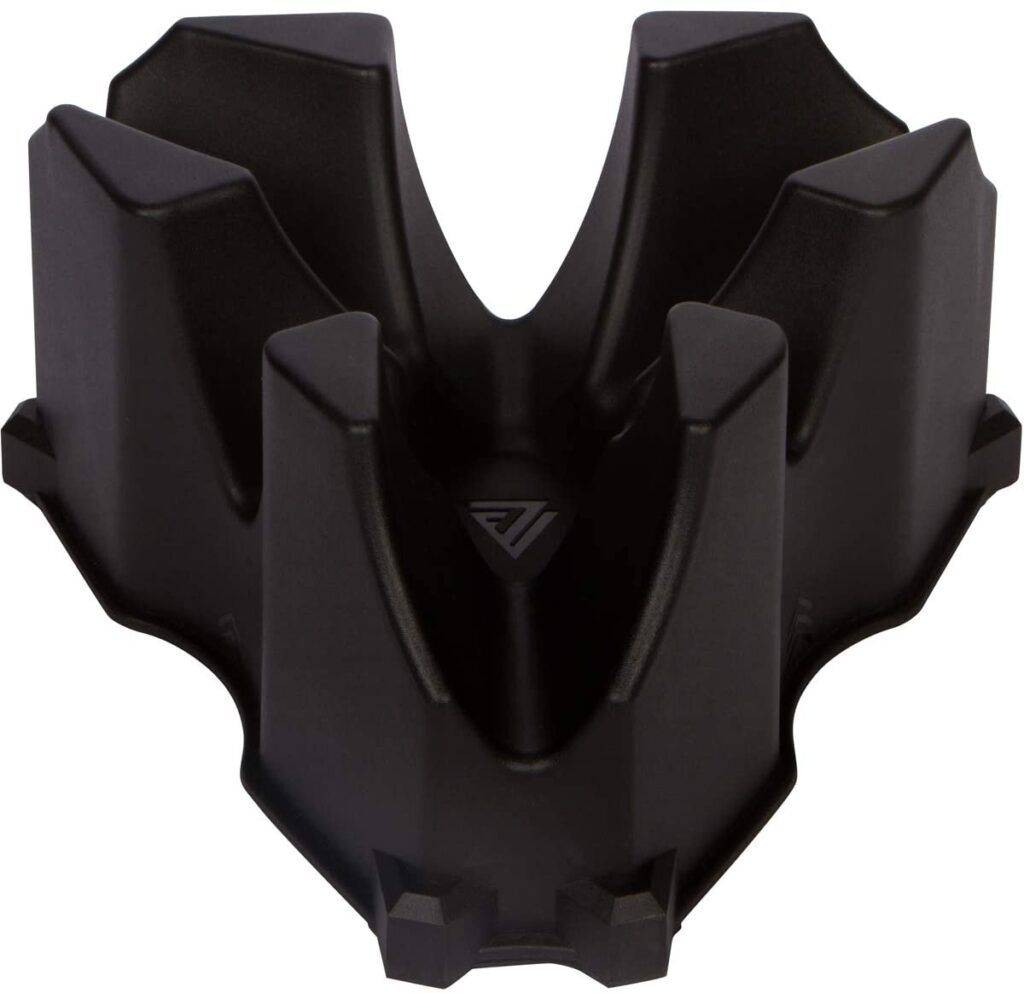
The Justo 2 is the next generation of Elite’s Justo, their top-end direct-drive smart trainer. Arriving two years after the original Justo, the Justo 2 improves on its predecessor in several ways:
Wi-Fi connectivity (2.4 GHz) with automatic firmware updates
Ships with a 12-speed cassette (original Justo did not include a cassette)
Flex Feet (two options to adjust trainer sway between 4.5° and 7°
Free 36-month subscription to Elite’s My E-Training app
Heavier flywheel (7.2kg vs Justo’s 6.2kg)
Along with these improvements, the Justo 2 sports the top-tier specs and features of the Justo, including:
Elite’s Avanti is a brand-new trainer that sports many of the top-tier features of the Justo 2, but at a lower price point. Key features and specs include:
Wi-Fi connectivity (2.4 GHz) with automatic firmware updates
Rizer (gradient simulation) and Aria (smart fan) compatibility
Resistance control via Shimano Di2
Power Accuracy: +/-1%
Dual-channel Bluetooth
Bluetooth bridging for heart rate monitors and cadence saves channels for Apple TV users
4kg flywheel
Black flex feet for 4.5° sway
No cassette included
Integrated drawer for adapters
Pedal analysis and other features via Elite’s My E-Training app
Comparing the Avanti’s specs to the Justo 2, you can see the Justo 2 has higher max power/gradient, improved power accuracy, a heavier flywheel, two sets of flex feet, and ships with a cassette. This makes the Avanti effectively the Justo 2’s little brother, priced 30% lower.
The Avanti retails for $849US/749€ and will be available in EU stores around the end of August, arriving one month later elsewhere.
This is an entirely new product category for Elite – a smart frame compatible with “all the most popular smart trainers on the market”. While Zwift appears to have beat Elite to the market with the Zwift Ride, the Square has some premium features the Ride lacks, including quieter belt drive, full customizable shifting/gearing, compatibility with more trainers, and adjustable crank lengths.
Features and specs include:
Silent, smooth operation via belt drive
Fully adjustable from sizes XS to XL:
Height, inclination, and fore-aft adjustment of the saddle
Height and fore-aft adjustment of the handlebar
Length of the horizontal tube
Length of the cranks
Adjustable crank length: 165 mm, 167.5 mm, 170 mm, 172.5 mm, 175 mm
Built-in Garmin mount
Integrated controls for Zwift steering and more
Fully customizable virtual shifting via standard shifting levers
Trainer compatibility: seamlessly integrating with “all the most popular smart trainers on the market”
Rizer (gradient simulation) and Aria (smart fan) compatibility
The Square retails for 1250€ (US price TBD) and will be available in EU stores in December, arriving one month later elsewhere.
Eurobike kicks off today in Frankfurt, and as usual, hardware manufacturers are announcing soon-to-be-released products at the show! The first we saw was from Australia-based JetBlack, who announced their new VICTORY trainer as a successor to the VOLT.
Looking at the trainer’s specs and pricing, this is a substantial evolution of JetBlack’s flagship trainer. While we don’t have a VICTORY in house to test (yet), JetBlack claims VICTORY is more accurate, more innovative, and more integrated with Zwift than the VOLT. It certainly boasts more features… at a significantly reduced price!
The VICTORY is priced affordably at $399 US, $749 AUD, €449, and £399. It’s also the first trainer to be publicly announced as “Zwift Ready” (more on that below).
JetBlack Founder and CEO Tony Simmonds says, “Riders are going to love some of the new features of the VICTORY, like the portability with the handle, its super sleek looks, WiFi, and USB-C connectivity. Its features and performance are next level, and it rides like a dream.”
“Zwift Ready”
JetBlack says VICTORY is “among the first ‘Zwift Ready’ trainers, making it easier than ever to use the trainer out of the box on Zwift.”
As far as I know, no other trainer has been publicly announced as “Zwift Ready”, although there are certainly trainers on the market that would qualify. The Zwift Ready program is a new certification protocol Zwift is rolling out to ensure trainers work well with the game, perform to spec, and are easy to set up. As I understand it, the “Zwift Ready” label will only be applied to trainers that support the Zwift Cog cassette and Zwift virtual shifting.
This is a welcome development. (Details of the program will be available soon, I’m told. Watch this space for more news on that front.)
Zwift Virtual Shifting Enabled
The VICTORY comes with the newest Zwift Cog pre-installed and includes the simple Zwift Click controller. JetBlack says this combination provides a simple, effective, and reliable virtual shifting experience within the Zwift game. It also means the VICTORY is compatible with Zwift’s new smart frame, the Zwift Ride.
JetBlack is careful to mention in their press release that the VICTORY is also compatible with other indoor trainer apps by simply removing Zwift Cog and replacing with your cassette of choice.
The New Adjustable Zwift Cog
Flying under the radar but visible in JetBlack’s product shots is a new version of the Zwift Cog. It’s easily recognizable by its orange outer cover, but the real magic is inside!
Looking at the photo above, you can see the number “1” on the inner body of the Cog. You can also see the outer edge of the inner body has three low-profile finger grips around its edge. What’s going on here?
Here’s how it works: twisting the outer half of the Cog while holding the inner half in place shifts the center metal cog from left to right. There are 10 positions available, and that number 1 changes to 2, 3, 4 etc to show which setting you are on.
This lets you easily adapt the cog’s position to your bike’s chain line for maximum smoothness. As someone who loves a smooth drivetrain, I think it’s pure, simple genius.
I’ve got one of these orange Zwift Cogs sitting here on my desk, in fact, and have been clicking it through its settings for weeks, just for fun. We’ll probably do an article all about it soon, but really, the explanation above tells you all you need to know. It’s the next iteration of the Zwift Cog, and allows you to easily dial in your setup just a bit more.
Features and Specifications
Connectivity: ANT+, Bluetooth, Wi-Fi, and (potentially) USB-C (see below)
Power Accuracy: +/-2%
Max Wattage: 1800W
Max Gradient Simulation: 16%
Auto calibration
Odometer (via JetBlack app) records total distance VICTORY has ridden
Smart Turn Relay Bluetooth bridge allows HR monitor and JetBlack’s smart turn block to be connected through the trainer, saving on Bluetooth connections, which is especially helpful for connection-limited Apple TV users
10Hz Race Mode for maximum responsiveness
Handle for easy carrying
Cassette:
Adjustable Zwift Cog works with almost any 8-12 speed bike
11-speed and 12-speed cassette versions will also be available for the same price as the Zwift Cog version (according to DC Rainmaker)
Zwift Virtual Shifting enabled
Flywheel/Disc: 4.5kg
Flywheel/Disc
You may notice that the Victory’s “flywheel” appears much larger than the Volt’s. This is because JetBlack has moved away from the flywheel design due to Wahoo patents, and instead is using a disc with weight evenly spread. While lighter than the Volt’s flywheel, this disc, JetBlack says, delivers the same inertial feel.
USB-C Connectivity?
The VICTORY includes a USB-C port for hardwired connectivity to devices like PC, Mac, and certain tablets that support the USB-C standard. While hardwired USB connectivity has been discussed for years, this isn’t a feature currently enabled on any smart trainer. So it’s big news!
I asked JetBlack’s Murray Healey if hardwired connections via USB-C are currently functional on Zwift, and he told me that they are not. However, Zwift and JetBlack hope to implement this in-game when the VICTORY goes on sale in September. Fingers crossed.
What’s In a Name?
JetBlack’s new smart trainer was named after the JetBlack founder’s father – VICTOR Simmonds. Vic, as he was called, sadly passed in late 2023. JetBlack says, “He was a visionary and inspired much of the JetBlack innovation story, always encouraging the team to push the boundaries on what is possible.”
Pricing and Availability
The VICTORY is priced at $399 US, $749 AUD, €449, and £399. It will be available in the US, EU, Canada, Australia, and UK beginning September 2024.
Wrapping It Up
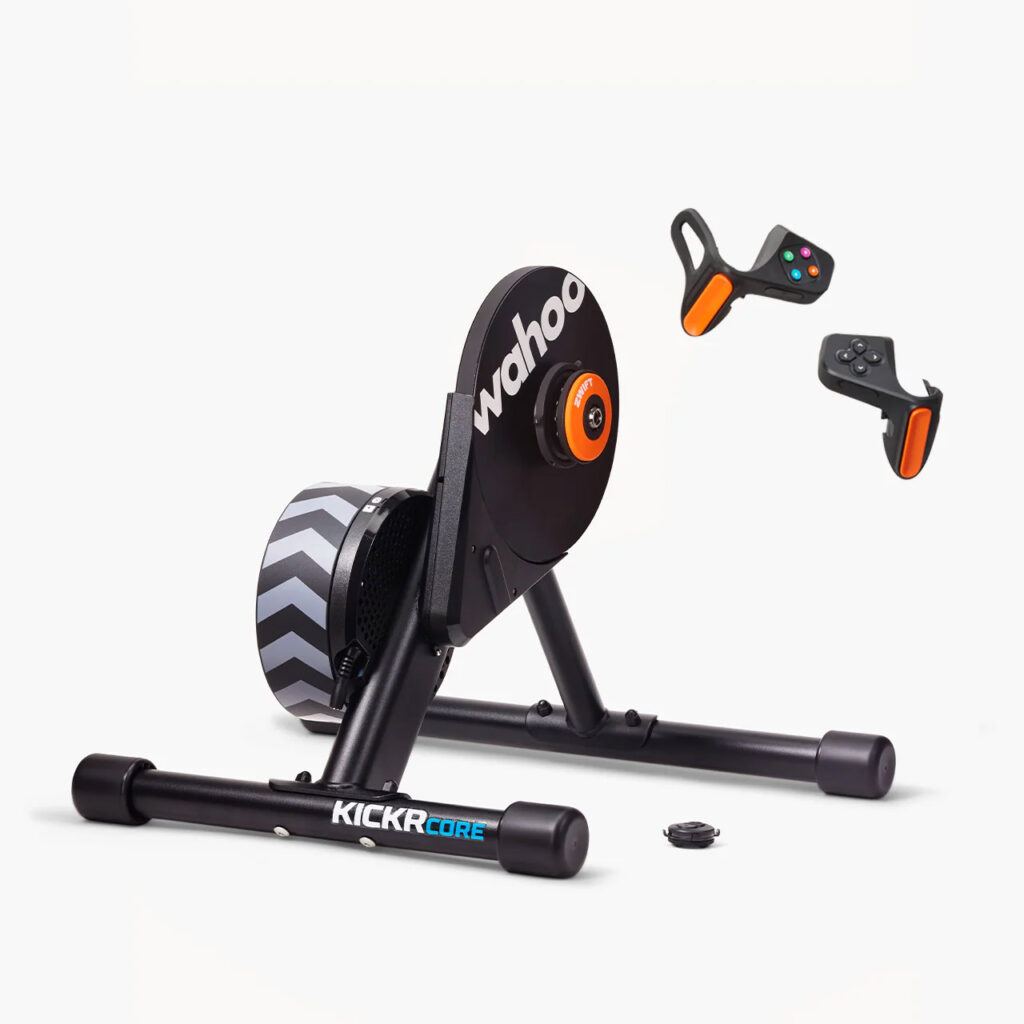
JetBlack claims the VICTORY provides “the best performance and most complete feature set of any trainer on the market today.” This may be overstepping a bit: Wahoo’s flagship KICKR offers more accuracy and a larger flywheel, for instance.
That said, the VICTORY, at least on paper, is very impressive. It meets the specs of the industry-leading Wahoo KICKR CORE while adding Wi-Fi connectivity, a Bluetooth Bridge, and 10Hz race mode, all for $100 less. That’s compelling! Well done JetBlack.
I look forward to seeing real-world reviews of the VICTORY in the coming months.
Questions or Comments
What are your thoughts on JetBlack’s new trainer? Share below!
Racing tactics. I see posts regularly about riders sitting in and then sprinting at the end, and how that isn’t right, or variations of that.
I think people don’t realize that’s how racing works. I’ve been racing a long time (40+ seasons). This is how racing works: you go as easy as possible until you have to go hard. And when it’s hard you absolutely have to stay in contact. If you can’t, your race is over, because once you lose the draft you’re done. If you can’t hold the wheels while saving 30% energy from the draft, there’s no way you can go faster than that while NOT drafting to catch back on.
Tip #1: Don’t Get Dropped
Therefore, the first priority in a race is to “not get dropped”.
In Zwift, that generally means two things.
Tip #2: Go Hard To Start
First, go hard the first minute, and do NOT let gaps open up from the starting pen. Even though the course may not start for a bit, the race starts as soon as you are moving. There are so many riders who average higher than the lead group but because they didn’t go hard the first minute, they finish many minutes behind. You have to go hard at the start and stay in the front main group (let the one or two super-aggressive attackers go). After a minute, maybe at most two minutes for the lower level races, everyone eases up, and now the pace will become more real. I’m guessing you want to go 2x as hard as the advertised pace. D race? You need to do 3-4 w/kg for much of that first minute. Even if you think it’s murdering you, do it. If you can’t stay with the group for that first minute, I’d actually recommend quitting and joining the next race and trying again. It is absolutely that important, it will absolutely change your racing. You have to learn to go really hard and still be able to pedal after.
Tip #3: Push Over the Top
You have to keep going “through” the top of rises and hills. This is where the majority of people who shouldn’t get dropped end up getting dropped, just like the ones getting dropped at the start. These poor souls ease at the top of the hill or even a very short rise, let a 5-meter gap open, and it quickly becomes 10-15 meters and their race is over. If you climb “through” the top, and stay within 2-3 meters of the group, you can relax 15-20 seconds later when it flattens out or the downhill increases your speed. A good tip here is to surge as you hit any rise – if you’re doing 1.5 w/kg sitting in, surge to 2.5 as you hit the rise. you’ll see riders around you go from 1.5 to 3.5+ trying to hold position, then ease back a bit, the whole time you’re doing a steady 2.5.
(Note: if you get dropped during a hill then that’s just a climbing thing. If you get dropped on descents once you’re up to speed, it’s probably a weight thing. Both require being stronger, which is not really about tactics but more about fitness.)
Tip #4: Save It For When You’ll Need It
The thing with racing is that “real racing” is not about “working together” and “sharing the load.” It’s about breaking the other riders, cracking them, so that they are no longer in contention. Where and how you break the others is up to you. The basic premise though is that you need to save everything you have until someone tries to crack the group, then you need your reserves to outlast theirs.
It doesn’t do a racer any good (at least to benefit themselves) to pull any harder than “easy.” For me, that’s about 1-1.5 w/kg (80-120w). In more competitive races I might pull harder to help a teammate or force a momentarily distracted opponent to chase back on (almost always after cresting a rise, if I notice a competitor 5m off the back, I’m immediately surging to force them to chase an extra 10-15-30 seconds). In less competitive races I’ll pull harder to tire myself out. And to be fair, other times I’m going 1.0 w/kg because I got shelled and now I’m alone, I can’t do 4 w/kg for 5 or 10 minutes to catch, so my race is over.
Tip #5: Pull At 1/5 Your Jump
When the attacks come, you should be 100% ready to respond at max power. I tell my teammates they should pull at 1/5 of what they can jump, so if their jump is 800w, they shouldn’t pull harder than 160w. It’s reasonable for people to jump at 5x an easy effort. If your jump is 500w, don’t pull harder than 100w. If you can respond to two attacks in a row, even better, because the common tactic is to attack after someone else’s attack is neutralized.
Tip #6: Be Strong When It’s Hardest
When you pull at 1/5 your jump power you realize, wait, that’s really, really easy. Like really easy, like it’s not racing! What’s the point? Well, the point is that eventually, someone will attack at 5x their easy, and when they do, if you can’t respond, you’re going to be dropped, and now your race is over. If you’re racing to race, you must be strong at the hardest parts of the race, not the easiest.
As racers get more experienced, they’ll be able to judge a little better what they can do when “building reserves” and still respond to the big attacks. Maybe you can try going 1/4 your jump, and see what happens. Or 1/2 your jump. For me that’s a no-go, at best maybe 1/4 if I have to pull a minute or three, 1/3 if I’m following moves and can’t let a gap open. 1/2 means I’m desperately hanging on and hoping everyone else blows up before I do – I probably have a 20-second fuse at that power before I’m cooked.
Tip #7: Develop Your Peak
The other thing is to develop your peak power. Not everyone can break 10 w/kg, but 10 and 7 w/kg are realistic, attainable numbers by many men and women.
Tip #8: Training Isn’t Everything
Peak power is NOT all about training, it’s more about coordination, gearing, proper position on the bike (most Zwift videos I see have riders sitting far too upright to recruit their most powerful muscles), and, critically, being fresh. You cannot hit good peak power if you’re completely blown up or if you’re sitting upright, and the more you ride in your more powerful position, the more you’ll improve your useful peak power.
Tip #9: Ride Racier
On Zwift you don’t have to be low for aero like you do outside, but you’ll notice that you lean forward when working hard (like on a hill). That’s because you’re instinctively recruiting the muscles from the back part of your body, your glutes especially. If you’re not using these muscles, you’re probably leaving 30-50% (I’m guessing) of your peak power off the table. Learn to recruit these muscles by riding in a “racier” position regularly. If your glutes are sore after a ride, you have not been riding in that lower position consistently enough.
Stuart Middlecoate Has Completed 500+ Consecutive 10k Runs On Zwift
“I never actually planned this…”
This might sound like a strange statement for somebody who has recently completed their 500th day of running consecutive 10k’s.
But it’s true.
In 2022 I decided to try and run 52 half marathons, 1 a week essentially. In the end I ran 62 but as a I neared the turn of the year I needed a challenge for 2023.
January is always a popular month for challenges and goal setting. There’s the classic “start exercising” and Dry January is more and more popular. I’m teetotal so that was a pointless one.
So I set myself a goal of running 10k every day in January. I’d run consecutive 10k days in the past, but never three in a row. January came and went and the addiction kicked in. The new goal was simply to carry on doing it until I got bored, injured, or some other life event occurred.
At this point I was just jumping on Zwift and running my 10k on my own, no plan. Just pick a course and go.
Then I saw the Zwift Long Distance Runners (ZLDR) events and started to join those. The welcome I received was immense and I was made to feel part of a community. The group chats and encouragement made the daily 10k pass much quicker.
James Bailey from the Zwift events team then suggested I make my daily run an event of its own. His support was amazing and he created the daily event with my only real input being to pick the course. And so in May 2023 Run 10k Every Day became a thing. Only it somehow became Run 10k Every Day in 2023. I can’t remember how, why, or where it became a challenge to do a year. (See I told you it wasn’t planned.)
Then NoblePro invited me to become an ambassador for their treadmills. (They’ve continued to support me throughout the challenge.) And so the Noble Pro Running Club (NPRC) was born and continues to grow.
As I neared 31st December 2023 I knew I had a decision to make as to whether to continue the challenge or not. I’d made it through 364 days and I was joined by over 50 runners from all different groups for my “final” 10k. It was emotional to complete the year to say the least. I woke up on 1st January 2024 and I honestly at that point hadn’t made a decision as to whether to continue or not. (Again, evidence of the lack of planning.)
And so I did, and the goal moved to 500 days which came and went last month. All through the 500 days an old friend of mine had been encouraging me to do 1000. I’d dismissed this every time despite him sending me percentage updates of my progress towards 1000.
So it’s 1000 now which takes me to September 2025. If I complete the challenge it will be 3 birthdays and 2 Christmas Days I’ll have run on spanning 3 different years. Reaching 1000 seems like it’s a final destination, will I stop or not? Almost definitely but like I say, “I’ve never planned this.”
For me, without Zwift I doubt I would have lasted a month. That’s the power of Zwift. It can help you push boundaries that you didn’t think were possible.
The ability to have that on-screen distraction from what can be a mundane daily run is fantastic. Each time I run I see something different that I’ve never noticed. Going a bit slower than cyclists you can take in more of the surroundings and really notice the detail that goes into building a world.
And I’m never alone. Each day, somebody new joins the event and I have a core group of regulars that keep me motivated through their chat and support. That’s the power of the Zwift community.
Moving up to the next racing category can be daunting. In Zwift racing, the jump from category B to category A is an especially big one! One Zwifter breaks down the issue and offers possible solutions.
Note: Zwift has just begun testing a new results-based categorization method based on Zwift Racing Score. Read more about it >
Additionally, we’ve selected a video about vEveresting up The Grade, accessing The Grade, one rider’s first race in category C, and a hardware teardown of the Zwift Ride.
The problem with Category B – Zwift
Zwift racers have long been afraid of moving up to category A. Because once you reach category A, you begin to race with some of the top riders in the world! The Moderate Cyclist explains the issue and offers insight into the inner workings of Zwift’s power-based categorization.
Everesting On Zwift (Livestream + Charity) – Part 2
Everesting is one of the biggest challenges in cycling. Watch as Adam, Road to A, vEverests up The Grade in Watopia. Additionally, throughout this challenge, Adam donated 50 cents for every subscriber he gained.
How to ride Zwift’s new route The Grade – What I learned
Hello Velo Cycling explains how to access The Grade and shares everything that he learned from riding this new climb in Zwift.
ZWIFT – Good Cat D Rider Tries Cat C… Can I Survive?
For the first time, Ryan Condon races in category C after recently getting upgraded. How long can he hold on with the lead group?
Zwift Ride Hardware Teardown and Handlebar Upgrade!
Shane Miller, GPLama, breaks down the Zwift Ride, giving an in-depth look at how the bike is built. Additionally, he provides steps for swapping out the handlebar to achieve greater comfort on the bike.
Got a Great Zwift Video?
Share the link below and we may feature it in an upcoming post!
The original version of Zwift Insider’s Watopia map poster was published March 2016. Since then it has been updated and enhanced with each Watopia update.
The latest version of the poster adds The Grade expansion and associated routes in addition to the new Radio Tower KOM and various minor updates.
As of today, we are making available for free download (as always) a PDF of the new version 2.2 map. If you’d like to support this site (and get a beautiful poster at a good price) you can buy a poster print of the map and we’ll ship it to you, anywhere in the world.
Note: order fulfillment in Australia and New Zealand will be delayed 1-2 weeks, as our shipper down under is waiting on receiving the new poster stock.