

Most cyclists are painfully aware that you can’t just hop in the saddle and successfully complete a Gran Fondo after a long lay off without progressively building your fitness. Many cyclists have also learned the hard way that maintaining a high level of training and riding often leads to burnout and overtraining. Even the most experienced racers realize that it is impossible to maintain peak form successfully for prolonged periods.
The Theory of Periodization
The Theory of Periodization addresses these limitations by varying training loads throughout the season according to the timing of high-priority target events. Periodization acknowledges that the training demands of peak conditioning are psychologically and physiologically difficult to sustain year-round.
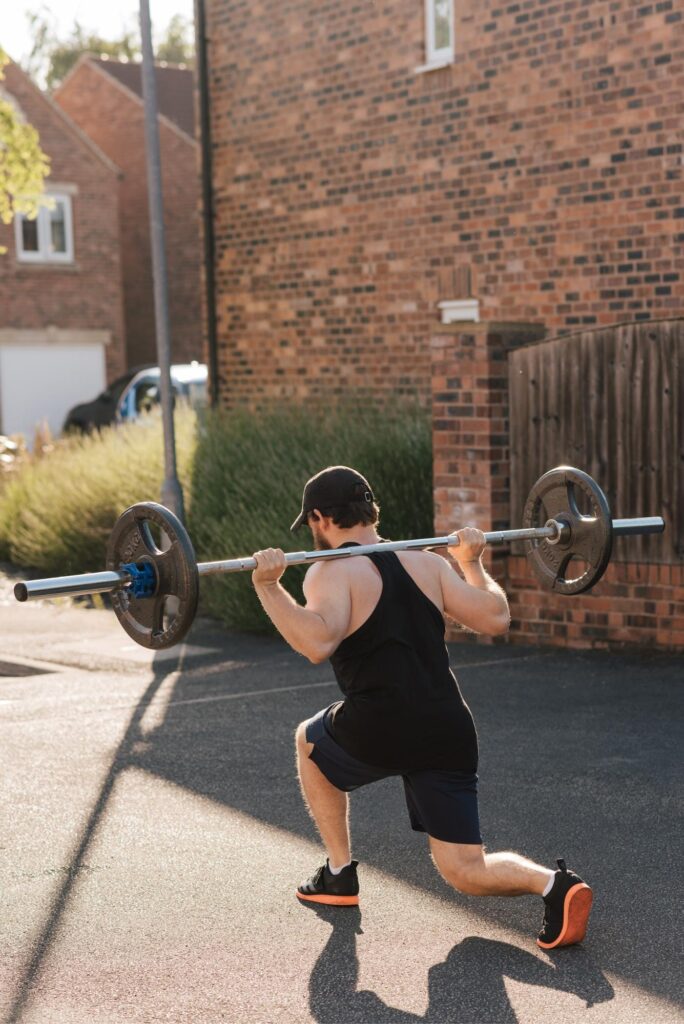
A solid training plan is scheduled carefully to build a base and then balance and maintain the many aspects of fitness required of the athlete’s sport, thereby reducing the risk of injury and burnout while maximizing performance.
Why is the Periodization of Strength Training Important?
The same is true of strength training for cyclists. Periodizing strength training for cyclists ensures that benefits are gained without disrupting key on-the-bike sessions. By simply adding strength training to your existing plan, or adding the wrong exercises at an improper point during the season, you may end up sacrificing the quality of your training and risk injury or overtraining.
Periodization of Strength Training for Cyclists
Phase One: Anatomical Adaptation (Preparing your Muscles and Connective Tissue for Strength Training)
- Perform 20-30 repetitions per set, 2-5 sets per session, and allow 60-90 seconds of recovery between each set.
- Perform each repetition in a slow and controlled manner.
- Perform sessions 2-3 times per week for a total of 8-12 sessions total during a 4 week period.
Phase Two: Maximum Strength Building
- Aim to lift heavy loads by gradually increasing weights and reducing the number of repetitions.
- To avoid injury begin this phase conservatively and increase loads to tolerance.
- Perform low repetitions (3-6) per set and 2-6 sets per session with 2-4 minutes of recovery between sets.
- Perform 2-3 sessions per week for a total of 8-12 sessions over 4 weeks.
Phase Three: Power (Convert Strength into Speed)
- Perform 2-3 sets per session of 8-15 repetitions with 3-5 minutes of recovery.
- Lift the weight as quick and fast as possible, in an explosive manner, while maintaining control and proper form.
- Perform 1-2 sessions per week for a total of 3-6 weeks, dependent upon progress, results, and priority.
Phase Four: Muscular Endurance (Extend Fatigue While Under Resistance)
- Perform your primary exercises while under low load for 1-3 sets of 40-60 repetitions per set with 1-2 minutes of recovery.
- Perform exercises at a moderate speed and pace the effort of the set.
- Perform 1 session weekly for 4-8 weeks.
Phase Five: Strength Maintenance (Retain Strength While Increasing Cycling Training)
- Perform 2-3 sets of 6-12 repetitions under moderate load with 1-2 minutes of recovery.
- Avoid excessively fatiguing the muscles with each set.
- Perform each session weekly and indefinitely unless tapering for a priority event.
Strength training is important for cyclists to reduce injury risk as stronger, more flexible muscles and connective tissue are less likely to break down through overuse. Strength, power, and endurance gains in the gym translate to improved performance on the bike!
It is a Wise Thing To Do… Period!
Do you follow a phased approach when performing your off-the-bike strength training program? Your fellow Zwifters would like to know how it works for you.
Bibliography
Hawkins, John. The Unconventional Guide to Strength Training for Cyclists. Simply Cycling Training, 2017. simplycyclingtraining.com.


Great article, I have just started weights and was wondering about this!
Any thoughts on the exercises to do? I’ve started with front squat, back squat and deadlift…
Pleased that this topic is timely for you Greg. See the other previous installments of this article series for further recommendations. I’m sure you will find them helpful, as well.
Sorry if I missed it, but, 20—30 reps @ 2-5 sets of what? Bench press? Bicep curls?
Would be nice if there was an example of a workout geared towards cyclists for each phase.
https://kettlebellsworkouts.com/kettlebell-strength-training-exercises-for-cyclists/
I apologize for pointing it out Carl, but the article above is meant to be a basic framework for the performance of an overall strengthening program. The specific details of the program most appropriate for your individual situation and circumstance can be found in previous installments of this article series on ZwiftInsider. Your kettlebell workout wish may also be granted soon! Thank you for the interest and I hope you find those exercises and workouts stimulating.
What’s the benefit of phase 4 as an endurance athlete? We’re already doing thousands of reps of light weight.
Otherwise I like everything else mentioned here especially the adaption phase… Don’t understand that people!!! Especially if you take time off the weights. We’re usually quite strong in the legs as cyclists so can lift a ton with our legs, but the other tissue adaptions to lift heavy take months not days/weeks to build.
Resistance exercise, consisting of mainly eccentric contraction, provides a different stimulus than that provided by the concentric contraction produced during the pedal stroke. Definitely not as important for endurance athletes as the adaptation phase, as you point out. I really like your handle Smashquatch. Thank you for the interest!