

Zwift rolled out version 2 of their popular Zwift Ride smart frame today. This isn’t a radical redesign, but it’s a welcome one! This new iteration makes the Ride more accommodating for more riders, at the same impressive price.
Are you a Zwift Ride V1 owner wondering whether to update? Or perhaps you’re looking to upgrade your current indoor setup or buy your first indoor setup as we head into “Zwift season”? This post is for you! Read on to learn all about the new Zwift Ride.
Buy Now
Note: if you purchase the Ride bundle via the links above, Zwift Insider will be paid an affiliate commission by Zwift to help support this site. Thanks!
What’s New
Here’s how the new Zwift Ride differs from the original V1:
- Bear Claw Cranks: Probably the most-requested upgrade on the Zwift Ride, these crank arms, offering 5 crank length options, have been available as a $99 upgrade option for over a year.
- Expanded Fore-Aft Seat Adjustment: A redesigned seat post topper lets you place the saddle clamp in 4 different fore-aft positions for an additional 30mm of fore-aft adjustability.
- Reduced Minimum Saddle Height: Minimum rider height is now 4’10” (146cm), which is 2″ (6 cm) shorter than the V1.
- Reduced Minimum Bar Height: Your bars can drop almost 4 cm lower on the V1 than the V2.
- Wider Bar Tops: Instead of the uniformly thick bars of the V1, the V2 sports bars with wider tops for more hand comfort.
- Improved Controllers: Not announced by Zwift, but confirmed by Zwift, the controllers on the new Ride feature an additional internal seal to keep them safe from moisture/sweat.
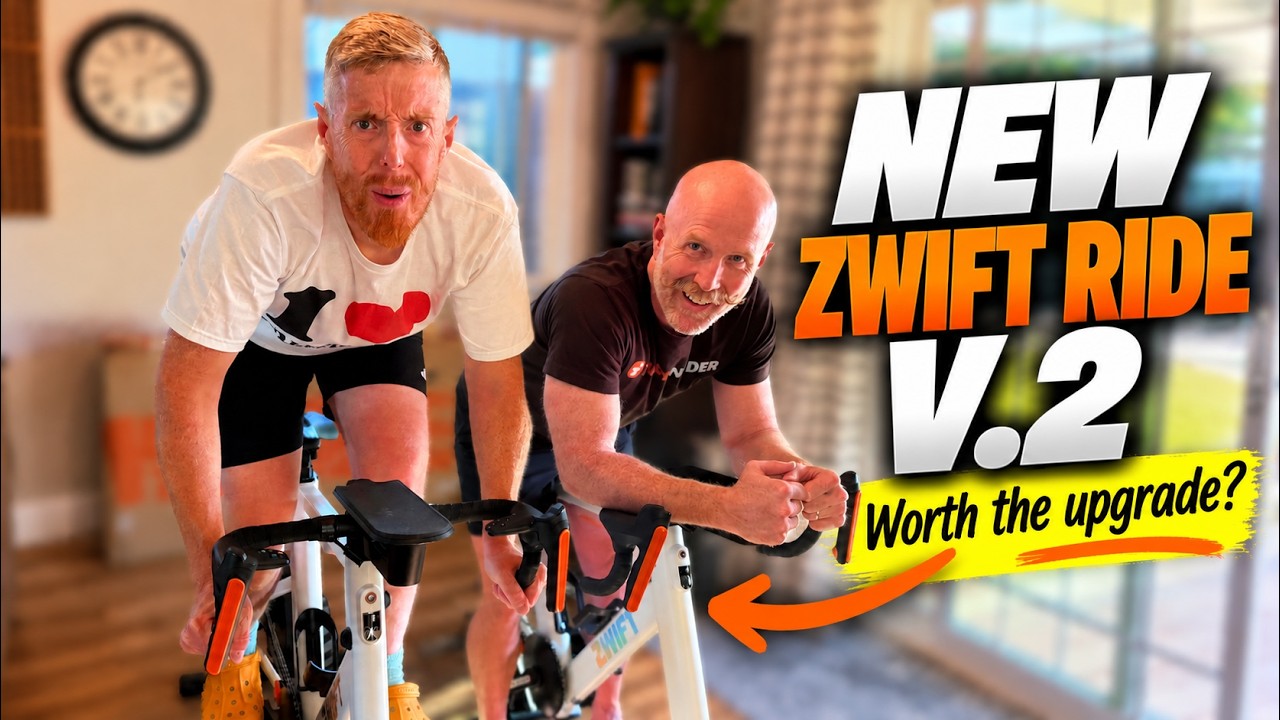
I dig into most of these changes below, but first… here’s a fun off-the-cuff video from my living room starring Ryan Condon and me…
Unboxing/First Impressions Video
Adjustable Crank Length
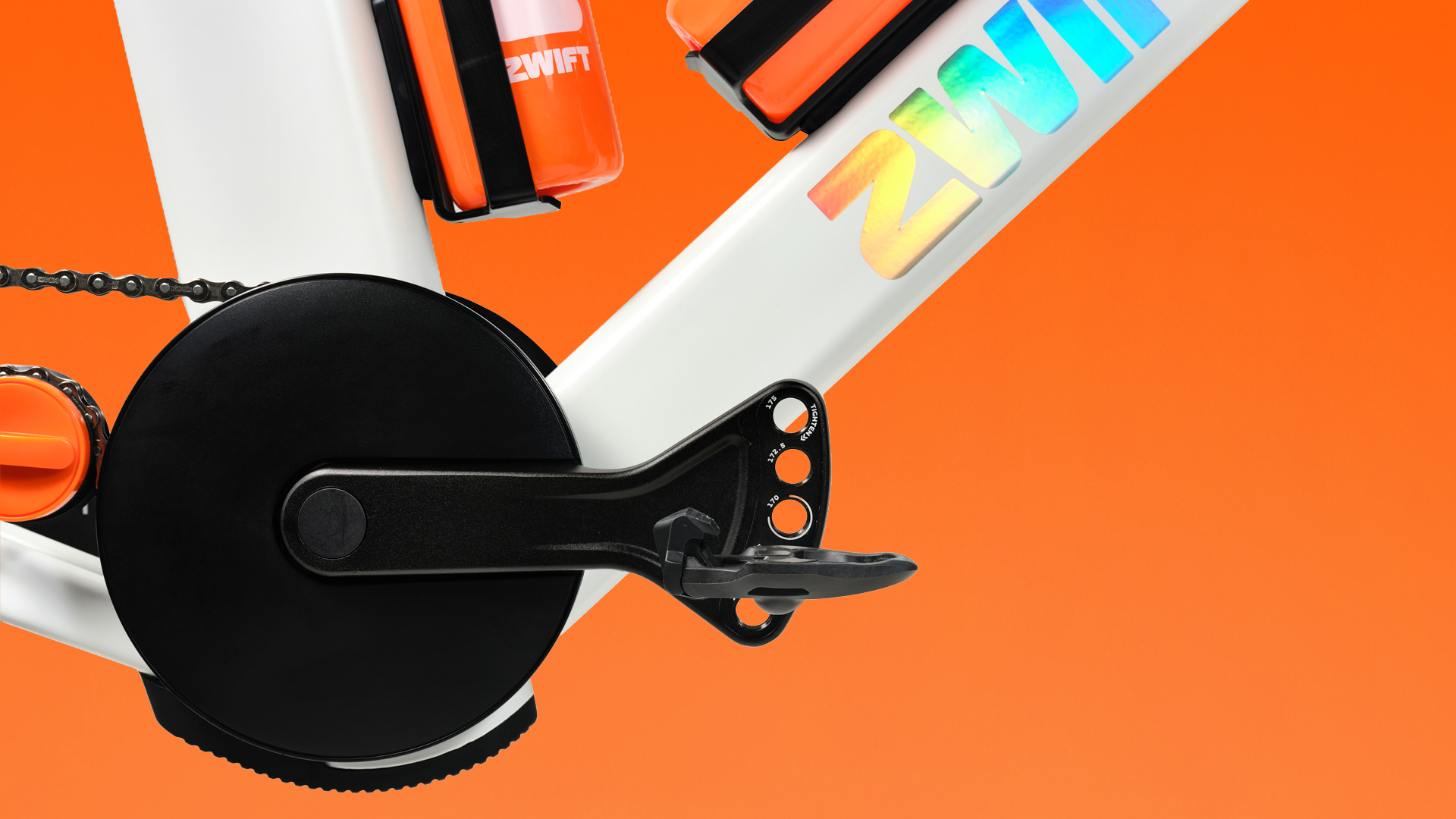
At a time when many riders are experimenting with shorter crank lengths, the original Zwift Ride’s lack of adjustability was a common source of complaint. (Not only did the V1 offer only a 170 mm option, but the cranks are non-standard, so you couldn’t swap in aftermarket cranks.) Zwift began selling a $99 bear claw crank upgrade in April 2025, but Zwifters consistently asked for these cranks to be included with a Zwift Ride purchase.
The bear claw cranks on the V2 are the same add-on cranks Zwift has been selling for the V1, with 5 options:
- 160 mm
- 165 mm
- 170 mm
- 172.5 mm
- 175 mm
New Fore-Aft Adjustable Seat Post Topper
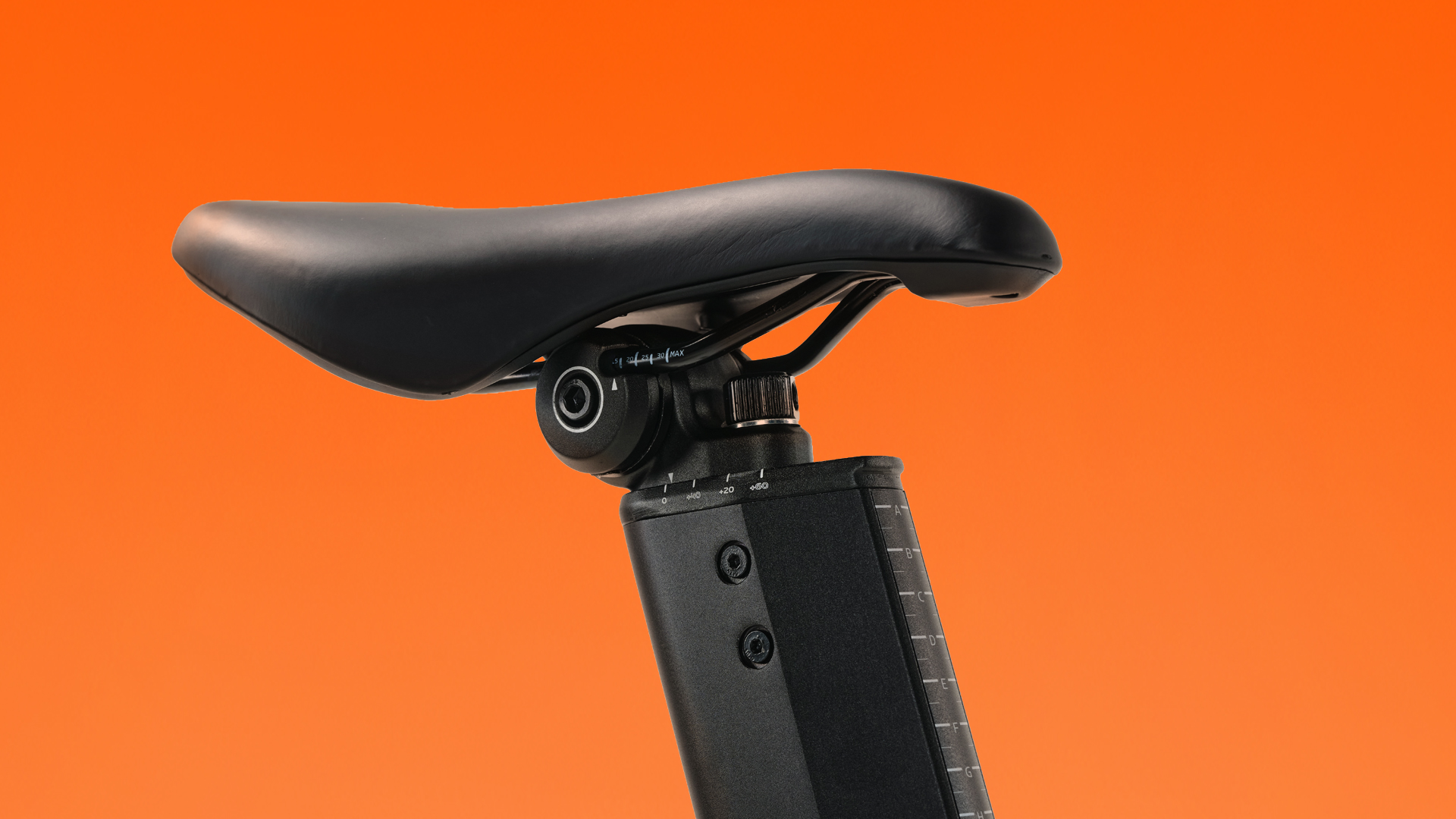
Since the Zwift Ride’s initial release, some riders have requested the option of a seatpost that allows the saddle to be located further forward. (In fact, aftermarket options have arisen to meet this very need.)
The new seat post topper can be placed in 4 different positions for an additional 3 cm of fore-aft adjustability. Two positions can be reached with the topper oriented in one direction, while the other two positions are reached by turning the entire topper around to face the opposite direction.
A single bolt holds the assembly firmly in place, and it can be tightened or loosened using the Zwift Ride’s built-in tool.
Reduced Minimum Saddle and Bar Heights
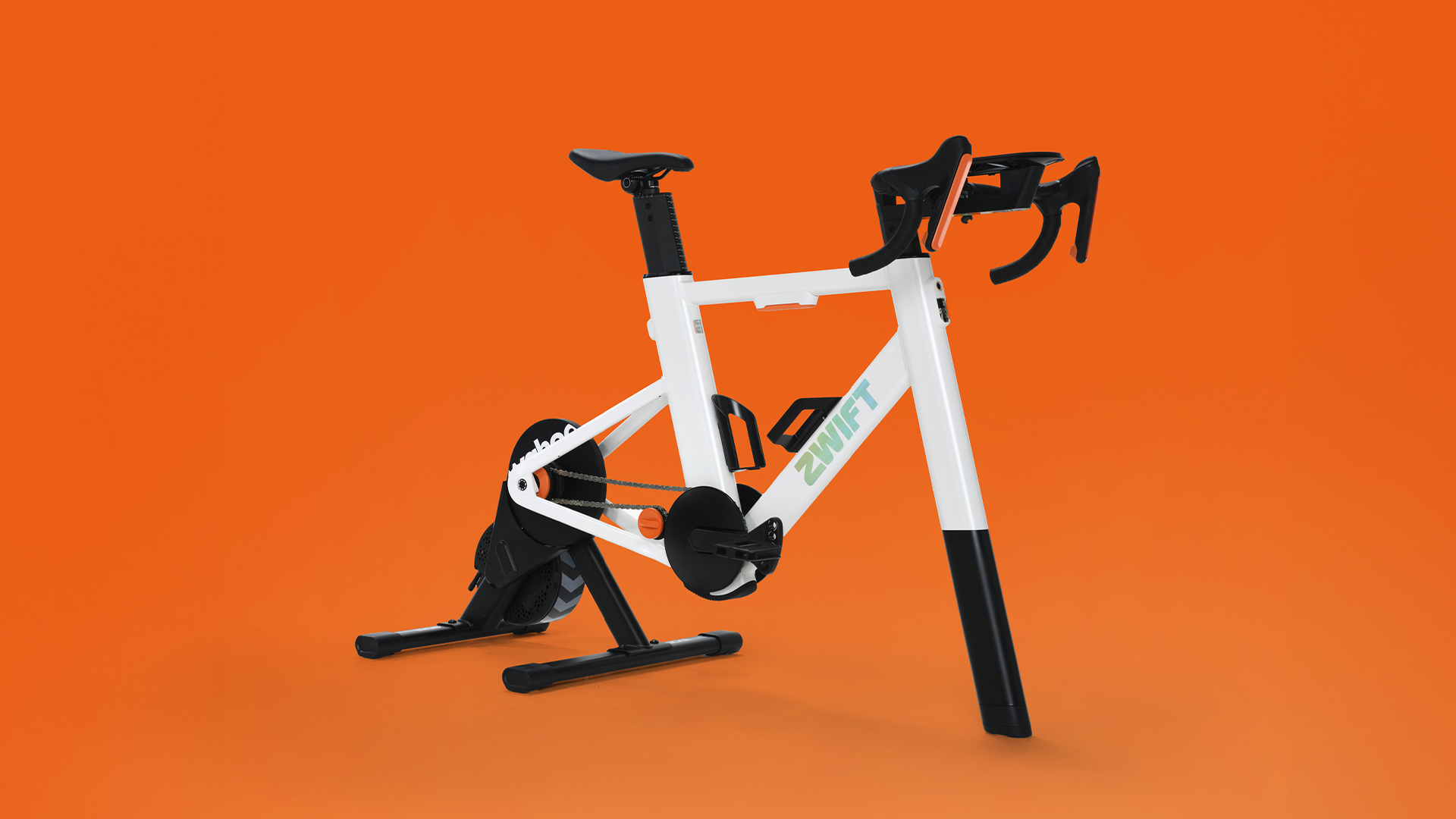
Multiple changes to the frame geometry have made the Zwift Ride V2 more accommodating to smaller riders. While the V1’s stated rider size range was 152-198 cm with a minimum saddle height of 60 cm, the V2’s stated size range is 146-198 cm with a minimum saddle height of 56.75cm.
The main change enabling the reduced saddle height (and reach) is a slightly smaller frame, where all parts of the main triangle have been reduced in length. This also reduced the standover height and minimum bar height, with the V2’s bars able to drop almost 4 cm lower than the V1.
Reducing the size of the frame’s main triangle also reduces the minimum reach, further accommodating shorter riders.
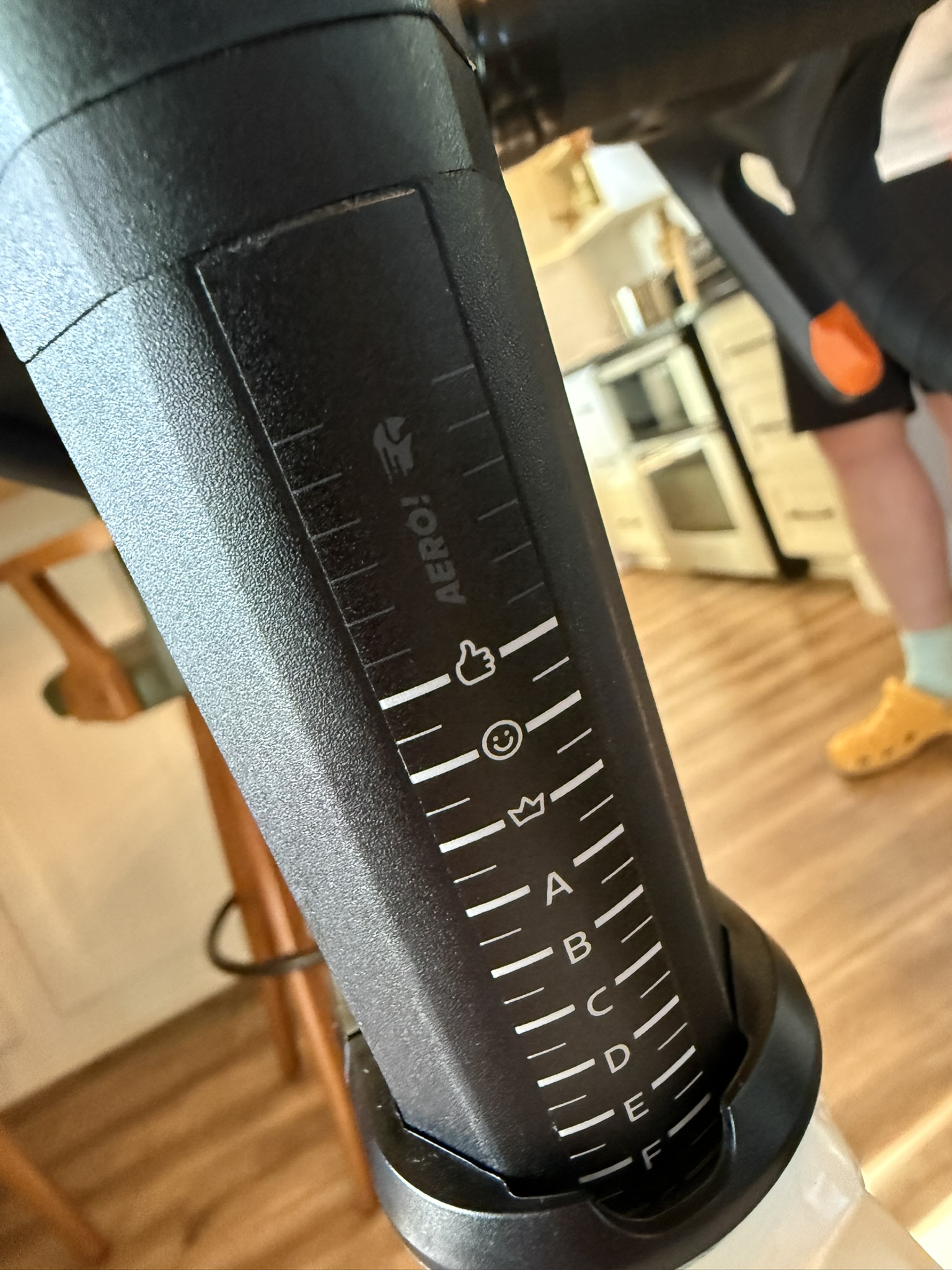
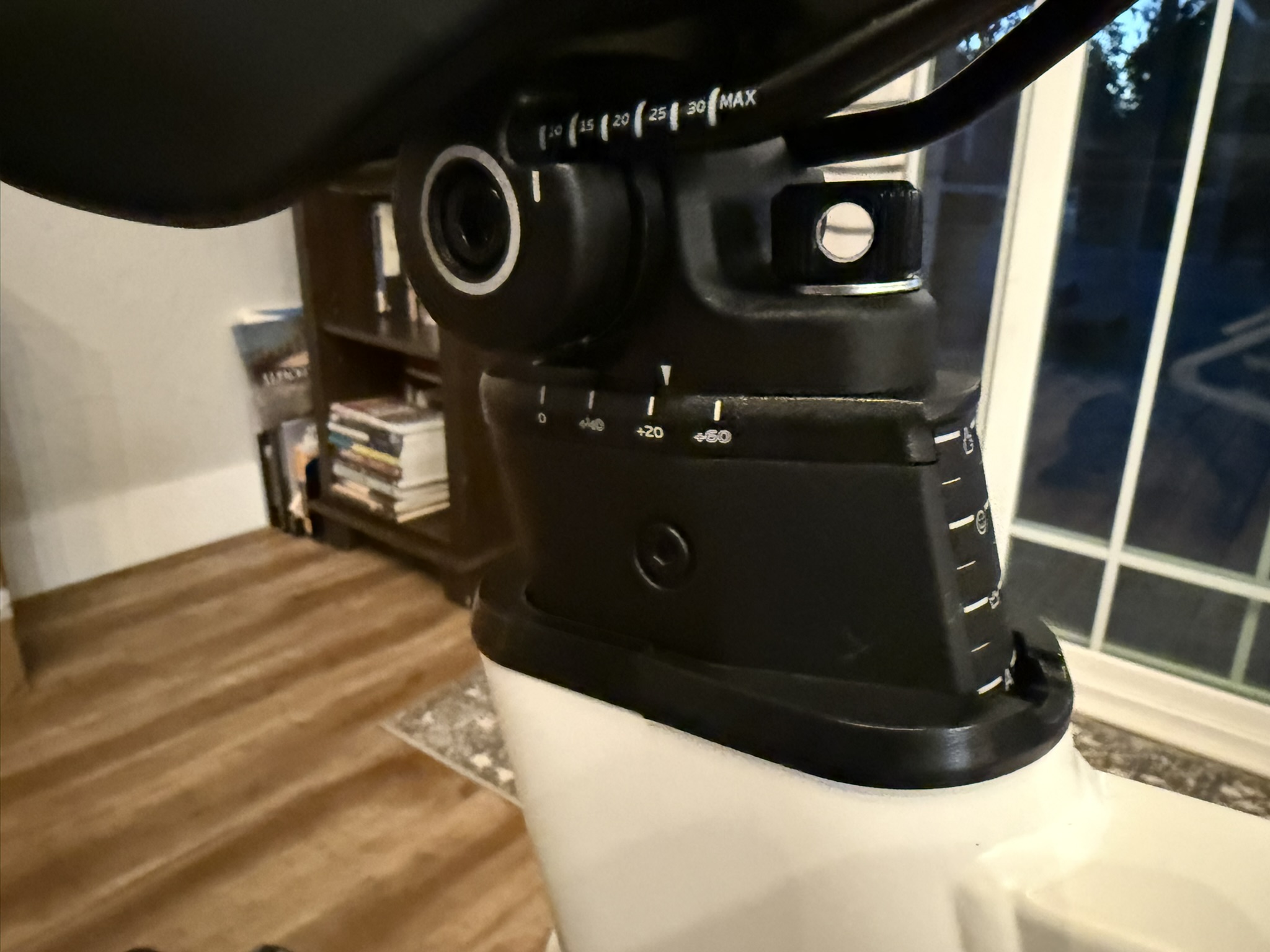
It appears that Zwift labeled the seatpost heights, stem lengths, and bar heights so riders who know their Zwift Ride measurements from a V1 can easily set up a V2. They don’t translate perfectly, and modifying the new seatpost topper’s position will, of course, affect these. But it’s a thoughtful move on Zwift’s part, and a playful twist to have crown, smiley, and Ride On symbols as new measurements…
Wider Bar Tops
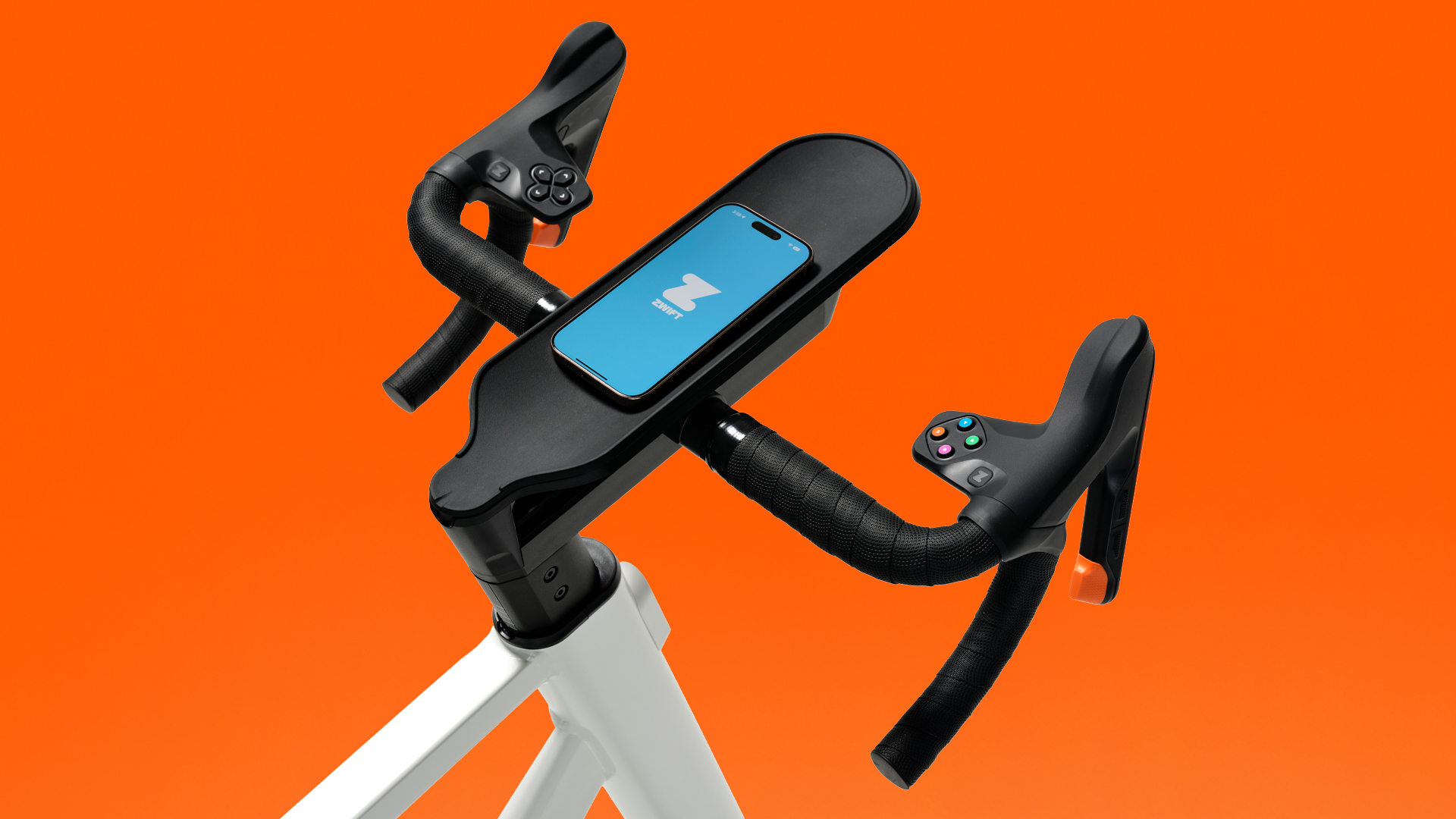
The narrow, uniform thickness of the original Zwift Ride’s handlebars didn’t win many fan awards, particularly for riders with larger hands.
The new Ride’s handlebars are oversized on the tops, like most modern bars, providing a much more comfortable grip surface.
Is it worth the upgrade?
That’s everything that’s new about the Zwift Ride V2 (apart from a new squirrel badge on the head tube and an updated rider sizing card). So the big question is – should you buy one?
Here’s my take: if you already own the Zwift Ride V1, upgrading to the V2 probably doesn’t make sense. If anything, you may want to purchase the adjustable cranks or updated seatpost, which Zwift says will be available at Zwift.com.
But if you’re looking for an upgrade to your existing bike/trainer setup, or looking to purchase your first indoor bike setup, the Zwift Ride V2 is everything the original Zwift Ride was, and more! The crank length options, saddle setback options, and accommodating minimum sizing for smaller riders are all big wins. Add that to the V2 shipping with the latest Wahoo KICKR CORE 2 and you’ve got a killer package at the same great price ($1299.99 / €1199.99 / £1099.99) as the original Zwift Ride.
Buy Now
Note: if you purchase the Ride bundle via the links above, Zwift Insider will be paid an affiliate commission by Zwift to help support this site. Thanks!
Share Your Thoughts
What do you think of the changes made in Zwift Ride V2? Will you be purchasing one yourself? Share your thoughts below!

I was hoping for an standard bb setup with v2, but that doesn’t look like it was in the works.
I think you missed mentioning (and Zwift didn’t either) what I see as the most important change: there appears to now be a fore-aft adjuster on the seatpost that does not involve unclamping the saddle (and thus messing up the angle). The fore-aft adjustment on V1 is the only thing you really cannot do easily. You can of course still use that adjustment as well.
I guess new version won’t fit on a Tacx Neo 3M either? I really hoped for that.
I think this bullet is worded backwards.
I feel like the Zwift Ride is missing 2 important feature that would make it much more complete.
First, I would like to see an option for a TT handlebar. They could put the controllers logic in the stem with some sort of connector to plug the buttons to it. That way we could swap handlebar easily and the second handlebar could be an option for say 100 or 150$.
Second, there should be an option to use the frame with a riser similar to the Elite Square. This would be quite easy to do and make the frame appealing to more people.
And bonus, the frame and cog could use a belt instead of a chain to lower the noise and maintenance.
I guess a belt drive cog would basically be specific to this frame, whereas the chain one works for both the frame and any other bike. I agree a belt drive would be nicer, but I can see why they didn’t go for it. The Elite Square ticks so many boxes for me, it’s a shame it’s so hideous looking and considerably more expensive (you can get the Zwift Ride V2 with a trainer for less than the Elite Square on it’s own).
Unless there are some under the cover mods as well that we are not aware of, there are some real big misses. The first has to be the lack of comfort of the bar hoods. They are very uncomfortable and could have been switched to a thicker, softer rubber compound. The other is the inability of the buttons interface to handle sweat ingress. From what I have read on various boards, there are some users who are on their fourth set of bars because the buttons stopped working. Is there anything in the release notes that refers to improve water resistance?
The controllers on the Zwift Ride v2 have an additional internal seal
Will The Zwift Ride V2 have the road-feel – like cobblestones?
That’s all done by the trainer, so you’ll get it with the NEO range while using the Ride.
I was hoping for a version compatible with the kickr climb. I’m not going to give up that feature. I’ll keep on using my own bike
I also don’t want to give up a KICKR Climb. I’ve been hoping V2 would come along and have removable legs on the fork to support it.
Looks like in theory it could be done, as the point where the front leg turns black looks like it could in theory be somewhere to attach a mount for the Climb, or Elite’s version as well
100%. No adaptability to mount on a Kickr Climb prevents me from even considering it.
Hmm, V1 sale as FRAME ONLY would be welcome 😁
I believe I just bought the V1 as frame only last month. It DID come with the v2 orange hub if that’s what you mean.
I have a Wattbike Atom and thinking of upgrading. Due Zwifters think it’s worth it?
It’s more of a sideways move, if that makes sense. I really like the ‘wrench’ idea, and it is ‘rather quiet’, but comparing it to a Peloton (which we have) the wife totally passed on the Ride. The Ride is nice which makes it hard to dismiss, and I do use it occasionally. It does have a buzz and slight vibration from the chain/cog interface which is easy to ignore. So, if your Atom is ‘old’, out of warranty, etc, the Ride would be a great bridge trainer until you get The Next Big Thing. (I was stranded without a trainer when I had the Kickr Bike die, so I always have at least one backup just in case)
My v1 only arrived last night and I find this out today 🤯🤯
My V1 arrived a week ago 🙂
Definitely would have held out for the added fit adjustment features, but thats how it goes I guess.
Did they keep the same handlebar from the V1? That was my only real complaint with the original—the handlebar felt off and pretty uncomfortable.
The video notes that the handlebars are new, with a thicker bar on the cross bar where your hands go most of the time. The drops look the same.
I found some rubber shims that gave a flat bar feel to the existing bars. I thought they might be silly, but nope. Just had to pull the tape off, add the ‘nudges’, and rewrap with new (thicker) tape. Worked better than trying to swap the bars. (Has anyone done that to a Ride? It looks high drama)
Nearly 30,000 km on my Ride in just a year! So if it breaks this is a nice option…lol
If it breaks they will replace it. Once they’re out of the V1 stock, the replacement will end up being the new one.
Does the new seatpost/clamp offer zero (0) setback now?
Yes.
Did they keep the brakes? I use them a fair bit on my Plays and having the Plays go to the Clicks which don’t have braking ability makes me worried that Zwift is going to get rid of that feature. If they still have them on the V2, I’d be less worried (my fear then would be my Plays dying).
Yes the controls still have the brakes.
Off topic question raised by the video for Eric.
that’s a nice mustache. How long did it take to grow, and what’s your care and feeding process for it. My mustache is a work in progress.
Good question. What you see below my nose currently has been growing for around… 6 months.
I trim the part above my lip so the hair doesn’t get in the way of eating. Other than that, I’ve let it grow wild.
Highly recommend Fisticuffs mustache wax for sculpting.
Any further questions, please visit my new blog, mustacheinsider.com.
Thank you.
“At a time when many riders are experimenting with shorter crank lengths”
The winners of the 2026 Tour de France and Tour de France Femmes both used 165mm cranks. If they had followed the antiquated recommended height/crank size recommendations that manufactures use, and ship their bikes equipped with, they would have used 170mm cranks.
You won’t find a respected professional bike fitter who agrees with those “recommendations” either.
Will Zwift sell a V1 “conversion kit” (seat post fore/aft, adjustable cranks) soon?
Haven’t heard of any plans to do so. I think they’re just planning to let people buy the parts they want.
Worth updating from a 4 year old wattbike atom? I do wonder if the position on the wattbike isn’t great (more upright and maybe not best for the knees on longer zwift rides?)
Also – would I be able to use a rocker plate with one of these?
Yes, you can put the Zwift Ride on a rocker plate.
As for whether it’s worth upgrading from your Wattbike… hard to say!
I am very happy with my V1 in general, as I immediately bought the bearclaw cranks, and now have 165 cranks on my new bike (love them). I bought a new CF handlebar with flattened upper grips, and plan to switch the handlebars, all after watching GP :ama do the same. Bars cost $35, using them indoor only.
My biggest beef and essentially only beef with the Zwift Ride is the incredible difficulty changing out a saddle. It requires a screwdriver as a wedge to pry the seat rails wider while leaning heavily/pounding on the seat while holding several parts in place with your third hand. Always frustrating. The tolerance is simply too tight for every single saddle (maybe 6-8 different saddles) I have tried on the frame. Simply needs to be 1-2 mm narrower at the mounting sight. I know most people put on one saddle and leave it, but I like to try different saddles, and would be like the indoor option of trying them and not being miles from home if they are a bad choice!
Is the frame also smaller?
Yes, a bit smaller overall, as mentioned above…
Random question: With the removable head tube emblem/badge (great bling idea), has anyone come up with badges to swap in? Just curious…
I didn’t have a v1 but have just bought a v2 and find one annoying niggle which may be a consequence of the reduced reach. That is, when I get up out of the saddle my thighs (just above the knee) rub against the phone tray which can’t me moved away (other than by raising the bar height which I don’t want to do). I can adjust my out of saddle position slightly to avoid this but it’s a bit unnatural for me and just hoping I get used to it. I’m just over 6’ tall and have a fairly moderate road set-up – nothing like the extreme slammed stem of a pro.
I’ve discovered the same issue! See attached image for how I’ve temporarily fixed it – just removed the whole tray. Added benefit: my headwind fan’s air isn’t blocked by the tray any longer.
There’s another potential solution for this being announced soon, I hear. I’ll do an article on it once it’s public.
It’s reassuring to find it’s not just me! I do use the tray for my phone and so had been trying to just learn to live with it but I may try your solution – though it does expose more “nuts and bolts” to sweat. I’m going to cross my fingers that the Zwift fix you hint at comes to fruition.
About the same time I posted my original observation here I emailed Zwift support to raise the issue and ask what they could do (this is before I saw your response). This initially drew a promising email from support asking for detailed information on my anatomy, road bike and bike fit which would help inform their review of this issue. I replied with the requested information but since then have received a bunch of different emails (never more than one from the same person) seeming to ignore that initial exchange – including one fobbing me off with the offer of a coupon to get a third party online bike fit to address the issue.
At present I am seriously considering just returning mine before my 30 day return period is up – and I would encourage any others ‘taller’ rider from holding off buying until there is a definitive solution. Seems to me a fairly simply redesign of the shape of the tray would suffice.
Sorry to hear that. I wish Zwift was making the new slim tray available for sale by itself: https://zwiftinsider.com/zwift-ride-supersonic-aerobar/
That would certainly be an effective solution – although a better solution for our problem would be slim for a few more inches than the current one then widening to accommodate a phone at least.
My exchanges with Zwift support now seemed to have reached a conclusion with them sending me another regular tray so that I can re-shape my original and have an intact spare. I don’t know what this does or doesn’t say about a proper solution being on the way. I still have no idea why I was asked to provide detailed bike fit measurements and what has been done with my response – all I have is an AI generated thanks to that particular exchange. I will keep my eye on your website for a proper solution being released – in the meantime it’s time to get the Dremel out.
My Dremeling is done. I followed the contour of the shoulder of the original tray as close a my hand/eye would allow and ground about 10mm off the profile and smoothed off the ribs on the underside of the tray and any sharp edges. This was enough to completely fix the problem for me. I have not yet cut the rubber mat as it might not bother me as it is and any cutting would not be as aesthetically tidy as the original.
In principle this would be very easy for Zwift to address with minor modification to the design of the tray/mat and with negligible impact on its function. I don’t know what the manufacturer tooling costs might be but I really hope they do this and my fix is temporary only.
The zwift selling now on zwift website are V1 or V2? How do you recognize them?
The offer from Rouvy. Is that V1 or V2? https://eshop.rouvy.com/products/zwift-ride-with-kickr-core-2-rouvy-edition?variant=58165643444527&gad_source=1&gad_campaignid=24048587903&gclid=CjwKCAjw88HWBhA3EiwAo2Zd6B8N09Vc5zd0_6DaHwQIb6ZRfEwDVJWHQAGNmjZPTDBmqpgntaJAUxoCJ_UQAvD_BwE
Only the V2 is being sold by Zwift and Rouvy. If it has the bear claw cranks, you know it’s the V2.