

For most cyclists, the Alpe du Zwift is a landmark achievement – a singular, grueling test of fitness that defines a Saturday morning. For Magnus Kulset, the 25-year-old Norwegian climber, the 21 hairpins of Watopia’s most storied peak became the backdrop for a feat of endurance that defied both logic and the limits of the human engine.
In early 2026, while navigating the strange, often silent limbo between professional cycling contracts, Kulset didn’t just climb the Alpe; he “Everested” it. In doing so, he set the fastest known time for a virtual Everesting on this specific segment: 7 hours and 6 minutes.
This wasn’t just a workout; it was a statement. In a sport where your value is often reduced to a spreadsheet of watts-per-kilogram and UCI points, Kulset used the virtual world to remind the cycling community that his engine is still very much WorldTour-caliber.
The Record: 8,848 Meters of Virtual Reality
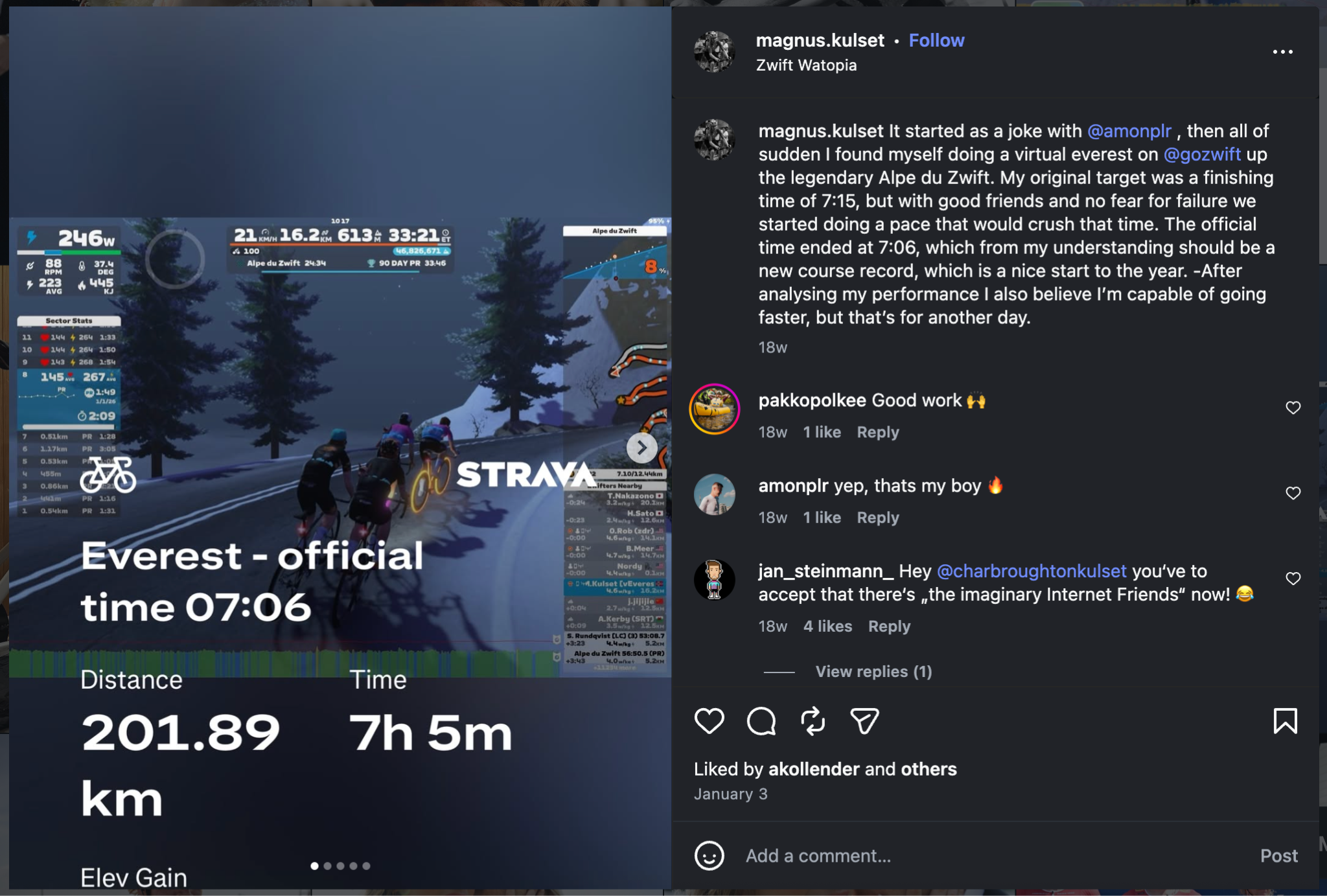
The concept of vEveresting is simple in theory and devastating in practice. A rider must climb the equivalent height of Mount Everest – 8,848 meters (29,029 feet) – in a single activity on a virtual platform. There are no shortcuts. The Everesting Hall of Fame rules are strict: the smart trainer must be set to 100% gradient difficulty, meaning every percentage of the Alpe’s 8.5% average grade is felt in the legs.
To hit the target on the Alpe du Zwift, which gains 1,035 meters per ascent, a rider must complete roughly 9 laps. For Kulset, this meant over seven hours of relentless climbing.
“I didn’t prepare,” Magnus admits. “I just did my normal training and took an easy day two days before. Then it was just a matter of fueling, drinking, and eating enough.”
Maintaining that level of intensity for over seven hours is a masterclass in metabolic management. Every descent – roughly 10-12 minutes of “free” speed on the Alpe – was a calculated window to refuel and recover before hitting the bottom of the climb and starting the 1,000-meter grind all over again.
The Stats of the Record Ride:
- Total Elevation: 8,852 meters
- Total Time: 7 hours, 6 minutes
- Distance: 202 km
- Average Gradient: 8.60%
- Laps of Alpe: 9
While many high-profile vEveresting attempts are months in the planning, Kulset’s “just showed up” approach speaks to the baseline fitness of a man who has spent the last five years in the professional peloton.
The Uno-X Legacy: A Norwegian Talent Factory
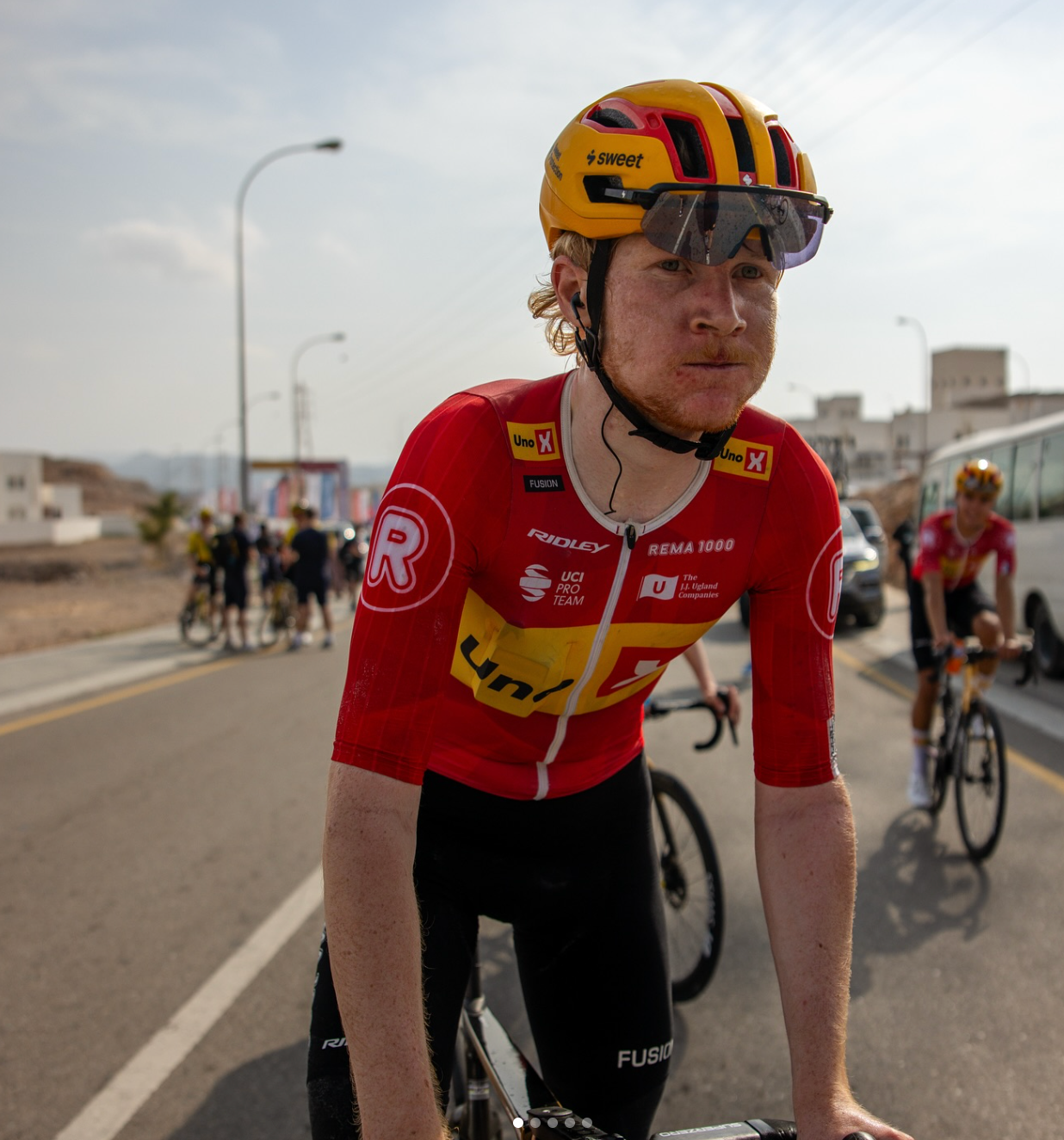
To understand the power behind this record, you have to look at the jersey Magnus wore for most of his career. Between 2021 and 2025, Kulset was a cornerstone of the Uno-X Mobility project.
The Norwegian team has become famous in the cycling world as a talent factory, a program dedicated to developing Scandinavian riders and bringing them to the biggest stages in the sport, including the Tour de France. Magnus rose through the ranks of the Uno-X Dare Development Team before moving to the ProTeam in 2023.
He wasn’t just a rider; he was part of a cycling dynasty. The Kulset name is synonymous with Norwegian cycling excellence. His brothers Kristian, Sindre, and Johannes are all professional cyclists. In fact, his younger brother Johannes is currently making waves as a GC leader for Uno-X at the Giro d’Italia, representing the next generation of the family legacy.
During his time at Uno-X, Magnus was known as the ultimate helper. A pure climber weighing in at a naturally lean 56-58kg, he provided critical support for team leaders in the high mountains of races like the Tour of Slovenia and the Presidential Cycling Tour of Türkiye. However, the professional peloton is a fickle place. As Uno-X tightened its roster for a 2026 WorldTour push, Magnus found himself without a contract extension – a victim of the increasingly competitive nature of the sport.
The Crossroads: Doubling Down
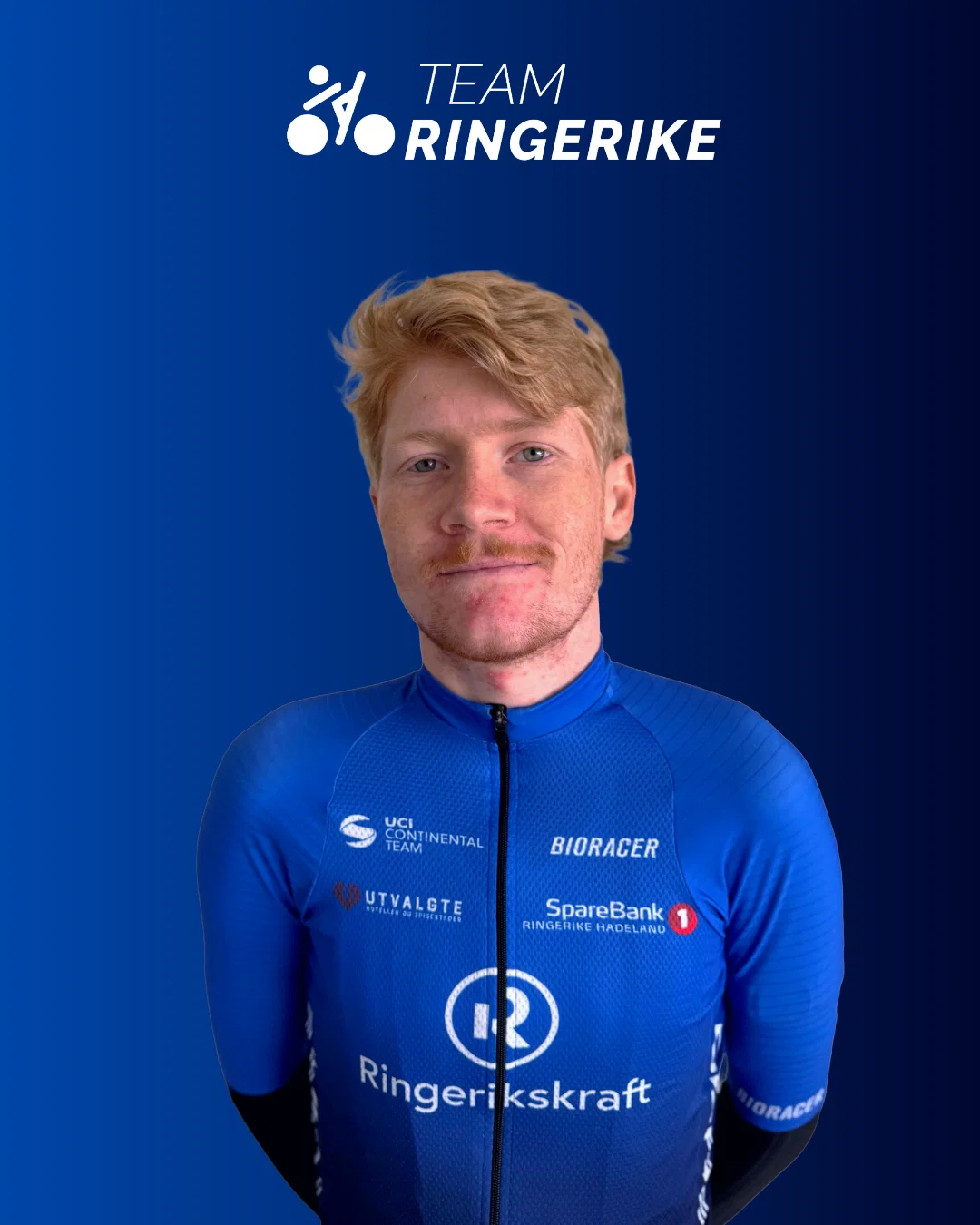
The end of 2025 was a period of uncertainty for the Kulset family. Despite his proven track record as a domestique and his climbing prowess, the elusive first professional win and the sheer volume of available talent meant Magnus was left hunting for a home. Instead of hanging up the wheels, he doubled down. He signed with the UCI Continental team Team Ringerike for the 2026 season, choosing to stay in the game rather than fade away.
2026: The Road Back Starts in Redlands
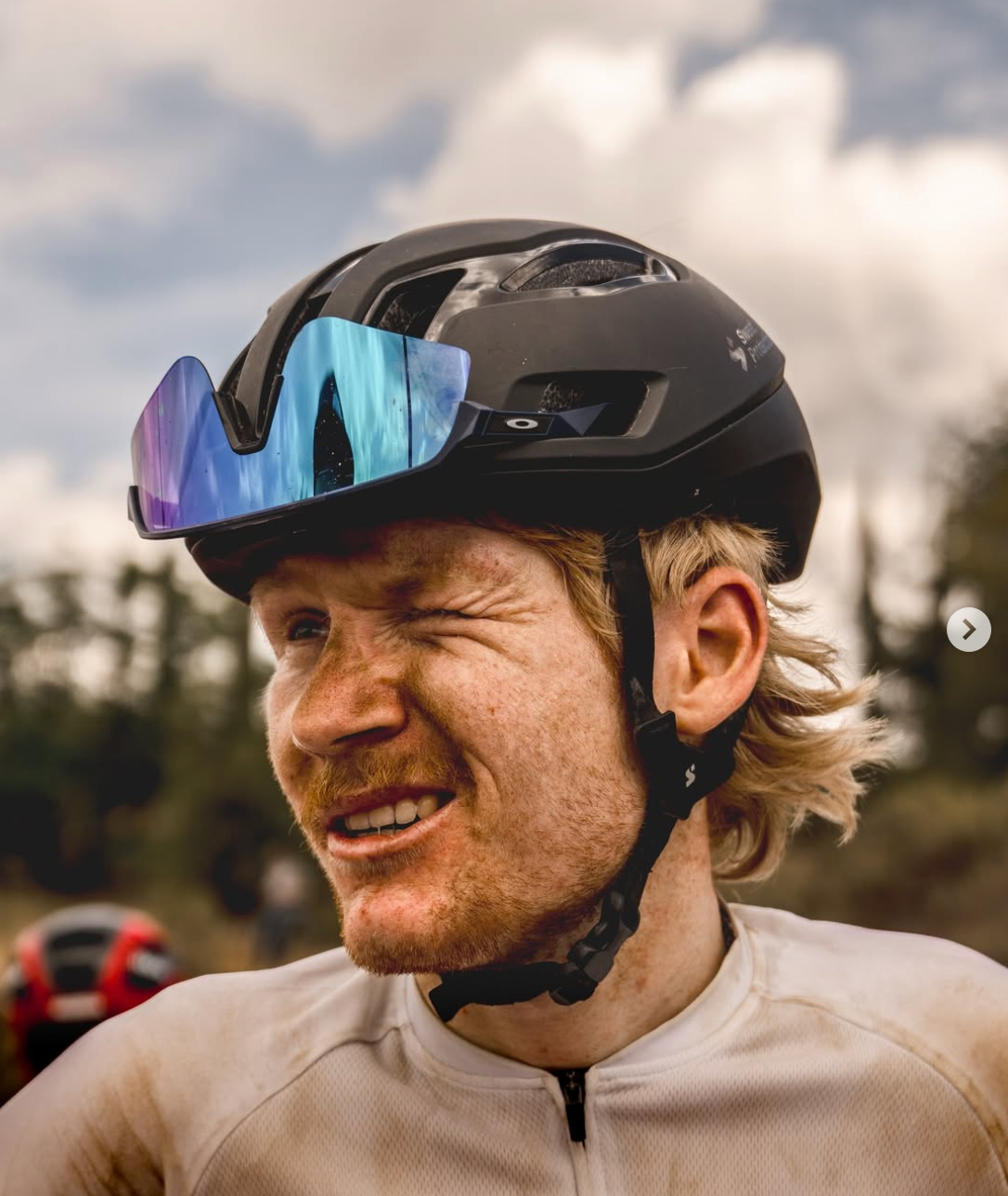
If the vEveresting record was a display of raw power, his performance in the 2026 season has been a display of race craft. Magnus recently traveled to the United States to compete in the Redlands Bicycle Classic, one of the most prestigious stage races in North America. Competing against a field of hungry Continental pros and elite domestic teams, Magnus finished 21st in the General Classification.
For Magnus, 2026 is a “bridge year.” He is using his time with Team Ringerike to refine his time-trialing position and lift his functional threshold power. He has ditched the traditional fixation on long “Zone 2” rides in favor of more modern, high-intensity training – data he often shares on his Strava and validates through his Zwift records.
The Virtual Tool: Why Zwift Matters for the Pros
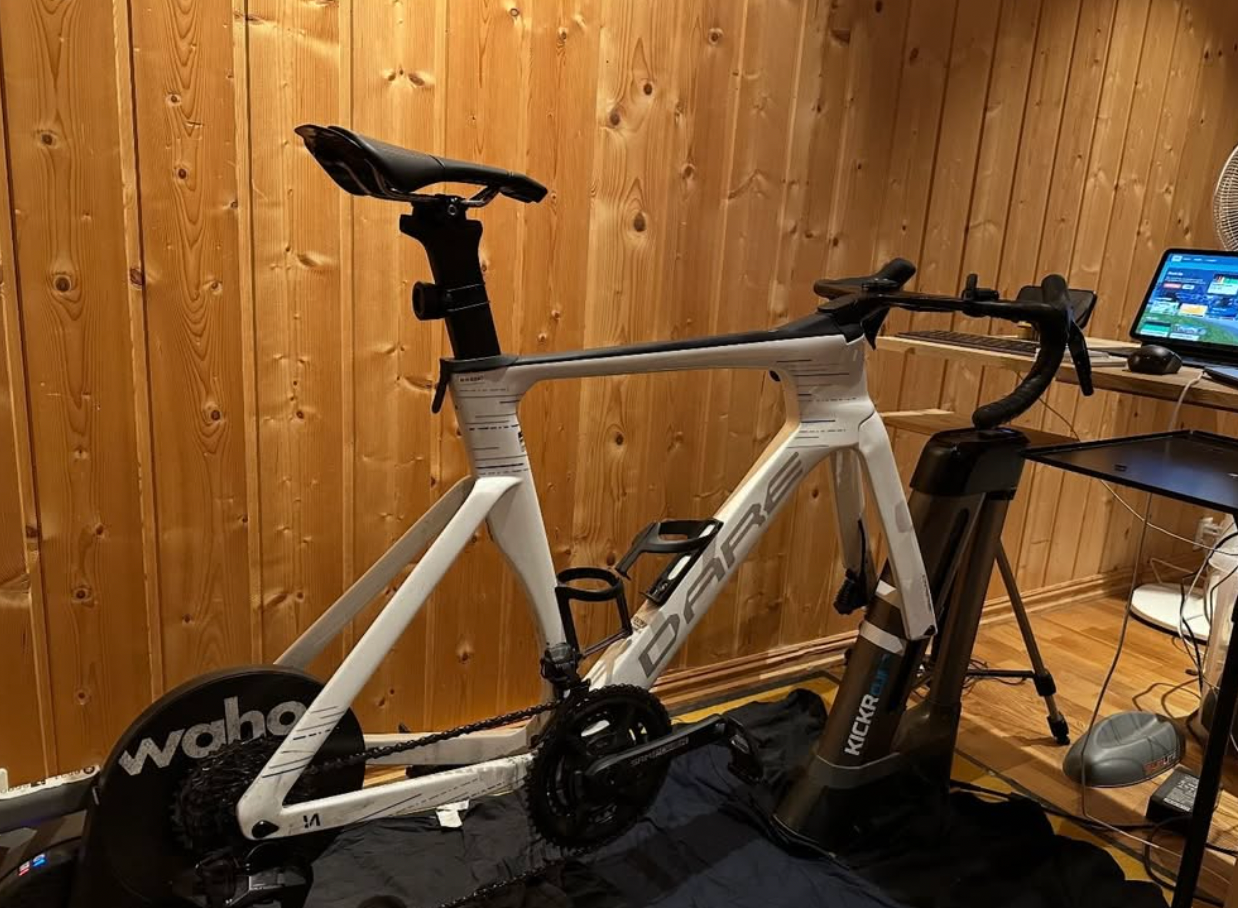
The question often arises: Why would a pro cyclist spend seven hours on a trainer when they could be outside? For Magnus, Zwift is more than a training tool; it’s a laboratory.
- Controlled Intensity: On the Alpe du Zwift, there are no stoplights, no traffic, and no downhill sections that force you to stop pedaling (unless you choose to). It is the purest way to test a rider’s climbing ceiling.
- Psychological Fortitude: Everesting is as much a mental battle as a physical one. Doing it virtually, staring at a screen while the body screams for rest, builds a level of suffering capacity that is vital for the final 5km of a WorldTour mountain stage.
- Visibility: In the modern era, a record on Zwift is a resume. Managers and scouts look at Zwift Power data. A 7-hour, 6-minute Everesting is a blinking neon sign that says, “This rider is ready to work.”
The Hope for 2027
Magnus Kulset is not done with the pro peloton. His goal for the remainder of 2026 is clear: secure a return to the ProTeam or WorldTour level for 2027. He is a rider who has lived through the highs of WorldTour racing and the lows of contract uncertainty, and he has emerged with a refined perspective.
He continues to be a loyal servant to the sport, whether he is leading out a teammate in a UCI 1.2 race in Norway or setting world-class times on a virtual mountain. For the Zwift community, Magnus’s story is a reminder that the leading avatars we see on the screen are often driven by real-world dreams and an unbreakable spirit.
Next time you’re struggling through the hairpins of the Alpe, take a moment to think of Magnus. He didn’t just climb it once; he did it nine times, back-to-back, faster than almost anyone else on the planet. And he’s just getting started.
Magnus Kulset currently races for Team Ringerike. You can follow his pursuit of a pro contract and his latest training data on his social media channels:
- Instagram: instagram.com/magnus.kulset/
- YouTube: youtube.com/@magnuskulset
- Strava: strava.com/pros/3527582
Are you ready to attempt your own Everesting? Check out vEveresting: An Objective Review for tips on fueling, gear, and surviving the Alpe.

The rules regarding the trainer’s difficulty setting have been relaxed, and it is no longer mandatory to set it to 100%.
« Trainer difficulty settings are flexible » (https://everesting.com/rules/ridevirtual/)
However, to really feel the effort and get the satisfaction of rising to the challenge, I will be setting it to 100% for my attempt at the Full Everesting on 14 June.
I’ll need some company, so anyone who’d like to join me for part of the ride is more than welcome 🤗
Good luck. Did it a few months ago. 10100 m vE on AdZ. I used the Ghost Pacer.
(My name in Zwift is « Zeu d’Homme » ☝️)
Not gonna lie, the fact it was supported with draft/group is not irrelevant.
Incredible accomplishment. The only thing that stands out to me is at 246 watts at a 4.6 w/kg would mean he is 53.5 kg (117lbs), when in real life it is published that he is 128 lbs.
The watts (246) shown top left and the w/kg (4.6) shown in riders nearby list rarely relate exactly to each other. Don’t read to much into them, they might give an indication of riders weight but they are certainly not accurate enough to suggest any weight discrepancies.
Wasn’t his WR 💪 archived on the Radio Tower ? 🤔
Here are the activity pages for this achievement ride:
Zwift:
https://www.zwift.com/activity/2042803970887417888
Strava:
https://www.strava.com/activities/16925306926
ZERO DUCKS ONLY
This is absolutely insane. The most I’ve claimed the Alpe du Zwift in one ride was 4 times back in March 2025. Selected the Road to Sky route, rode to the base and repeated the climb 4 times. The ride ended up being 70.46 miles, 13875 feet, 6h 43m 19s moving time and average 10.5 mph and 125w. Still have yet to do the full Everest (did do a half so there was one more ride that I did that was more elevation than the one I mentioned which was 90.32 miles, 14747 feet, 7h 44m 40s, 119w average, 11.7 mph average) this is just absolutely insane.
Well someone had to eventually do this, and he’s the guy that did it and at heart rate zone 2!
It reminds me of the story of Göran Kropp (Swede) who bicycled to mount Everest and then climbed it without sherpas or supplemental oxygen. That stunt should have filled his lungs with water.
Scandinavians can be nuts. They made some hilarious movies that poke fun at this. OffTrack (Ur Spår) covers the Vasaloppet 42K ski race from Mora Sweden. OffTrack 2 covers the Vätternrundan 315K cycling race. The raunchier Norwegian version is The Wrong Track (På Villspor) covers the Birkebeinerrennet 53K ski race.
Yea makes sense. Now that I kind of know where he’s coming from. Man that’s crazy.
I heard a rumour that he is planning a double Everest on Zwift in June