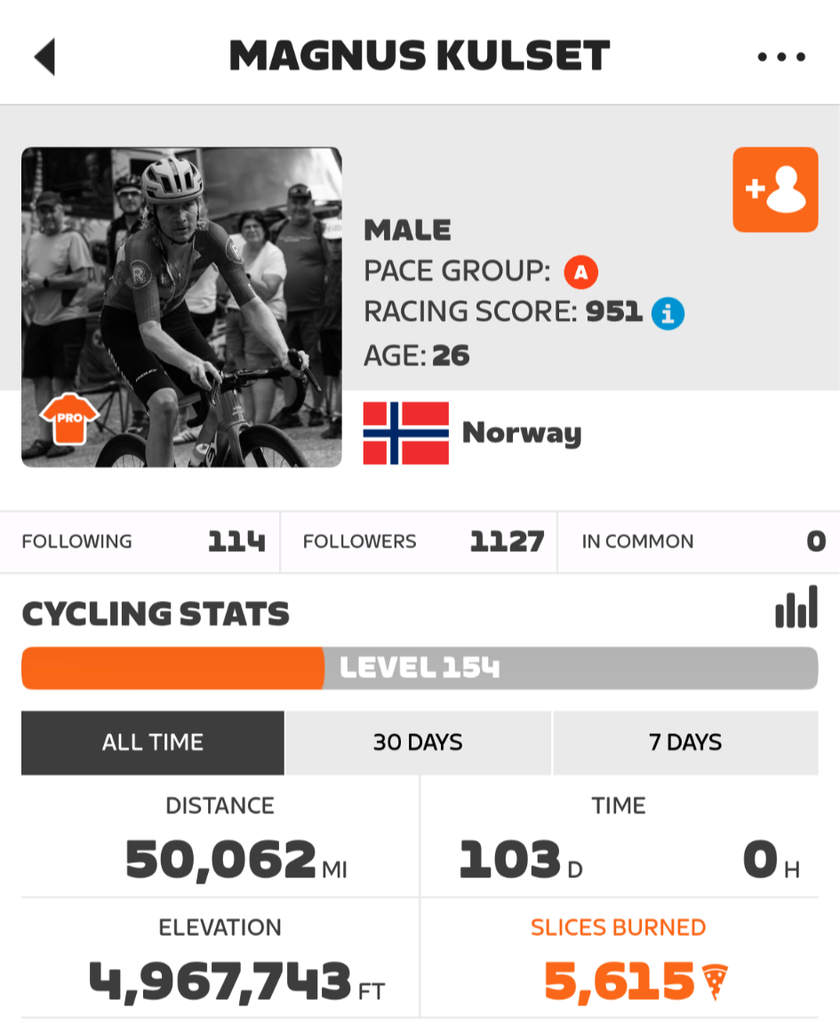
There is something wonderfully poetic about a cyclist looking at a brutal stretch of tarmac, deciding it is simply not steep or painful enough, and turning it into a canvas for history. For most of us, conquering a sharp climb once on a weekend group ride is enough to justify an extra slice of post-ride pizza. But every so often, an athlete comes along who looks at the laws of human endurance, smiles, and rewrites them entirely.
Enter Magnus Kulset.
If you follow professional cycling or keep a close pulse on the indoor climbing scene, the name Kulset needs no introduction. After carving out a hard-earned reputation as a fearless, high-mountain domestique for Uno-X Mobility and Team Ringerike, Magnus has spent years learning what it means to suffer on a bike. But recently, the ex-Uno-X star decided to channel that incredible WorldTour-caliber engine into a project that has the entire virtual cycling community buzzing: shattering his own vEveresting world record.
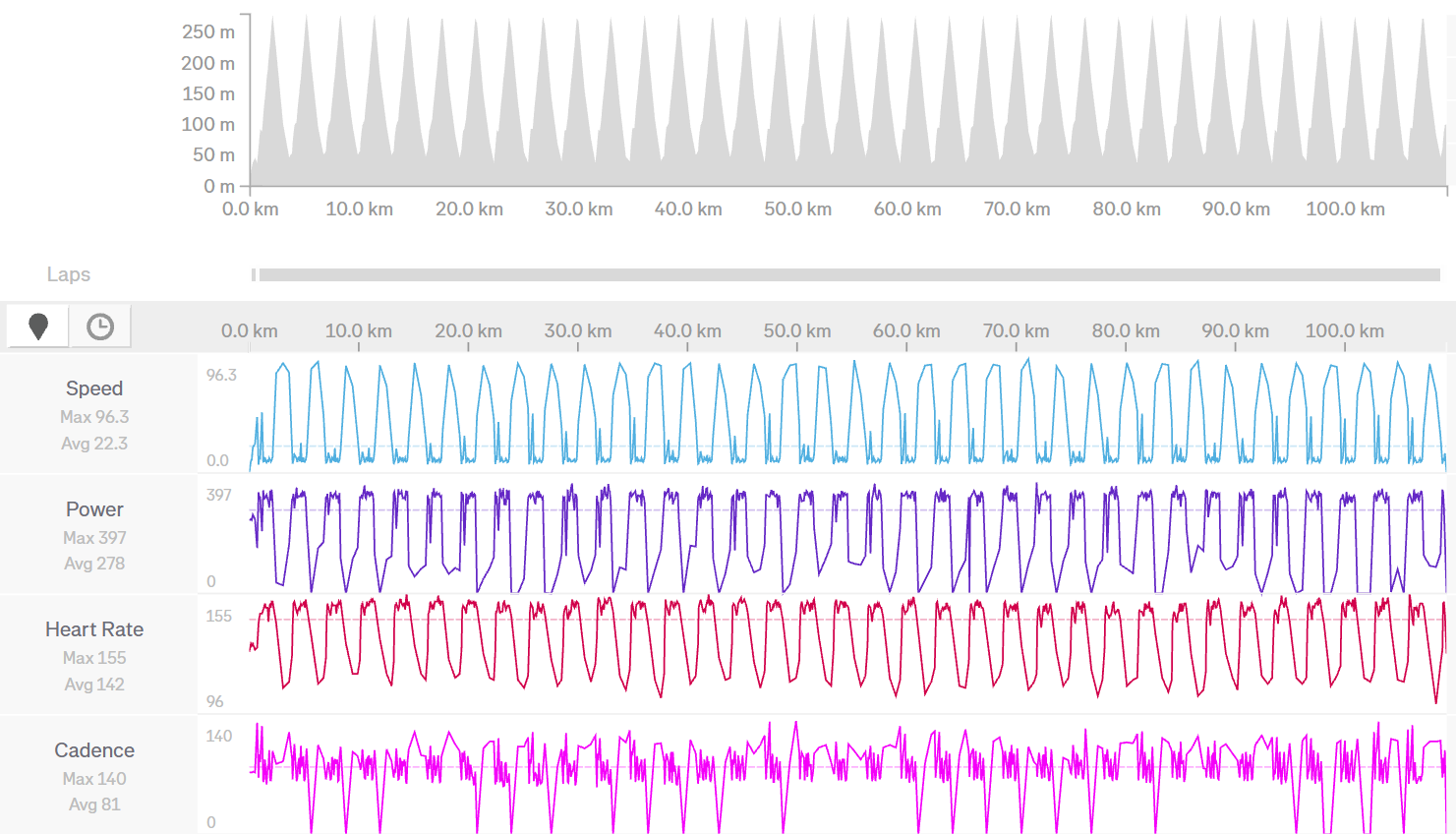
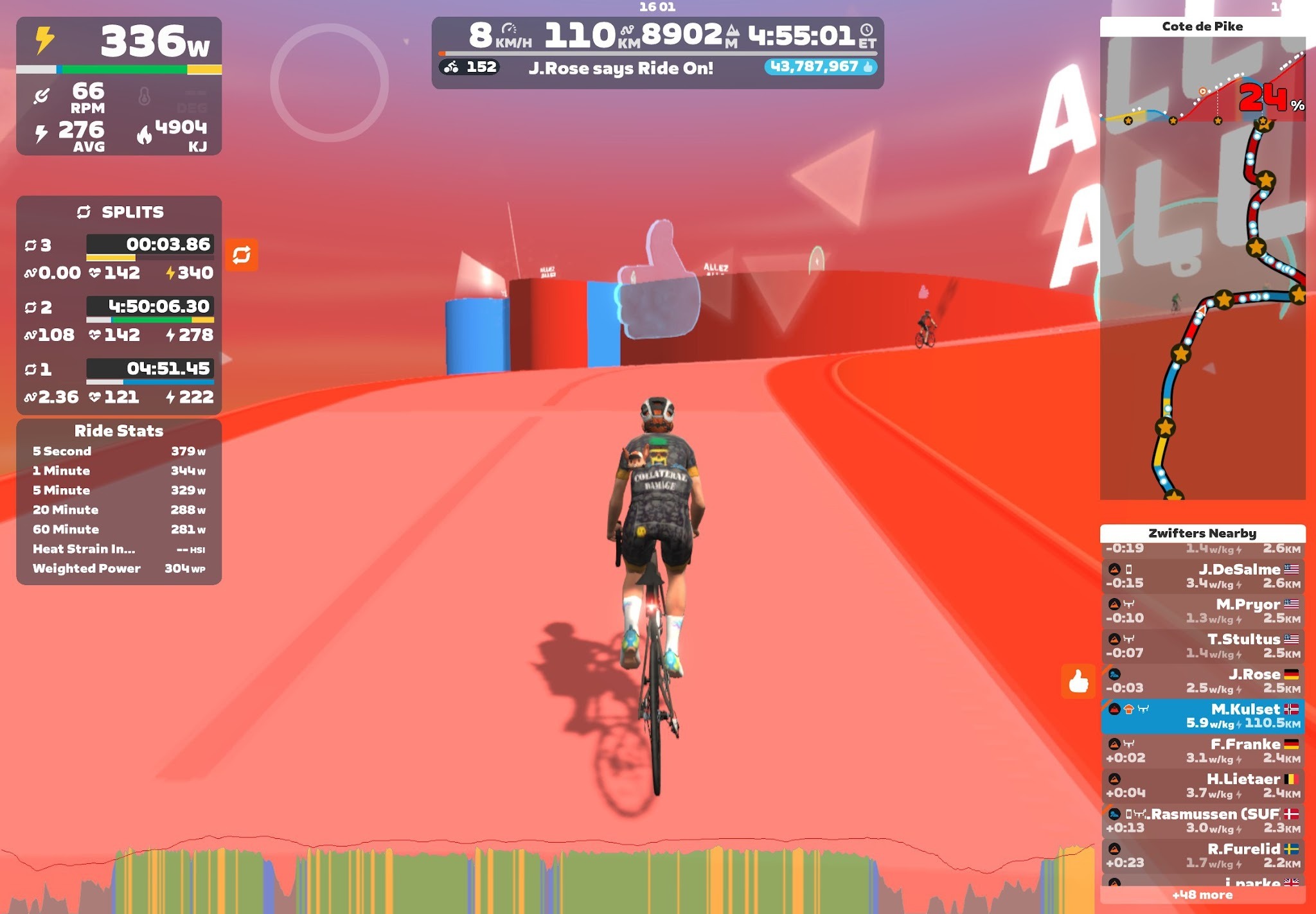
Rather than sticking to the familiar, iconic hairpins of Alpe du Zwift, Magnus set his sights on an entirely different beast: the Côte de Pike climb portal set at a punishing 125% elevation. When the clock finally stopped, his avatar crossed the finish line having accumulated 8,849 meters of vertical gain in an astounding 4 hours and 53 minutes.
We went behind the scenes to look at the math, the mindset, the fueling, and the masterclass in strategy that made this historic sub-5-hour effort possible.
Finding the Ultimate Climbing Laboratory
Every world-record attempt starts in the laboratory of preparation, and for Magnus, that meant playing virtual cartographer across Zwift’s digital terrain. Having previously tested his limits on classic long-form climbs like Alpe du Zwift, Magnus realized that breaking his own barrier required a radical shift in geography.
He methodically tested various routes before zeroing in on Côte de Pike. Measuring 2.2 kilometers in length with a steep 9.5% average gradient and 215 meters of vertical gain per repetition, it wasn’t chosen for comfort. As Magnus candidly admitted, “I have tried all the different climbs on Zwift, and figured out that with 125% elevation Cote de Pike would be the fastest by quite the margin. It definitely isn’t the most comfortable climb to vEverest on, but for maximizing elevation per kilometer, it is the best.”
The 9.5% Wall: A Completely Different Ball Game
Choosing a shorter, punchy climb instead of a long, steady one completely changed the physiological rules of engagement. On Alpe du Zwift, riders settle into a sustained rhythm over a long period, utilizing the extended descent to catch their breath and shake out their legs.
Côte de Pike offers no such luxury. For Magnus, the entire attempt felt less like a series of distinct repeats and almost like one long, continuous, brutal effort. The descent down the 2.2-kilometer stretch lasted a mere one minute—just enough time to shovel a quick bite of nutrition into his mouth, watch his heart rate drop slightly from the red zone, and immediately pivot right back around to face the wall.
Because the climb was shorter and steeper, Magnus found himself operating at a lower cadence to match the high gradient, yet delivering staggering power numbers. In fact, he averaged almost 50 watts more for every single ascent of Côte de Pike compared to his previous Alpe efforts, sustaining that higher wattage band without accidentally drifting into the wrong physiological training zone.
Balancing Ultra-Endurance and Speed
Having previously taken on massive mental and physical trials—such as Double Everesting efforts for mental health awareness alongside Amon Polierer—Magnus views speed trials as a fun way to mix and match his training while primarily focusing on standard distances.
“For me it’s a fun way to try new things,” Magnus explains. “I’m not putting much time into focusing on just ultra-distance, which to me makes it easier mentally. To me it’s a good way to mix and match my weeks and months of training… It makes it easier mentally when I do ultra-things, as it’s for the fun and love of cycling and the community, while a challenge to myself and see what I’m actually capable of doing.”
Baseline Pro Fitness and Relaxed Preparation
How does a rider pull off an ultra-endurance world record on relatively short notice? For Magnus, years of racing at the highest levels provided a built-in physiological baseline. “I think having trained at a high intensity makes your body adapt well to ultra-endurance,” Magnus notes. “For example say you train a lot on 350 watts for an hour or more most days, if you then suddenly start doing 200 watts, for more than an hour, physically and mentally that will in my opinion feel much easier.”
Despite the staggering output, Magnus approaches these massive efforts with a remarkably relaxed mindset. Rejecting the notion of month-long, hyper-specialized blocks, his preparation for Côte de Pike consisted simply of doing a 50% and a 25% vEverest on the Tuesday and Wednesday of that week to test his pacing. “Yeah, I am a strong believer of not making too much out of it,” he says. “For me, having a relaxed entrance to it, lowers the pressure I put on myself. If I make it, great, if not, well then I probably should have prepared better, and will try again at a later point.”
Dialing in the Cave: Setup and Monotony
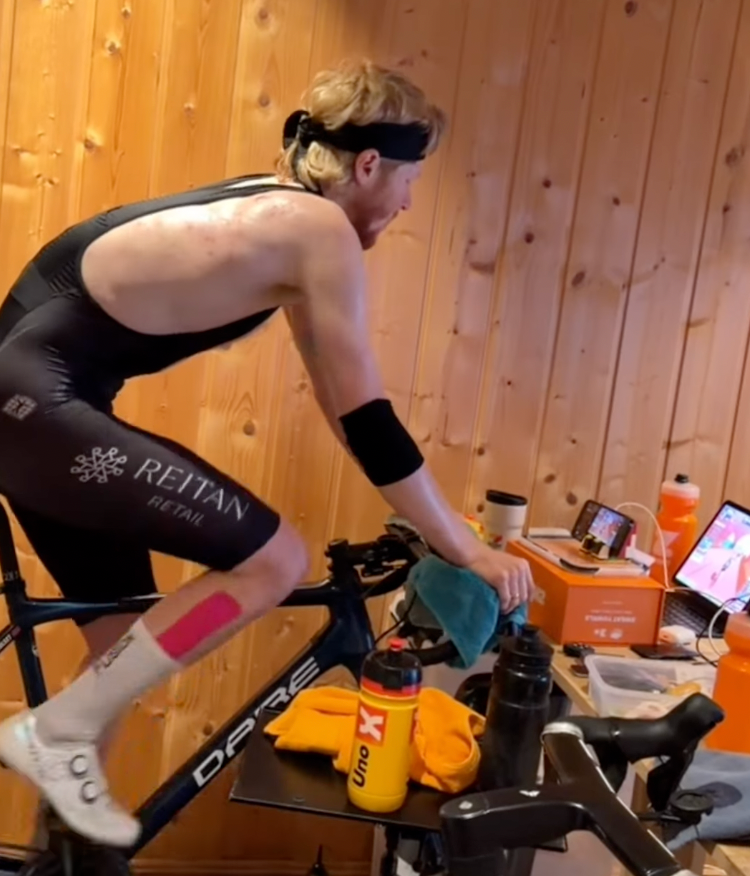
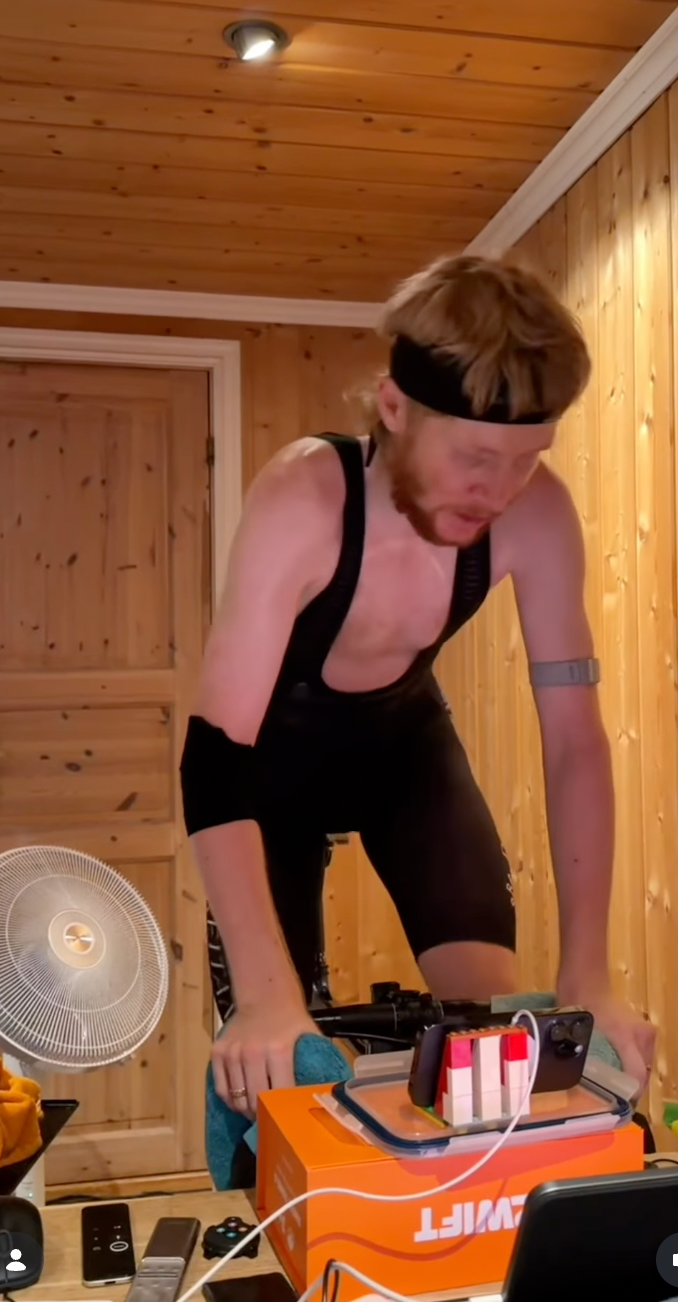
When every second counts in a sub-5-hour vEveresting attempt, mechanical or comfort bottlenecks can spell disaster. “You need to be very accurate in your planning to pull this off,” Magnus stresses. “If your body becomes too hot, it’s game over, so I always make sure I have options to cool down if I notice that it’s needed.” He also fine-tunes his indoor rig with a dedicated hill-climbing bike setup featuring a shorter stem than his outdoor race geometry.
Climbing a 2.2-kilometer loop dozens of times also presents a severe mental challenge. As an economics student, Magnus combats the loop monotony by leaning into his love for numbers: “I always play around with calculations to stay mentally engaged.” Once past the halfway mark, the strategy shifts to locking in on one climb at a time, backed by great music (here’s his playlist) and motivation from online friends.
When asked how indoor suffering stacks up against a brutal WorldTour mountain stage, Magnus notes the distinct psychological difference. In a WorldTour race, you are hanging on for dear life to a pace dictated by the peloton’s best. Indoors, you control your own destiny. “I don’t ride against anyone, so the motivation is different,” he notes. “For me it’s always motivating seeing what I can do, and how good I can do it.”
A Meticulously Dialed Fueling Protocol
Sustaining the output required to clear 8,849 meters in under five hours leaves zero room for nutritional error. Magnus maintained a strict intake protocol to keep his stomach from rebelling at high intensity:
- Hydration: Consuming between 1 to 1.5 liters per hour of fluids, blending sports drinks, caffeine, hydrotabs, and water.
- Carbohydrates: Stoking the engine with 120 to 150 grams of carbohydrates per hour.
- Solid Nutrition: Reaching for his go-to brand of sweets—Haribo—to keep solid fuel flowing.
“I am very calculated in my fueling, knowing that one missed piece of sweet could be a big mistake, and same with hydration,” Magnus emphasizes. “Even when it doesn’t feel necessary or I lack hunger, I will still get down the amount of nutrition that was calculated beforehand.”
Digital Proof and the Family Barometer
For Magnus, high-visibility virtual records serve a valuable purpose in the modern cycling landscape. By putting power files and metrics on platforms like Zwift, it allows everyday fans to measure themselves against pro numbers and test their own limits, even if outdoor records remain the ultimate traditional standard.
And what about the famous Kulset cycling family? Unfortunately, brothers Kristian, Sindre, and Johannes aren’t jumping into the vEveresting game just yet. “I wish they did, but unfortunately I don’t see anyone doing anything like this anytime soon,” Magnus laughs. “Hopefully one day there will be in-family competition again like when we were kids.”
What’s Next for the Virtual Climbing King
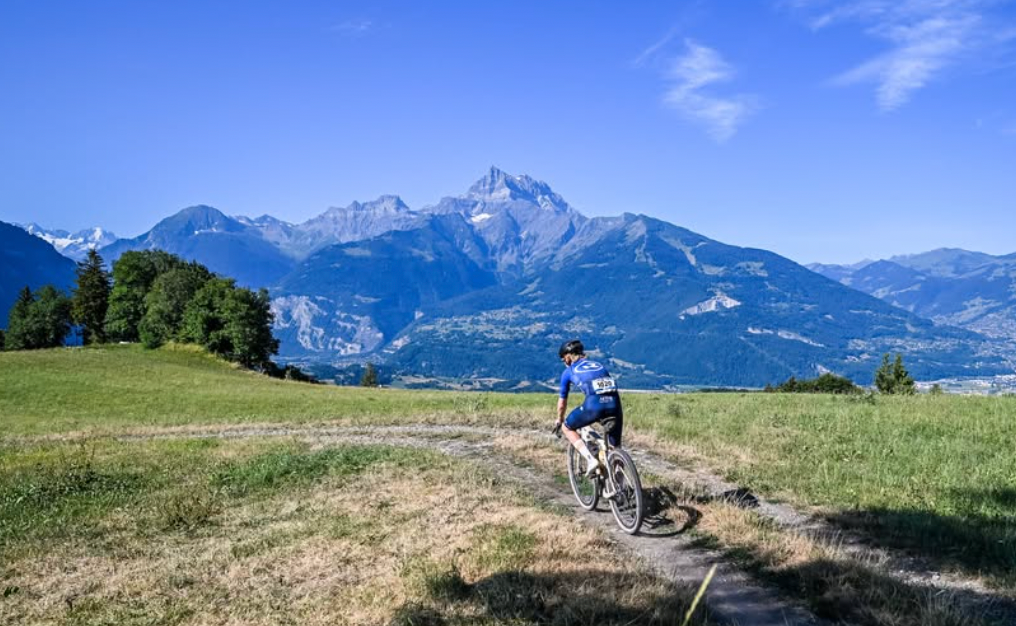
So, after rewriting the record books on Côte de Pike, what is next? Magnus is already looking ahead to his next major test: the Everesting World Championships hosted by the Torturefest Cult Zwift Club, where he plans to tackle multiple 25% and 50% vEverests every weekend in November—an event open to all climbers looking to test their pacing.
See events at zwift.com/events/tag/torturefest >
Looking further down the road, his long-term radar is locked on the outdoor Everesting record, hunting down legendary outdoor KOMs, jumping into gravel racing, and potentially making a return to the top ranks of professional road cycling if a team is looking for a pure climber.
Magnus currently races for Team Ringerike. You can follow his pursuit of peaks and his latest training data on:
- Instagram: @magnus.kulset
- YouTube: youtube.com/@magnuskulset
- Strava: strava.com/pros/3527582
- Everesting Hall of Fame: https://hof.everesting.com/activities/709dbb5f-1eed-4c23-93ce-8d6a407bb64
And on Zwift: