

Wahoo’s KICKR Core is one of the most popular smart trainers in the world, and this week, Wahoo issued a firmware update (version 1.3.17) for the trainer, expanding its capabilities.
See Wahoo’s firmware release notes >
The firmware release coincided with the announcement of the new KICKR Core Zwift One trainer, so it would be easy to miss the news if you are one of the tens of thousands of Zwifters who already own a KICKR Core.
See below for details on the new features delivered by firmware version 1.3.17 and instructions on updating your KICKR Core’s firmware.
New Feature: Auto Spindown Calibration
With automatic spindown calibration, you no longer need to do manual spindowns to ensure accurate power readings from your KICKR Core. Instead, the trainer will automatically calibrate itself as you ride. (This is the same tech built into Wahoo’s flagship KICKR v5, v6, and MOVE trainers.)
How does this work? Wahoo says, “The trainer continuously monitors the motion of the large pulley wheel and flywheel. When the trainer detects coasting, it measures the drag in the system (resistance in the wheels, belt, etc) which allows us to recalibrate. This process only takes a second or two.”
Short answer? It just works. There are no downsides here… just more accurate power, automatically.
New Feature: Virtual Shifting
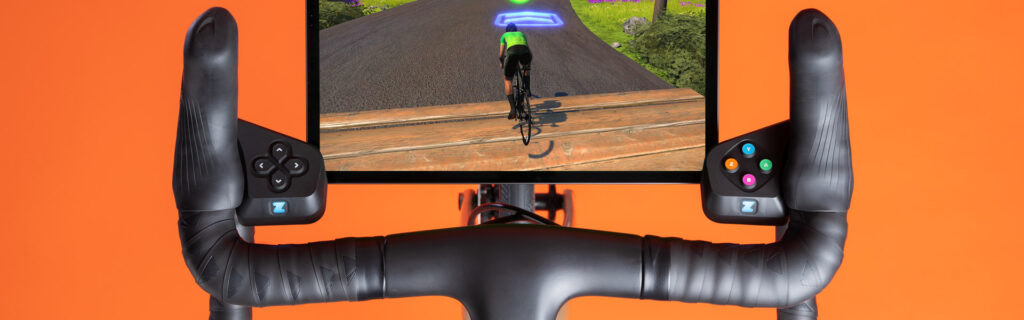
Virtual Shifting is a Zwift-specific feature that requires either the Zwift Click or Zwift Play Controllers. With virtual shifting, your chain doesn’t move between different rear cassette cogs when you shift. Instead, a virtual shift changes the resistance on your KICKR Core so it feels like you’ve changed cogs.
There are lots of benefits to virtual shifting, including flawless shifting, less drivetrain wear, and an expanded gear range. We’ve covered these benefits in more detail elsewhere, so if you’re curious, see “Virtual Shifting Expansion” on this post.
Upgrading Your KICKR Core Firmware
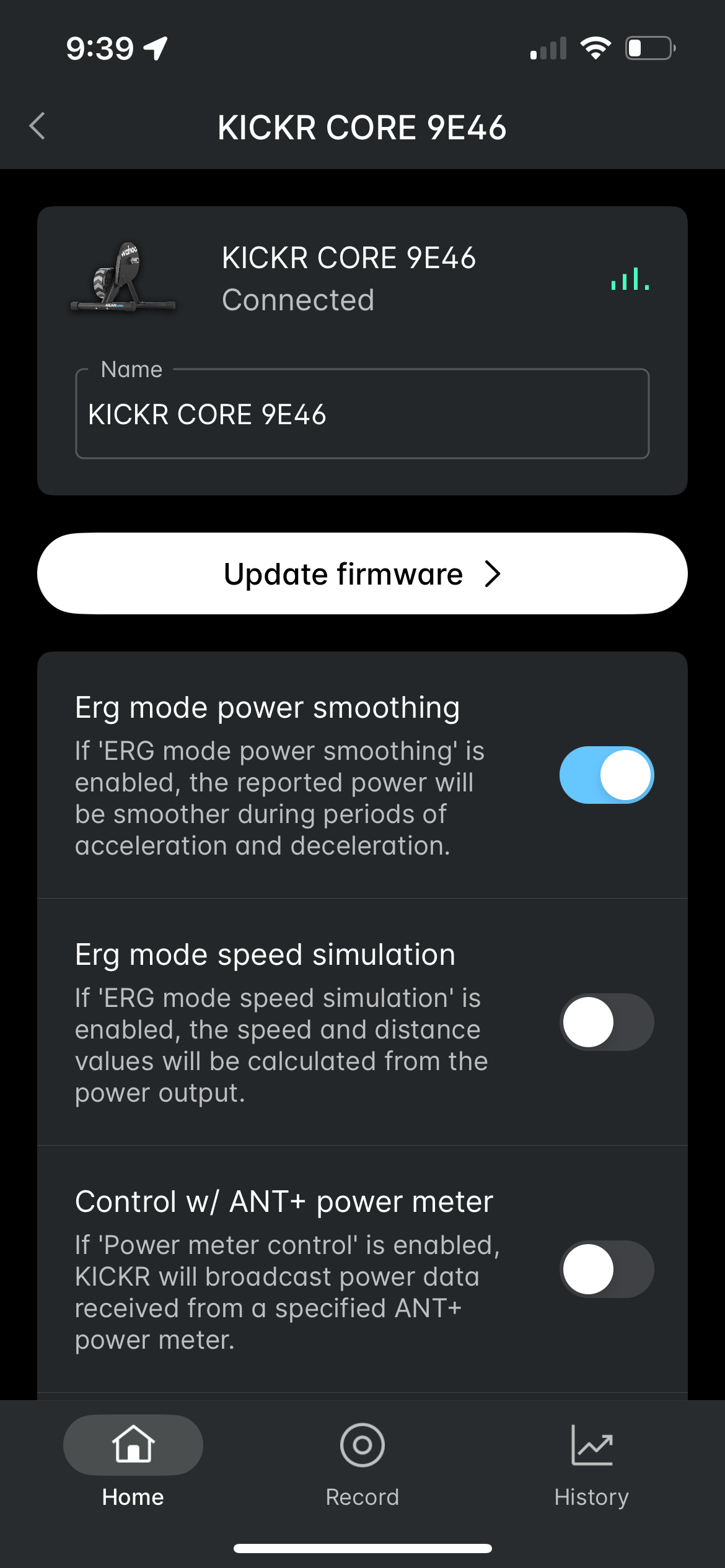
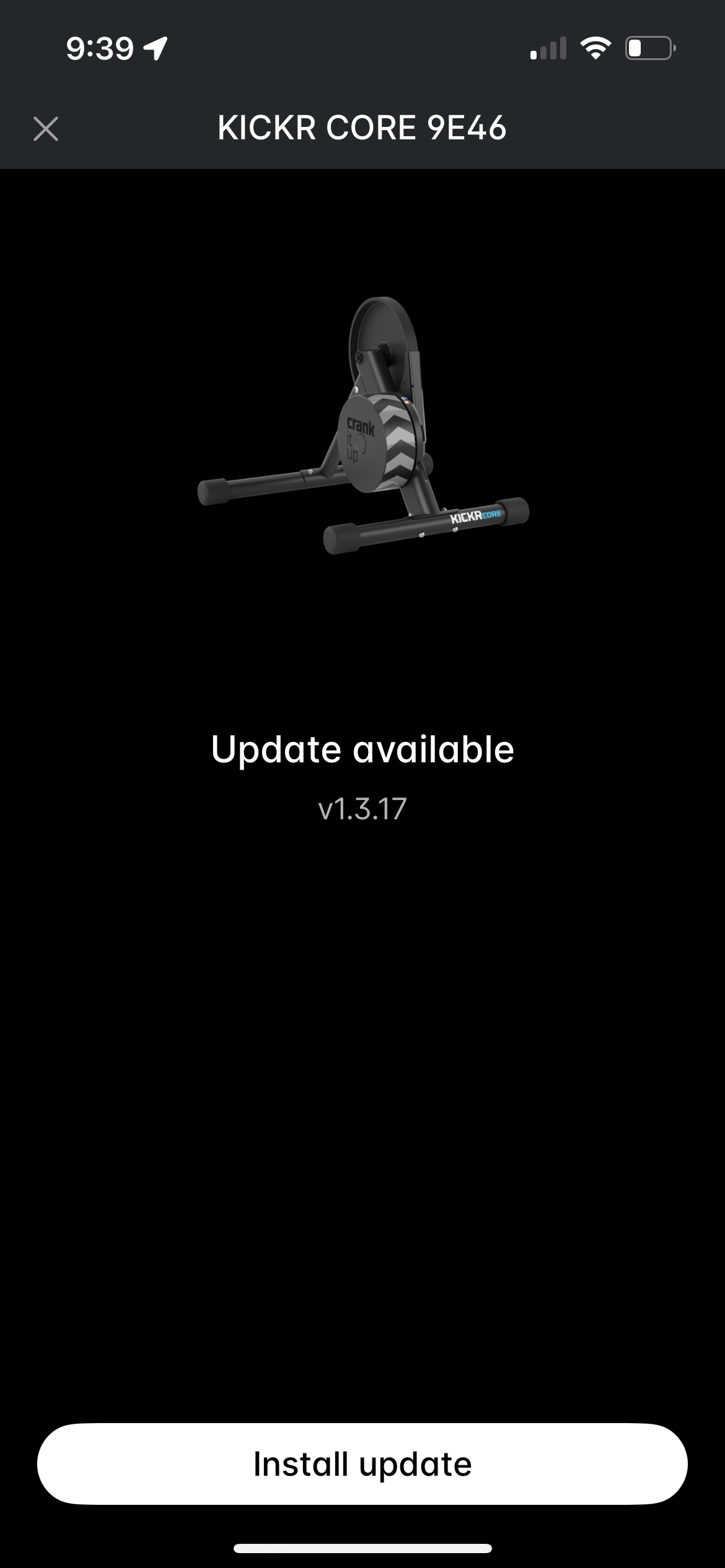
Installing the new firmware is easy using the Wahoo app (available for iOS and Android). Add your KICKR Core to your list of sensors if you haven’t already done that, then click it for details. From there, click the “Update Firmware” button and follow the instructions.
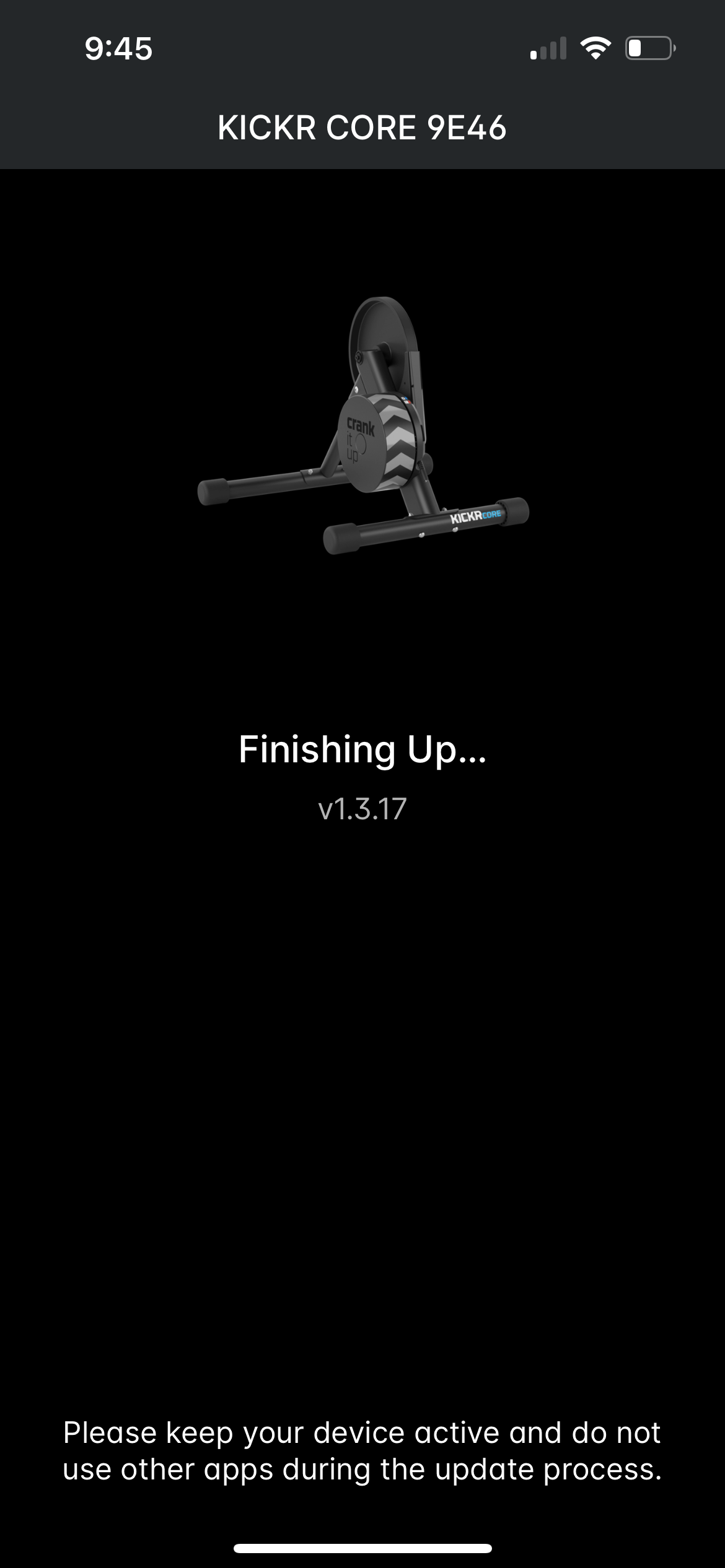
Note: when I installed the update, the app hung on the “Finishing up…” screen. After waiting for around 10 minutes, we restarted the app (which is a scary thing to do in the middle of a firmware update) and it showed the firmware as installed. The KICKR Core has been working fine ever since.
Questions or Comments?
Post below!

Any word/rumors on whether virtual shifting will be coming to Kickr v5/6?
Hope mine V5 gets this update soon!
Yup, the DC Rainmaker article and video mention it going back to the V5, V6 specifically. He also confirmed my guess that it will go back to the V4 eventually since that was the first one to get the silent belt drive design.
I heard about a week ago from a podcast by DC Rainmaker that if we ordered the play controller now that virtual shifting software update for the Kickr V6 may be released before the play controller arrived. Well, I ordered the play controller and it arrived yesterday and it still does not work on the Kickr V6. I hope that the software update comes soon!
With the announcement of the new wahoo trainer, what happens with firmware updates to the zwift hub trainers, will they no longer receive updates? I purchased my zwift hub trainer in March of last year, would this mean that I would need to purchase a whole new trainer going forward? I have really been enjoying my first year with zwift and have really been happy with all of their hardware; I purchased controls, the click as well as the cog for virtual shifting, please tell me I didn’t make a mistake.
Zwift has said they’ll continue to support firmware updates on the Hub for 2 years. As well as honor the warranty on the units.
will any of these features come to Kickr18?
THIS!!!
AFAIK KICKR 18 (v4) and CORE share a very similar hardware. Also if you look at their respective FW update history they have been mirroring each other. I’m especially interested in the auto-calibration. Please WAHOO release these features for the v4 as well!
Just to clarify; can I now buy the Zwift one cog and install it on my Wahoo Kickr Core from 2022?
https://eu.zwift.com/products/zwift-cog-click-upgrade-kit?variant=44725431238907
No. Well, sort of.
The Zwift Cog comes with a freehub that doesn’t work on the Core. You can take the Cog apart, and just install the actual gear onto your Core’s freehub. It’s a bit hacky, but works.
Okay, and the two black plastic cups does also fit on the Kickr Core freehub?
yes,
Will the single little shifter unit be made available for purchase without cog?
Will shift buttons be integrated into companion app?
Is the shift button protocol open via Bluetooth so it maybe could be reverse engineered into a custom solution (keith wakeham comes to mind)?
Hi, the firmware was released on 01/22, but without details on its content. On the other hand, the release note was updated yesterday with autocalibration and virtual gear shifting… Strange how it happened…
Just did the updates for Core and Climb…easy peasy…Thanks
Hope you don’t run into the same issues as we did after updating the KICKR CORE firmware..
https://forums.zwift.com/t/kickr-core-firmware-update-available-01-2024/623165/14?u=wil
Thanks for posting this. Came here because I’m having major calibration issues after updating also. Kickr Core and Android App.
Amazing, makes it hard to justify the Kickr when Core has auto-cal too. I’ll save my 400 quid for another 1% accuracy. Surprised they did it,but then again had to, to match Zwift Hub specs. Tried shifting on play controllers works a dream, the jumps seem bigger than my real block… Ideal on steep stuff and stops spinning out on down stuff now with better chain line. My Christmas came early.
Now that it’s becoming more widespread – has anyone actually demonstrated there is less drivetrain wear associated with virtual shifting? It’s taken for granted in the story above.
From a basic understanding of how materials work and drivetrains age, I can imagine the opposite – things might actually be worse, or potentially much worse under some conditions.
In which case it may not be advisable to implement on your ‘A’ bike, or you may want to dedicate particular cogs/chains for indoor use, for example.
Happy to be proved wrong about this, though! Wish I had time to test it out myself!
Hi Harry,
You probably know a large amount of the wear in your bike’s drivetrain comes from physically shifting gears – such as from the friction of the chain rubbing against cogs and derailleurs as it moves from cog to cog. The noisier your gear changes are, the more wear is being caused.
With virtual shifting you never physically change gear – you put your bike in a single-speed and the chain never has to slide or jump from one cog to another. As long as you get a straight chainline – which doesn’t rub – you won’t have any of those noisy, wear-causing gear changes so overall wear will be lower.
What makes you think it would be worse – are you thinking wear may be lower but more uneven? If so, that’s where a “dedicated cog” like the Zwift cog comes in.
Hi Paul,
Thanks for the question. So, quick thoughts.
First point is that it’s pretty generally accepted the chain/cog system wears like a system. As the two become increasingly unmatched, or less well matched. then the cog(s) wears the chain faster and the chain wears the cog(s) faster.
In a ‘normal’ setup, or what I’ll call normal for the purposes here, the chain runs at a range of angles. Leaving aside very bad operator error, it’s not obvious to me that ‘a large (relative) amount’ of wear to the ‘drivetrain’ comes from properly shifting gears. Maybe that’s true, though, I don’t know. It strikes me that if you’ve cross-chained it’s not the shifting that’s causing the damage right? Plus in terms of frequency of events the increase in damage/wear would have to be on the order of, what, 1000x-10000x higher than the wear associated with the gears running? Is it 1000x or 10000x, or only 10x, or much more?
Angles come into play for the first point too.
There’s probably also concerns about the indoor environment and reduced ‘cycling’ of the system and maybe things like resonance effects as well.
Maintenance helps prevent most wear in all contexts of course, so a different way of putting it is that virtual shifting may have (probably has?) considerably different maintenance requirements than traditional shifting set ups.
It may also be that you should not use the same bike for both if wear is a concern.
any word/rumor on other trainers like the. neo 2t?
Yeah, I was thinking the same. Would like to try virtual shifting on my Neo2
The overall resistance of my Core definitely jumped up after the firmware update.
For the same power output, I’m running 2-3 cogs higher up the cassette than before.
Not an issue, but something that was definitely noticeable.
It would be nicely appreciated if Zwift could offer the virtual shifting in different ways to make it much more affordable. As of now the cheapest way to get virtual shifting is the cog+button which is still 80 euros!
It would be nice to just buy the button at a much lower price. People who already have a kickr core will already have a cassette they can use the click with and seems crazy to think someone can realistically buy a dedicated cassette for much lower than that plastic cog.
Even better from zwift is to allow the up/down that the click sends to zwift to be done via a keyboard shortcut then we can get even more creative with mapping various other devices and put us in control of utilising the virtual shifting
Is there any scope for Race Mode to come to the Kickr Bike v1 via firmware update? Or does it simply lack the hardware to be able to upgrade? I know it doesn’t have direct connect, but it does have USB…
Hi, can you still use “oldschool” shifting if you have an updated Kickr core with cassette and play controllers? Or will the software somehow try to “overwrite” your shifting? Thanks, Matthias
Yes you can. Zwift Hub Classic users (myself included) do this.
Yes, you can do mechanical shifting even though virtual shifting is activated.
Hello. Any possibility regarding gear indicator on Zwift for users of Wahoo bike shift?
I’m always terrified of calibration, since I’m afraid that my trainer has been over-reading and I will lose a bunch of power. I know it’s equally likely that it will give me more power, but it still stresses me out! It’ll be nice to have an auto-calibrating trainer and not worry about it anymore.
Is there any indication of what the timeframe is for the virtual shifting coming to v5/6 Kickr… weeks or months?
Sounds like it’ll be very soon. I don’t know exactly what that means, though, and Wahoo isn’t promising any dates. I’m expecting within a month or so!
Thanks Eric
Eric, do you know if Wahoo will be releasing a firmware update for Kickr V5 for virtual shifting and if so when?
GPLama says Wahoo is adding virtual shifting to KICKR v4 and up, and quite soon. No date given though… but I do know some testers have the firmware in use currently.
Will you be able to buy a Wahoo-Zwift cog to update the “old” Wahoo Kickr Core?
Do you have any info about that?
It may happen, but Zwift hasn’t promised anything. Until then, if you really want the ZCog, buy the one for the Hub, then remove the ZCog assembly from the freehub it ships with and install it on your Core.
Hi Eric, Thanks for the article. I’ve purchased the Kickr Core + Zwift Cog in Feb, and have been using it weekly ever since.
Regarding the auto-calibration, I’m a bit skeptical and I’m wondering if you have any thoughts. I feel that there’s a shift of resistance (and I’m not talking about the gear) while I ride happening after 30mn, 40mn, 50mn… Depends on the ride.
To give a concrete example, let’s say I do a work out where I need to sustain 200w* for 80mn. For the first 50mn, I was definitely feeling it in the legs, and averaging 130bpm, and then, all of a sudden (after I’ve increased my cadence to give my legs a bit of change), it felt like riding 230/240w became suddenly very very easy on the legs, and I can also see my HR is decreasing at the same time to 110bpm, then 100bpm, down to 95bpm as I go and finish the workout. So in other words, without virtually shifting gears (same gear remained), I can feel that it becomes suddenly much easier to have a higher cadence and hence my power output increases but the strain on my legs reduces massively.
This has happened on other rides, while doing intervals for example, and sometimes only after 30mn or 40mn.
While I’m no expert, it feels like the calibration is completely off after a while, and hence I’m wondering if this is something that has happened to others.
Any thoughts on this?
Thanks a lot, and thanks again for all your content.
Thomas
*note: I’m not on ERG mode; and the road was mostly flat.
PS: Happy to share Zwift/Strava extract where we can see the watt output, cadence & HR, for whoever interested.