
Glen Garry Wilds (The Scottish Highlands) Zwift Video Route Details
Route Basics
Length: 13.4 km (8.3 miles)
Elevation: 243m (797′)
Location: The Scottish Highlands
Zwift Plus required
ZIMetrics
Rating: 8.7/100 🛈
Time Estimates 🛈
4 W/kg: 23 minutes
3 W/kg: 27 minutes
2 W/kg: 34 minutes
Ride Achievement Badge: 270 XP
Strava Segments
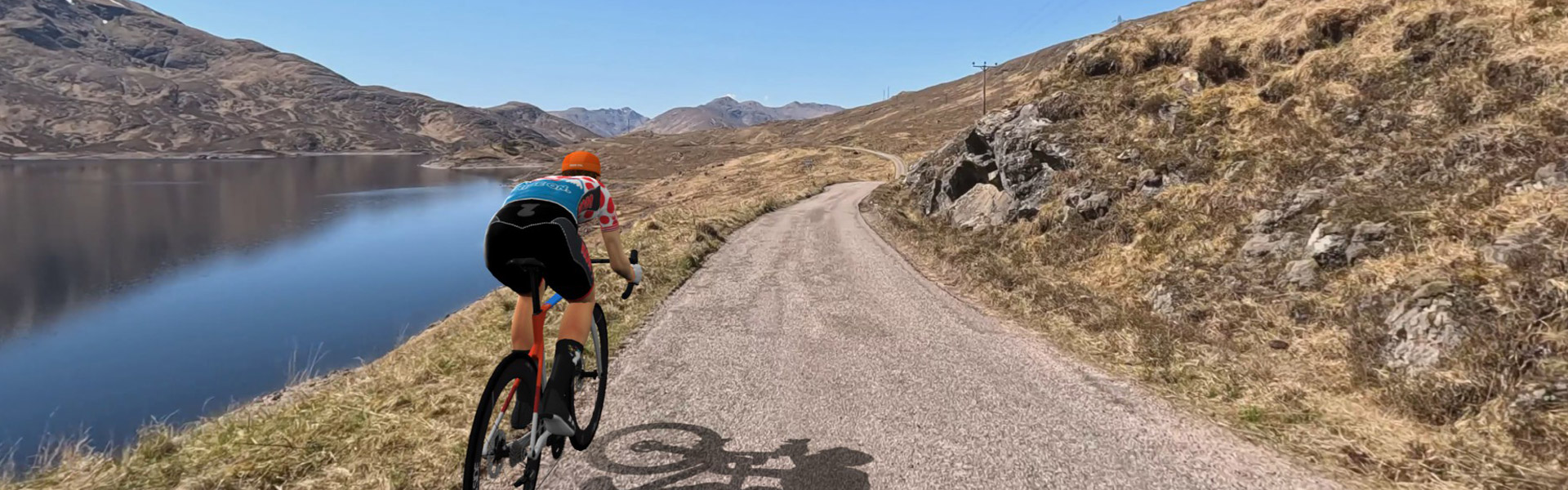
Glen Garry WildsGlen Garry Wilds covers the upper reaches of Glen Garry, among the quietest roads in the Highlands. You’ll notice this road is narrow but well kept. It was upgraded, though still left single-track, to serve the hydro dam at Loch Quoich, so the tarmac is better than you’d expect this far from anywhere.
The ride winds and dips for the first half of the route alongside River Garry, before climbing up to the dam. The remainder of the route is alongside Loch Quoich. Watch for deer crossing! And if you ride this IRL, expect changeable weather. This is one of the wetter corners of Britain, so a dry ride is never guaranteed.
On a clear day, though, few roads match it: Highland historian James Hunter rated the trip from the Great Glen through Glen Garry to the Atlantic among the most scenic journeys in Britain.
Ridealong Video
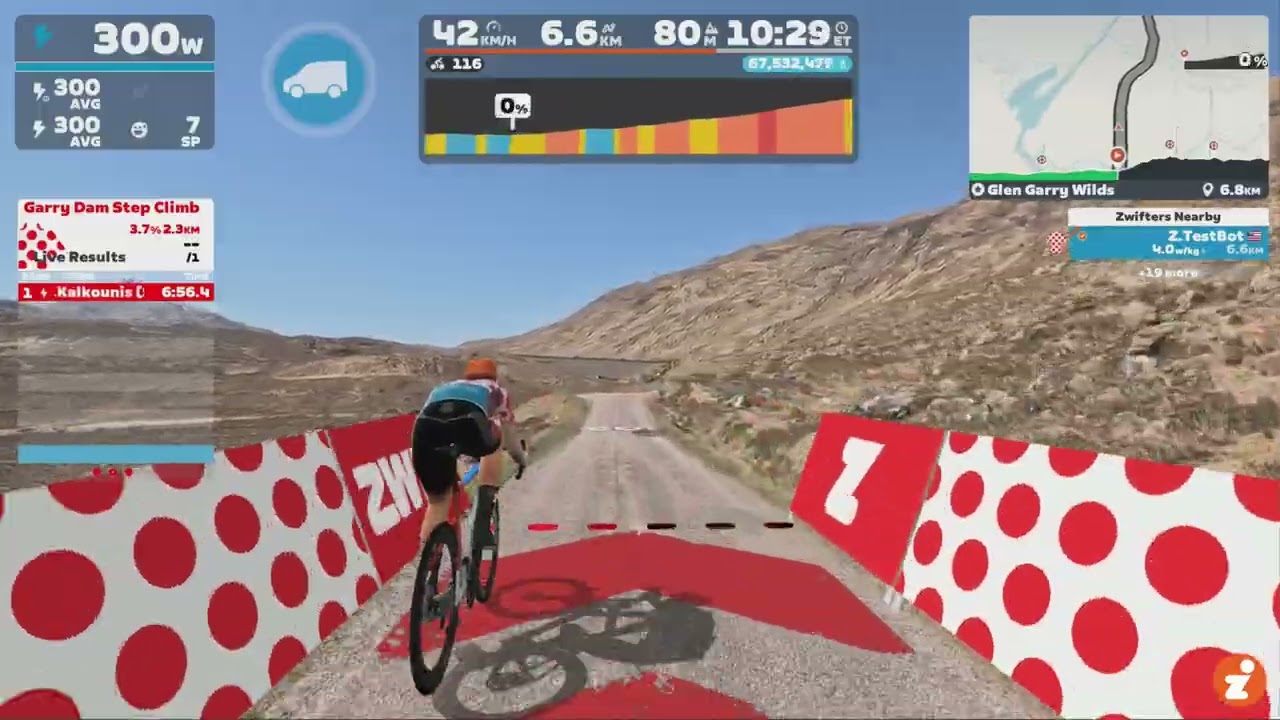
IRL this is an out and back ride to end at sea level. If you continue on foot or mountain bike along the sea loch (Loch Hourn) you reach the wild bounds of Knoydart. No roads, wildest wilderness, fantastic mountains. It’s a land of seclusion and rebel uprisings. To return to this route though, once past the dam the lovely hill on the other side of the loch is Gairich, one of the easiest of the 283 summits known as Munros (over 300 ft, 913 metres.) On the right of the route, for most of this way are another two Munros, Spidean Mialach and Glouraich. In the last couple of Kilometres of the route the cars and vans crowded into parking spaces by the side of the road show where the start of the walking route is, and just how popular climbing to high places was on this day. What a glorious day for a bike ride in a really glorious place. What a glorious day to climb up to that blue sky.
Lastly, in the last km or so before the finish the route becomes more vegetated on each side. The yellow shrub is gorse, an indigenous plant, but the dark green foliage is an invasive shrub, Rhodedendrons. They originate in the Himalayas and were planted in scotland because of their glorious colour when in bloom. However, they have become a real scourge as it chokes native plants and theres a lot of activity to get rid of them. Here it is choking out the gorse.