Facebook Instagram Twitter Youtube
  • Get Started
    • Create Zwift Account
    • How To Get Started On Zwift
    • Zwift Course Maps
    • How to Race on Zwift (Setup, Strategy, and More)
    • Women’s Racing on Zwift
    • Links Every Zwifter Must Have
    • More “Get Started” Posts
  • Tips & Tricks
    • Training & Nutrition
    • Racing
    • Zwift Hacks
  • Reference
    • How Zwift Works
    • Course Calendar
    • RoboPacer Calendar
    • Weekly Challenges Calendar
    • Climb Portal Calendar
    • Upcoming Events
    • Game Updates
    • Smart Trainer Index
      • Current Models
      • Exhaustive Trainer List
    • Achievements & Unlocks
      • XP Basics for Riders
      • XP Basics for Runners
      • Kit Unlock Codes
    • Frames & Wheels
    • Routes & Maps
      • Master List: Routes
      • Master List: Climb Portal
      • Master List: KOMs
      • Master List: Sprints
      • Master List: Rebel Routes
      • Downloadable Watopia Map
      • Printable List of Routes by Difficulty
    • Speed Tests
    • Tiny Races
  • Women
    • Race Calendar
    • Why race?
    • Women’s Teams
    • Racer Spotlights
    • More Women’s Racing posts
  • Shop
    • Watopia Map and Other Posters
    • ZI Indoor Cycling Kit
Search

Logo

Logo

  • Get Started
    • Create Zwift Account
    • How To Get Started On Zwift
    • Zwift Course Maps
    • How to Race on Zwift (Setup, Strategy, and More)
    • Women’s Racing on Zwift
    • Links Every Zwifter Must Have
    • More “Get Started” Posts
  • Tips & Tricks
    • Training & Nutrition
    • Racing
    • Zwift Hacks
  • Reference
    • How Zwift Works
    • Course Calendar
    • RoboPacer Calendar
    • Weekly Challenges Calendar
    • Climb Portal Calendar
    • Upcoming Events
    • Game Updates
    • Smart Trainer Index
      • Current Models
      • Exhaustive Trainer List
    • Achievements & Unlocks
      • XP Basics for Riders
      • XP Basics for Runners
      • Kit Unlock Codes
    • Frames & Wheels
    • Routes & Maps
      • Master List: Routes
      • Master List: Climb Portal
      • Master List: KOMs
      • Master List: Sprints
      • Master List: Rebel Routes
      • Downloadable Watopia Map
      • Printable List of Routes by Difficulty
    • Speed Tests
    • Tiny Races
  • Women
    • Race Calendar
    • Why race?
    • Women’s Teams
    • Racer Spotlights
    • More Women’s Racing posts
  • Shop
    • Watopia Map and Other Posters
    • ZI Indoor Cycling Kit
More
    Home Blog Page 468

    Zwiftcast Episode 32

    • Interviews
    • News
    • Training & Nutrition
    Simon Schofield
    -
    August 16, 2017
    0
    Zwiftcast Episode 32

    Zwiftcast Episode 32

    Episode 32 of Zwiftcast has been released. Here’s the full episode description:


    Simon, Shane and Nathan are back to discuss a very busy period for Zwift news and chat. This episode is available in both audio and video versions.

    The chaps start off discussing customisation, outlining their avatar policies and deciding that the new customisation features are much more fun than they ought to be. . . . . for grown men and women. Was “Ponytailgate” a thing? Listen to find out what the trio think.

    There’s a quick rattle through all the other Zwift news, including the billionaire on the super yacht in a Zwift T shirt; the emergence of Running; the influence of the new influx of pro riders for recruitment of new subscribers to the platform and the appeal of working at Zwift as the company continues to hire new staff.

    Long-time Zwifter Casey Schumm discusses the prospects for Zwift Running in the podcast’s first feature on the new way to Zwift.

    The widely-respected sports tech blogger Ray Maker makes another appearance on the Zwiftcast, this time talking about the challenges and rewards of building a business and a new life in Paris.

    Simon, Shane and Nathan go on to discuss the ethics and pitfalls of reviewing sports tech products – pertinent given the imminent holding of Eurobike, the world’s biggest bike show, and an occasion when we expect a number of new products of interest to Zwifters to be unveiled.

    The final recorded feature on this episode is with coach Kev Poulton, who analyses the effectiveness of probably the best known interval in cycling, the 2×20.

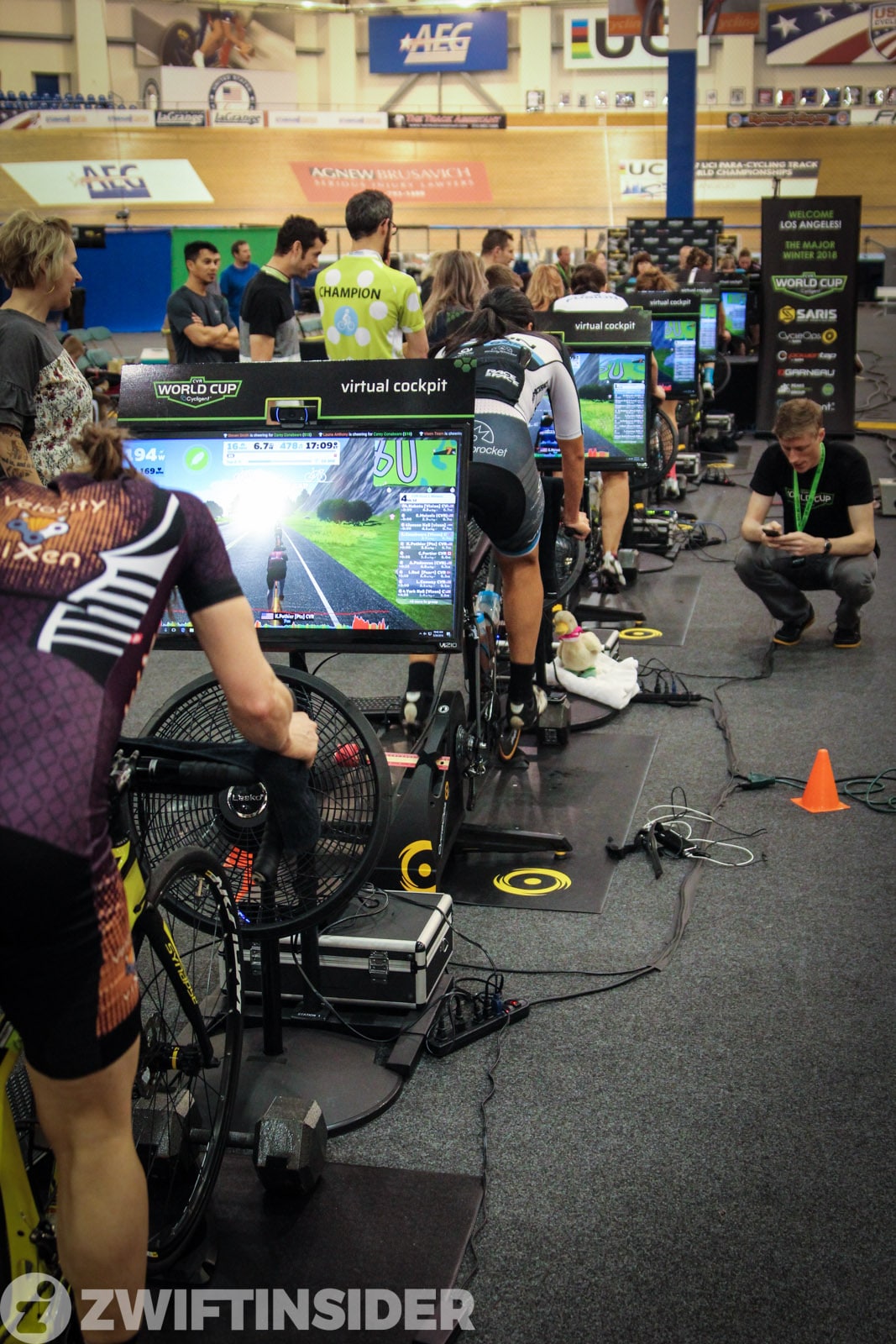
    The trio round off a lively and varied episode with a serious discussion about what the advent of a large prize purse for the next CVR World Cup event in Paris may mean for virtual bike racing. . . a fascinating area to discuss.

    We hope you enjoy either watching or listening to this episode.


    Zwift releases update 1.0.19710

    • Game Updates
    Eric Schlange
    -
    August 4, 2017
    0
    Zwift releases update 1.0.19710

    Zwift releases update 1.0.19710

    ZwiftHQ pushed out a new update to the desktop version of the game last night, with the corresponding iOS updates coming in the next day or two. Based on the last several months, it appears that updates are being released on a fairly regular schedule typically within the first 10 days of each month.

    The biggest new feature in this update is avatar customization. The team at Zwift has made a major upgrade to our ability to upgrade our avatar (runners included!), and it is clear from the new interface that additional customization options will be coming down the road.

    Here’s what the new interface looks like, along with some details for each option:

    Kit: interface is drastically improved with previews of all the kits in your closet.
    Frame: interface improved with previews plus star ratings for weight and aero level.
    Wheels: interface improved with previews plus star ratings for weight and aero level.
    Helmet: choose between the old white helmet or a new black one. Or a cap (see unlock note below). Additional unlocks to come.
    Sunglasses: choose between two styles, and unlock a couple more once you start riding (see below).
    Gloves: just one glove option for now.
    Socks: yes! Multiple colors and patterns available (see unlocks below), PLUS you can set your sock height.
    Shoes: choose between black and white.
    Hair: additional haircut options for anyone who isn’t blessed with baldness.
    Facial hair: sorry ladies, you don’t have this option. But my beard has finally made it into the game. Excellent!
    Skin color: not much different than before the update.


    Within the first couple minutes of riding in game, you’ll unlock additional wearables:

    Level 25 only!

    Additional Changes

    This update also includes lots of other changes:

    • ANT+ FE-C trainer calibration button added for some trainers: this is a good first step towards helping newbies make sure their power numbers are accurate without needing to use a third-party phone app or cycling computer.
    • Bluetooth support for calibration on Wahoo and Cycleops smart trainers
    • Italian language support added
    • Runners can now earn items and level up to level 10
    • August mission added
    • Graphics slightly improved, ‘floating grass’ fixed
    • More options added to your Zwift.com connections page: now pair youra ccount with your Withings scale and MapMyRun / MapMyRide

    Game Master Jon Mayfield included this note in the update:

    We are continuing to work on our next batch of new roads, improvements to events, and some very exciting Zwift Companion app updates.

    Exciting stuff! Keep up the good work, ZwiftHQ!

    Read full update notes on Zwift.com >


    Controlling the race (Skillz and Drillz)

    • Racing
    Ian Murray
    -
    August 3, 2017
    0
    Controlling the race (Skillz and Drillz)

    Controlling the race (Skillz and Drillz)

    ODZ SkillZ and DrillZ, 19 July – For the past three weeks, we have built up our ability to control the race in the most efficient way possible. We started this journey just as the Tour de France was getting underway as a way to relate what we see with what we do. Managing the race and how we behave in the race is just as important as having strong legs. Races evolve, and we have to learn to make it evolve in our favor, rather than simply reacting.

    It’s a Group Thing, Baby

    The first skill necessary to controlling the race is the ability to ride in the group in a good position. Too often in Zwift and IRL races, we are in one of two positions, on the front or off the back. Those are the two worst places you can be, as you have to work so much harder than everyone else.

    This begs the question: why do we always sit in the positions that make us work more instead of relaxing in the bunch? During IRL races, I understand the discomfort and insecurity of riding in the middle of a bunch, rubbing elbows and trying not to crash. In Zwift, though, this makes no sense. It’s just a little harder to manage due to the fact that avatars can ride through each other. Because of this difficulty, we need to practice it often both at pace and during controlled efforts.

    If there are any doubts about the importance of being able to sit in the group, please watch any bike race. The winner spends a good portion of the race in the draft, protected by teammates. The only time the winner goes to the front is when it is necessary. Part of this skill involves learning how to control your position when the group’s speed changes. Riders need to learn quickly how to look up towards the front of the group to anticipate these changes before or as they begin to happen. Waiting for the wheel in front of you to change speed is a recipe for disaster and can lead to an unnecessary energy expenditure or crash.

    During the first lesson of the series, we spent a significant portion of the class riding at different paces, keeping the group together. We changed the pace gradually, ramping up to harder paces, allowing riders not accustomed to riding at those efforts to benefit from the draft. Those riders who successfully stayed in the bunch saw that they were able pedal at much lower wattage than those at the front of the group. This dynamic enabled the riders to stay together in a tight group. However, the first few iterations of our drill were not very successful with riders strewn about the road. What changed? Well, at the beginning, many riders were missing the forest for the trees. What I mean is the riders focused on the wheel directly in front of their avatar and not the group as a whole. That is the same as driving by only focusing on the vehicle in front of you and not all of those around you. It is imperative to keep an open aperture to see the group as a whole. If the front is bunched up, three or four riders across, it is better to position yourself right in the center of the group a few rows back. The draft zone is bigger, and you get caught up in the group. Sitting just on the one wheel, stretched out in a long line, leaves you dependent on that one rider. If he/she accelerates or sits up, you will likely find yourself out of the group before you realize what has happened. That’s not a good end to the day.

    Find Your Inner Control Freak

    The second skill that riders need to practice is controlling an attack or break. More often than not, an acceleration on Zwift leads to a bunch of individuals sprinting to cover the attack. Sometimes that is necessary, and normally that is how most Zwift races start. But again, this begs the question of why. If we are in a group of 30 with teammates, is there a need for all of us to burn matches to cover an attack by a single rider if that rider is not known to be one of the strongest riders? Absolutely not. Refer back to the first skill about riding in the group. The bigger group, with very few exceptions, will move faster at a similar effort of the solo rider or small group. Thus, if a rider attacks, taking one or two others in tow, a sound strategy is to have the group elevate its pace (much easier to do with teammates) to match the effort of the breakaway riders once they drop out of attack mode. Sure, the attacker(s) may get a small advantage, and you as the group may even ease off a little bit to give the break some rope. As long as you pay close attention, the big group can manage the gap to keep it small enough to close down at will. The break will have to burn significantly more energy to gain the advantage and maintain gains than the much bigger group of chasers who can take turns working.

    If you are lucky enough to have a group of teammates in the chase pack, figure out who the expendable riders are and put them on the front. Seriously, this is how it is done at all levels of racing. I do it routinely for the stronger ODZ riders, as I know that my sprint is a bit lacking. Likewise, they do it for me as we head into a finishing climb.

    At some point, the chasers will have to decide when to shut the break down. It may be due to the end of the race approaching or the break having too much time. Whatever the reason, do it as a group. Again, use teammates if you can, and share the load with other riders if you do not have teammates. Think of it from a math perspective. If the break rider is holding 4.1 W/kg trying to stay away, the bunch needs to do about 4.5 W/kg to shut it down quickly. If the chase has ten or so riders, why make the effort one versus one. The chase riders can each take turn pushing 4.5 W/kg for one minute and sitting in at 4.0 or less for nine minutes. The net expenditure of the chase will be a lot less than the breakaway rider. If you are really cagey or have teammates supporting you, it is possible that you may not have to even do a turn at the front. How awesome would that be? What often happens, though, is the chase group devolves into a series of 5+ W/kg attacks in an effort to bring back the rider or bridge across. I go back to the lack of rationality of that choice when you look at the energy saved versus expended.

    Cast Judgement On Your Fellow Riders

    The last, and most difficult skill to learn is the ability to judge the threat from an attacking rider. Some riders should never be allowed to go up the road solo, as they won’t be seen again until the finish line where he or she might be waiting with an adult beverage. This was the problem Fabian Cancellara had in the latter years of his career during the cobbled classics. Everyone knew that if Fabian went up the road alone, the race would turn in to one for second place. Thus, teams did their best to not let that happen, or at least stave it off until later in the race in hopes that their riders could go with him. Other riders can be given a leash on flat courses but not on hilly courses or the reverse. Most of it depends on your knowledge of the rider from past experience or how the rider is behaving. If a skinny-looking rider takes off on the climb, it’s probably best to not give that rider much space. Likewise, I wouldn’t give a heavier rider an inch on a flat or downhill run in to the finish. Understanding your competition will help you determine who goes and who is not allowed to go, assuming that the attacking rider is not simply able to ride the whole group off his or her wheel. Yes, I’m talking about you, BB and Purificati!

    Over the last three weeks, we spent a good deal of time during the SkillZ and DrillZ Ride practicing techniques that will help us control the race as much as possible. The most important aspect of all is being smarter than the other racers. To help you with that, remember the four steps to controlling the race:

    1. Identify who is attacking – Is it a dangerous rider or someone you know is not that strong.
    2. Determine if you can let him or her go – Once you have identified who is attacking, you will quickly know whether that person is a threat to win the day.
    3. Chase or control as a group – Making a bunch of solo efforts is pretty pointless unless you want to lose the race. Use the strength of the group to pull back the attack or control the gap. Keep the pace where it needs to be, but don’t spend the whole time on the front if others are willing to share the workload.
    4. Shut it down – Once you have decided to end the break’s freedom, shut it down in a controlled manner. Determine the minimum pace you need to ride to pull the break back in a timely manner. Don’t exceed that average effort unless the gap doesn’t close. Like in the chase/control phase, work together to spread the effort across as many riders as possible.

    If you follow these simple steps, your group should be able to control any race where riders are evenly matched. Again, if Matt Hayman joins your race and decides to put the screws to you and attack, there is not much that you will be able to do. Well, you can race for second place, I guess.

    SkillZ and DrillZ will be off the week of 26 July but will return the following week. Hope to see you then. Until then, Ride On!


    Power-Based Training: Where to Begin?

    • Training & Nutrition
    Taylor Thomas
    -
    August 3, 2017
    0
    Power-Based Training: Where to Begin?

    Power-Based Training: Where to Begin?

    The “Watts up with Power?” ride is likely the slowest group ride you’ll find on Zwift, because it focuses on learning the basics of power based training while riding together on Zwift. Each ride is streamed to Zwift LIVE by ODZ on Facebook, and focuses on teaching specific principles of power-based training. For viewers that are unable to attend live, the teaching is made available for all to review afterwards.

    Here is the summary for August 2nd from ride leader Taylor Thomas.


    The ultimate reason for training and racing with power is to be able to more effectively and accurately reach your goals. Knowing how to use your meter, how to understand the data it provides, and how best to utilize the software will help you to get the most out of your power meter.

    1: Data Collection and FTP

    Once you have your new power meter installed, the first step is to simply ride. Familiarize yourself with the data and how to set up and operate your cycling computer. Begin to understand what different wattages feel like in relation to heart rate, cadence and speed.

    Next you’ll want to establish your Functional Threshold Power. This will provide the baseline number needed to begin to interpret your data and calculate your training zones.

    What is threshold? The word “threshold” gets used a lot, and often serves to further confuse and intimidate riders. Terms like lactate threshold, anaerobic capacity, maximal lactate steady state and onset blood lactate are referencing the same general concept. The important thing to know is that FTP is by definition, “The highest power a rider can maintain in a quasi-steady state for approximately one hour.”

    2: Determining FTP

    As many definitions and understandings of threshold that exist, there are equally as many approaches to calculating and estimating one’s Functional Threshold Power.

    There are several ways to estimate your FTP using your existing data without performing a dedicated field test. Power frequency distribution charts, routine steady power, and normalized power are all methods used to get an idea of your FTP.

    More dedicated and complex methods include performing a 1 hour time trial, or calculating your critical power. While these methods enable a deeper understanding of your threshold, they do require more effort and knowhow.

    The testing protocol, or “field test” is the linchpin of a sound and accurate FTP. After a series of warm up efforts that prepare the body, perform an all out 20 minute time trial. The average wattage for this effort minus 5% is your approximate FTP. 5% is subtracted due to the fact that “true” threshold is a rider’s maximal effort for 1 hour.

    3: Power-Based Training Levels

    For athletes to take full advantage of their power meter and their newly established FTP they need to calculate their individualized training levels. The basis for these levels is an athlete’s Functional Threshold Power.

    Understand that power levels are not black and white. While they’re based on average power consideration must be given to the type of effort that is performed. The average power may very well be the same for a race and a tempo workout, but due to the surges and variability of a race it will be more physically taxing.

    To determine your training levels take the results from your field test and use it to calculate the percent of your FTP for each zone. There are up to seven zones, each of which has a range corresponding to certain percentages of your established FTP.

    Once you know your zones you can begin training using specific wattages to hone in on the areas in your fitness that need work.

    4: Collect More Data

    After you’ve started to understand the data your meter is producing, established your FTP, and calculated your training levels, it’s time to keep riding. Producing more data with each ride will help to provide further insights into your training.

    Use the data to apply meaning to your favorite routes, group rides or hill climbs. Beginning to understand what type of power it takes to complete different types of rides will only help to further clarify the data that your meter produces.

    Use the continual collection of data to further understand your strengths and weaknesses. This will help you to apply insights from the examination of your ride data to your training.


    Zwiftcast Episode 31

    • Interviews
    • News
    • Training & Nutrition
    Simon Schofield
    -
    August 1, 2017
    0
    Zwiftcast Episode 31

    Zwiftcast Episode 31

    Episode 31 of Zwiftcast has been released. Here’s the full episode description:


    Simon, Shane and Nathan talk about the post-Tour blues, how they’re coping and how Zwift has leapt into the vacuum with a big announcement.

    But before they get to the launch of the Zwift Men’s Academy, the chaps discuss the arrival of Mark Cavendish on the platform… with a little help from Cav’s team-mate, Steve Cummings and his Directeur Sportif, Roger Hammond.

    The big news, though, is the Men’s Academy in partnership with Cav’s team, Dimension Data.

    Team owner Doug Ryder tells Simon why the decision to get involved was a no-brainer and describes his excitement at the benefit both to the team’s adopted charity, Qhubeka, and the potential to find a hidden gem of a new rider.

    Roger Hammond is equally excited and tells Simon how Zwift may help modernise recruitment to the pro peloton.

    There are important differences from the Women’s Academy scheme and the Zwiftcasters discuss what they are, why they might have been made and what is their likely impact.

    Zwiftcast resident Coach Kev Poulton discusses the theory behind his Four Week FTP Builder programme, a training plan that’s likely to prove very popular for Zwifters.

    Simon, Shane and Nathan then get excited about how training plans can be compared to moving piles of sand…

    Steve Cummings gives Zwifters a little insight into how his rehab worked on Zwift and feels the same results can be achieved as Cav starts his long climb back to race pace using the platform to stay sharp.

    Finally, Simon pops into DC Rainmaker’s pain cave in Paris for a quick chat about what Eurobike may hold in store and why software challengers to Zwift may face an uphill battle.


    Greater London Flat route details

    • Routes & Maps
    Eric Schlange
    -
    July 21, 2017
    0
    Greater London Flat route details

    Greater London Flat route details

    London’s “Greater London Flat” route covers the mostly flat Greater London expansion and most of the Classique route. It is currently the flattest route on the London course.

    Route details:
    Distance: 11.6km (7.2 miles)
    Elevation Gain: 45m (149′)
    Strava Forward Segment from Sprint Banner Strava Forward Segment from Start Banner Strava Forward Segment from Start Gate


    Coming into form: race day readiness

    • Training & Nutrition
    Taylor Thomas
    -
    July 12, 2017
    0
    Coming into form: race day readiness

    Coming into form: race day readiness

    In conjunction with TrainingPeaks, Justin Wagner of TeamODZ leads the “Watts up with Power?” ride each Wednesday at 6:30AM PST/9:30AM EST/14:30 GMT.

    The “Watts up with Power?” ride is likely the slowest group ride you’ll find on Zwift, because it focuses on learning the basics of power based training while riding together on Zwift. Each ride is streamed to Zwift LIVE by ODZ on Facebook, and focuses on teaching specific principles of power-based training. For viewers that are unable to attend live, the teaching is made available for all to review afterwards.

    Here is the summary for July 12, 2017 from ride leader Taylor Thomas.


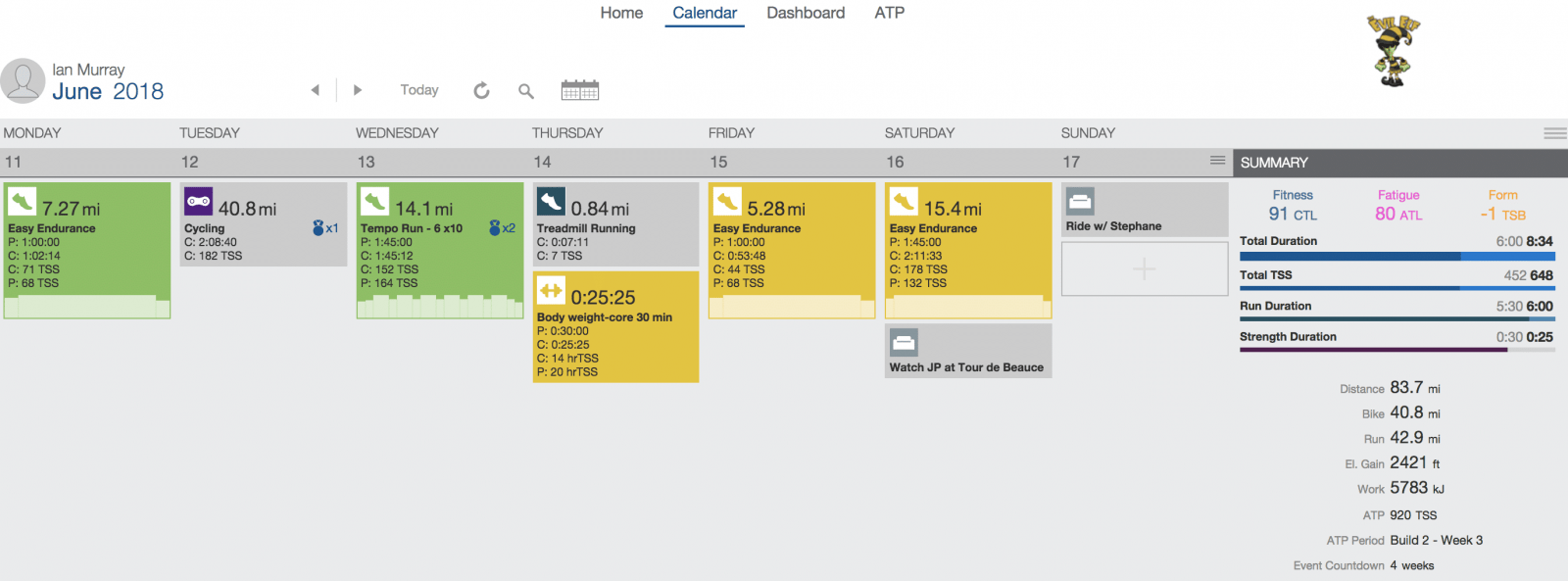
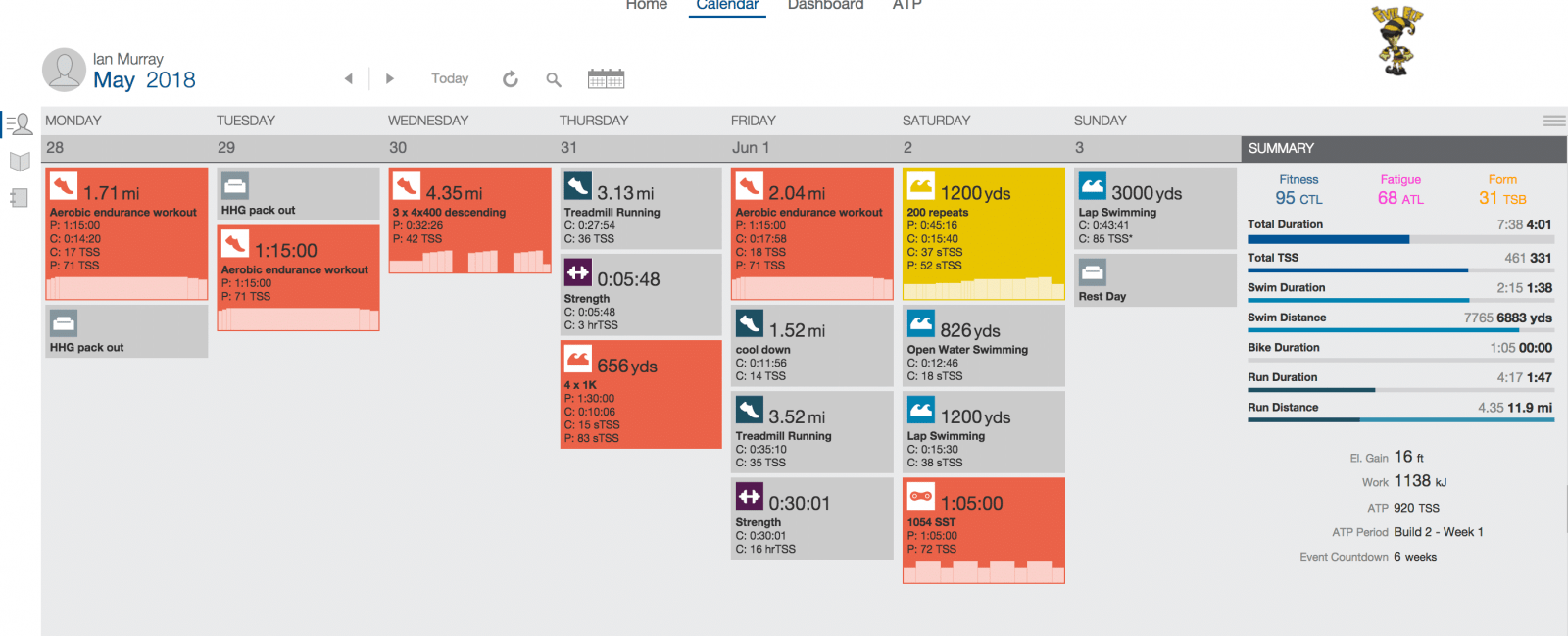
    For the majority of athletes adhering to a structured training plan, the end goal is to show up to race day fit and prepared. But how do you know if you’re ready to race, and if your fitness is where it should be? Form is a metric that allows athletes to see how it is their training, and eventual taper, is impacting their ability to produce race day efforts. Form is an integral part of race day preparation, and something that all athletes should understand.

    What is Form?

    Form is simply how ready to race you are, or your “freshness” for an event. It tells you how prepared your body is to perform to its maximum potential.

    Training Stress Balance (TSB) is the metric that puts form into numerical context. It’s calculated by subtracting today’s fatigue from today’s fitness. A plus or minus TSB provides a snapshot of both an athlete’s freshness and fatigue.

    Form reflects not only your fatigue but also your fitness. How high or low your form is depends on which area is the focus of your training. Lower fatigue equals higher form.

    Monitoring and understanding form helps take the guess work out of preparing for a race. The application of a metrics-based approach ensures athletes are achieving their desired goals.

    How to Achieve Form

    TSB is often most closely monitored in the build up towards an A priority race. The goal TSB should between 15-25 depending on how much fatigue your body can handle on race day. Some athletes perform better by maintaining a small amount of fatigue, so find the number that’s right for you.

    The workouts in the weeks and days before a big race are crucial. The overall goal is to schedule workouts that keep fitness high, but allow form to be reached on race day. 10-14 days out from a high priority race is usually sufficient to begin a taper. Typically volume is where the biggest reduction in training is seen.

    Lower priority B and C races are to be approached differently. The goal may be to “train through” these races with little to no taper involved. A TSB of -10 to 0 is often the goal for these lesser priority races.

    Acute Training Load (ATL) is a measure of your actual fatigue from day to day. Keeping an eye on this metric will allow for a greater understanding of form, as well as help you plan daily workouts during your build up and taper.

    How to Track It

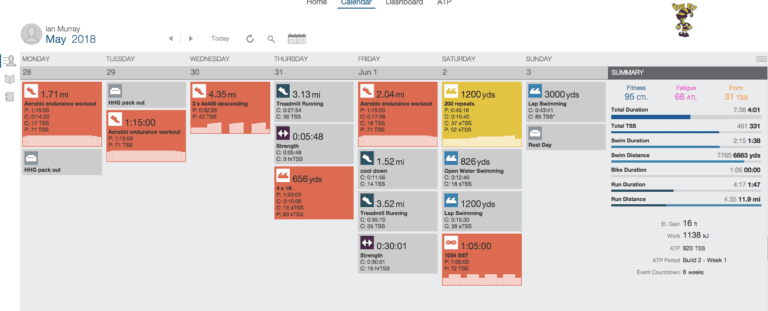
    The Performance Management Chart (PMC) is one of the best ways to keep track of not only form, but also CTL (fitness) and ATL (fatigue). Tracking TSB in relation to other key metrics helps you keep your finger on the pulse of your progress.

    Training Stress Score (TSS) is one of the best metrics for understanding how your training will impact your form on race day. Too much TSS and your TSB will be too low, not enough and you’ll be too rested.

    Plan your build up and taper in advance. Know what workouts will produce the desired results, and what the TSS for those workouts will be. This process will let you know exactly where you’ll be on race day.

    Using an Annual Training Plan (ATP) can help to plan for the times when you’re coming into and out of goal races. Set target CTL and TSS values for priority events, as well as each week to ensure you’re exactly where you need to be at every point in your training.

    What to Look For

    A range of negative 10 to positive 10 TSB should be avoided for the majority of training. This range is only appropriate if you’re on your way to reaching form for an A race, or coming off of some down time after a priority race.

    Be mindful of a TSB higher than positive 25. More than likely that means that you’re too rested and not applying enough training stress.

    Form in the range of negative 10 to negative 30 is typically a productive zone during focused training. Try to stay there when training is at its peak.

    A TSB below negative 30 should be approached with great care. Form can dip below -30 during peak training, but it should only be for a very short period of time, and accompanied by adequate rest and recovery.


    Rapha Rising Mission Announced for July

    • News
    Eric Schlange
    -
    July 10, 2017
    0
    Rapha Rising Mission Announced for July

    Rapha Rising Mission Announced for July

    In partnership with Rapha, Zwift has rolled out a new challenge for riders: ride the new Three Sisters route on Watopia and earn a virtual Rapha kit plus a chance to win one of three Pro Team Flyweight Bundles.

    How to Enter

    Simply click “Join Now” on the startup screen and agree to the terms. (Note: you will need to use the World Tag hack if you want to complete the mission on a non-Watopia day. See July’s course schedule.)

    The Three Sisters route takes you up all three Watopian climbs (the original KOM, the Epic KOM including the radio tower, and the volcano climb). Total distance is 47.8km (29.7 miles) with an elevation gain of 879m (2883′).

    You must complete your ride by 23:59 UTC July 31st.

    Prizes

    Successfully complete the mission (it must be accomplished in one session) and an exclusive virtual kit is yours to keep. Additionally, you will be entered into a drawing to win one of three Rapha Pro Team Flyweight Bundles.

    Winners will be announced August 7th.

    See Zwift’s official page for this mission >


    Zwift releases update 1.0.18779

    • Game Updates
    Eric Schlange
    -
    July 8, 2017
    0
    Zwift releases update 1.0.18779

    Zwift releases update 1.0.18779

    Zwift HQ rolled out an update last night which includes a new London route plus some minor enhancements and fixes.

    The new London route, named “Greater London Flat,” is the flattest route available on the London course. It covers the recent “Greater London” expansion roads, plus most of the Classique route.

    Other notable changes include less rain across all worlds, German language support, footpod calibration support for runners, and the addition of July’s Rapha Rising mission.

    For a complete list of changes in this update, see the full post from Zwift HQ >


    Zwiftcast Episode 30

    • Interviews
    • News
    Simon Schofield
    -
    July 7, 2017
    0
    Zwiftcast Episode 30

    Zwiftcast Episode 30

    Episode 30 of Zwiftcast has been released. Here’s the full episode description:


    Simon, Shane and Nathan are in Grand Tour mode for the latest episode of the Zwiftcast.

    They trio discuss the latest trainer from Elite, the Direto (or Dorrito as it has instantly been christened) which was launched by the Italian company at the TdF.

    A compatriot of Shane’s in Melbourne, Mike Boudrie, has compiled a “taxonomy of Zwifters.” He’s come up with four categories ranging from the die-hard to the denier… Simon talks to Mike about his fun list.

    The chaps move on to a light-hearted compare-and-contrast exercise on Tour TV coverage on their respective continents before considering the latest chapter in Zwift Academy winner Leah Thorvilson’s amazing story as she competes in the women’s Grand Tour, the Giro Rosa.

    Leah has had a tough time and the trio discuss what implications her experience may have on the next editions of the Academy scheme, with both a second women’s contest and a new men’s competition on the horizon.

    The first Zwift Masters racing series has just concluded and it’s won a reputation for being not only great racing, but cultivating a super-friendly atmosphere. Simon talks to principal Chris O’Hearn about his conclusions and plans for the next series.

    Could Jarvis Island, the first Zwift world, ever return? It’s a perennial topic of discussion and fuel is added to the fire with Simon’s conversation with Zwift 3D artist Tony Yruegas.

    The chaps debate the merits of a Jarvis return and Shane confesses what happened when he tried to hack his way back to Jarvis!

    We hope you enjoy listening.


    1...467468469...512Page 468 of 512
    Purchase a Pain Cave poster

    Shop for a trainer using our Smart Trainer Index

    Shop PR Lotion (20% off with code ZwiftInsider)


    Contribute a post: Email [email protected] for details.

    This community-driven site is maintained by Eric Schlange and a team of Zwift enthusiasts. Zwift Insider is independent of Zwift corporate (www.zwift.com), although Zwift does provide funding to help defray site costs.

    This site contains affiliate links to Amazon, Wahoo, and other brands. Zwift Insider makes a small commission on purchases made from these links, so please shop through them to support our efforts.

    Terms of Use/DMCA Copyright Policy

    Privacy Policy | Privacy Consent

    [email protected]

    Latest articles

    Zwift Racing League Week 1 Guide: Neon Shore Loop (TTT)

    All About Zwift’s Fitness Metrics: Training Score, Training Status, Stress Points, and More

    Top 5 Zwift Videos: Erg Mode, Zwift Ride, Alpe du Zwift

    Popular Categories

    • Racing1593
    • Events1108
    • News841
    • Training & Nutrition746
    • Interviews569
    • Routes & Maps485