

In May 2025, the FemmeCycle Collab (FCC) partnered with Zwift to launch a four-week women’s race series that grouped participants by age. There were five age brackets, with racers under 30 placed in one group and those over 60 in another. While this categorization was welcomed by some, many others remained skeptical. Interestingly, a portion of the feedback questioned the fairness of using age as a basis for categorization. These women referenced the previous Zwift model, which categorized racers using performance metrics like zFTP (~40 min power max) and zMAP (4-6 min power output), as a fairer system.
This feedback, particularly the reactions to this Zwift Insider article, got my wheels turning. Why do we, as women racers, consider a model based on medium- and long-term watts-per-kilogram (w/kg) output “fair”? And does this perception align with how athletes are categorized in outdoor cycling or other sports?
Let’s examine how categorization works in professional cycling, amateur events, and other sports to gain a better understanding of what might be applicable in the esports context.
“Real” Outdoor Professional Bike Racing
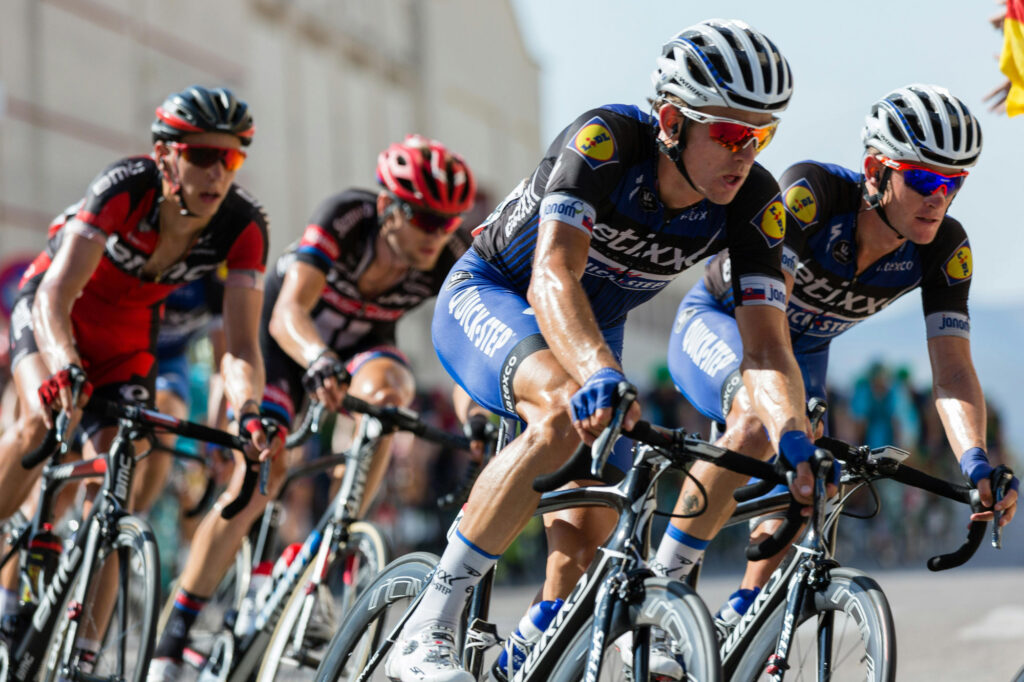
In professional cycling, which is often (perhaps unfairly) compared to community-level esports racing, categorization is rarely rigid. Instead, there are varied points systems that reward different elements: overall finishing position, stage wins, sprint points, mountain points, and even subjective recognitions like “most combative rider” or “best young rider.”
Although racers in mountain bike, gravel, or road events aren’t explicitly categorized in novel ways, these formats are largely self-selecting. Riders choose races that suit their strengths, whether that’s climbing, sprinting, or endurance.
Outdoor Amateur Cycling
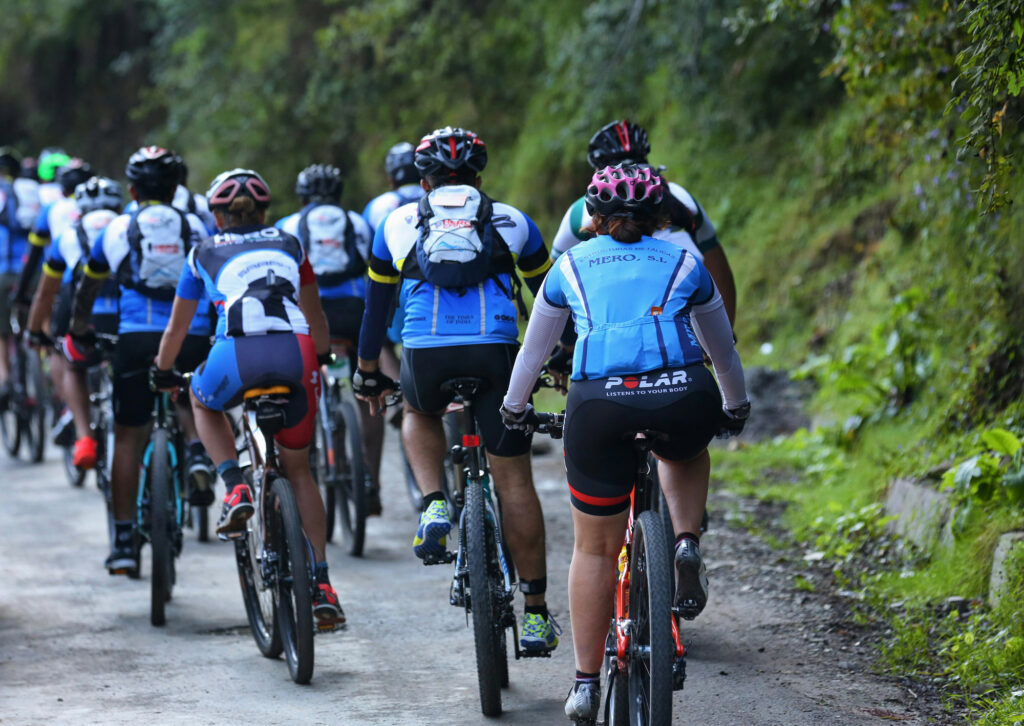
At the amateur level, race formats and categorization vary globally. In the USA, criterium races dominate, while in the UK, time trials are more common. Again, there’s a self-selecting dynamic: riders choose the races that align with their abilities and preferences.
Some events include special categories, such as the “Clydesdale” class in mountain races for heavier riders, which reflects an effort to tailor competition based on rider phenotype. However, most outdoor amateur racing disciplines employ a categorization system that starts everyone at the bottom, with progression based on both experience and performance. This has practical justifications (e.g., bike handling skills at high speeds).
Other Sports
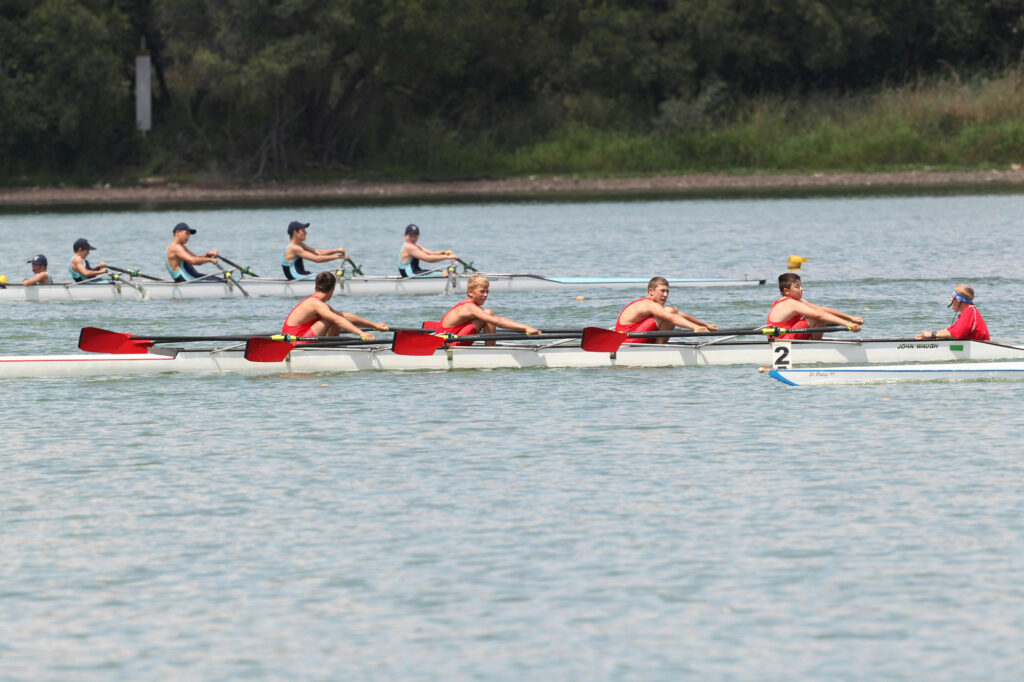
As a former rower in high school and college, I saw firsthand how diverse categorization can be. Rowing classifications vary by boat type (single, double, quad, or eight), rowing style (sweep or scull), weight class (lightweight or heavyweight), and even team composition (men’s, women’s, or mixed). Events are further divided by age group and skill level.
Track and field provides another strong model for categorization by athlete type. You have sprinters, distance runners, hurdlers – all with distinct strengths and race types. Athletes specialize early and select events that match their capabilities. In contrast, community-level esports cycling allows anyone to enter any race, regardless of phenotype. This can lead to mismatches and a feeling of disconnection between racer and race.
Why shouldn’t esports racing be just as versatile? We already have points races and climbing races. Why not a climbing event organized by weight class? Or a mixed-ability team time trial where the team’s result is based on the finish time of the lowest-ranked member?
So, What Makes a Race Feel “Good” or “Fair”?
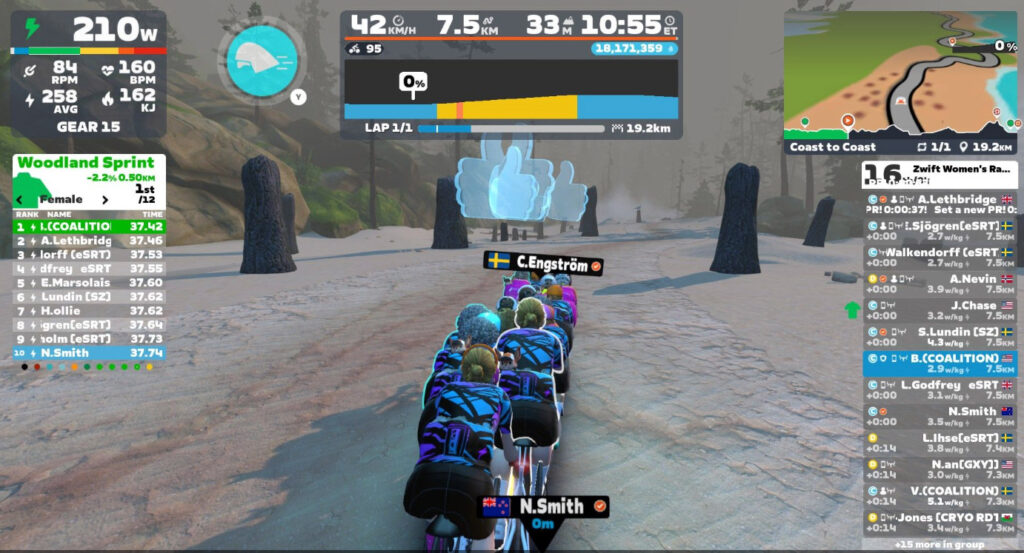
A healthy pen size is important—it keeps things competitive and engaging. But beyond that, what truly matters is the sense that every racer belongs and that their unique strengths contribute to the dynamic of the race. If everyone has a superpower, why not create races using categorization systems that allow athletes to showcase theirs?
There are multiple platforms launching in 2025 which will allow race organizers to showcase the performance in race fields, including ECRO and Lead Out. These services could make community-level racing more exciting on every platform for both racers and spectators. Now is the time to explore what racers want, so the right tools can be built.
Share Your Thoughts
I’d love to hear from others in the community – what kinds of racer categorizations feel fair to you? What formats have made you feel seen and valued as a racer?
Let’s keep the conversation going and explore how we can build more inclusive, creative, and exciting race experiences together.


Thanks for the background story, which is important for suggesting what to do. But I miss you may have had your own suggestions for how to handle fairness?
At the moment I find the new racing score system in Zwift a lot better than the old ftp-based categorization. Since this new system occured I have had several races where I truely felt the harmoni in the pen field.
But thanks again for the background story and perspectives..
Lars
My goal is actually to encourage as many women to race as possible – I don’t find any of the categorization systems more fair than any other, I just want to tap into what resonates with the most racers so we can try to get more of that type of race out there. Thanks for the comment!
Why not have a system on winning points.
Each race has points from 50 to 1 for finishers.
Winner gets 50, 2nd gets 40, 3rd gets 30 4th gets 20, 5th gets 10 and then 6th to 10 get 5 and remainder gets 1 pt.
Then gave riders classed by point totals. Class 1 over 1000 points
Class 2 over 500 points
Class 3 over 300 points
Class 4 over 150 points
Class 5 under 150 points.
Then this bases people on their abilities and also allies for fair progression up the classes
Number of points is just an example. 😁
That’s an interesting idea, mirroring some amateur outdoor racing categories right? But do you think that would make racers who may not be as fast annoyed that they couldn’t stay in Class 5? Or, annoyed that they are always racing against new racers, no matter what their ability level was? I’m up for trying anything, just curious how each of these ideas would shake out over time.
Welcome to the real world. The slow people would stay at the bottom as they would struggle to get the 150 points and they would just be against the next bunch of faster riders but this is life and how it world in armature cycling.
In the UK if you move up a Category after winning some points you will get relegated at some point if you fail to maintain those points and I think everyone in the bottom category starts from 0 each season which means they won’t get promoted when they aren’t ready.
That’s kind of like ZRS and somewhat addresses the issues @Beccah Niesen brought up in her reply too I think.
Hello everyone. The ECRO series of races classify participants into A to E based on the vELO ranking system. As this is pretty much solely based on race finishing position it seems pretty fair – if brutal!
Going off of the specialty idea it would be really cool to have a separate racing score based on course type (flat, hilly, mountains) and then the riders are grouped for a particular race according to the terrain.
should help with all riders in a given category being competitive and would be cool to attempt to improve your racing score on each category.
That sounds like an awesome idea Kyle – thanks for that!
That sounds good! And basically reflects what the vELO ranking system does with the terrain handicaps. Because having separate scores would not work for any multi-stage races where you want to race against the same riders each race… You could find a way to calculate a GC from finish positions, maybe points-based, but it would be different (and an idea I’d like to try: having a GC over all categories based on finish or FIN or FAL points earned by winning against your own cat).
That said, as Beccah described it in the article, too, racing is surely more engaging if you have a wealth of different categorisation systems in different races – there doesn’t have to be one fit-for-all category system… and having many different systems might also give another perspective on which one is fair and which isn’t – they would just be different.
One thing the women’s group I’m in (the FemmeCycle Collab) has been doing is putting on mass start mini races on Sundays. The mass start leads to many wattier, lower “ranked” women keeping in the front group for a short, flat course. If you looked at the vELO ranking system and accounted for terrain handicaps, I think the entire field in these mini’s would show just how accurately the system captures the handicaps. It’s great! But, because people race all sorts of races, I think the vELO w/ the handicap would be a better way to categorize. So I’d love to try to set up a race like Kyle suggested – and it’ll give racers a chance to race against different fields!
I think this is a really good idea – enough of an incentive to improve and compete in areas requiring work and you finish nearer the top of the field in your strength areas giving you positive outcomes
I dislike this idea as a skinny climber solely because then I would never have a chance to get back at the heavier riders that punish me on flat courses.
Maybe as a test, there could be a series where everyone starts together, no categories at the beginning, eveyone gives their best. But after the race, we could see who would have been on the podium if there were categories based on age, then on weight, then on race type, then on FTP, then on vELO points, then on Zwift points – more podiums for one rece/series. And then figure out afterwards what makes the most sense…
Now I say this ironically – that way, everyone would be happy at once!
Great idea Anja! I think it would be important to use an experienced group of racers to do this type of test, as you’d have to explain that you could be categorized after the fact – maybe something we could trial w FCC!
This is exactly how the UCI organises their amateur races. Mass start for all and ranking at the finish based on gender and age group.
I am not the biggest fan of mass starts, as in many of these races it’s about using the draft as much as you can to keep with a higher category. Does that make you a better racer overall or just the ability to hold on at the front of the field slightly longer than another rider? Unless of course ‘draft’ is turned off – that could work.
I like it when otherwise willbe 15 of us in one hoir race .
In mixed, when you have 30 racers in the pen ,asive start dont do some big game change.
In women racws its big diference in plasure, at least to me .
But of course, everyone can like or dislike it
I agree Marc, however at the same time, turning off the draft turns it into a TT, and then you’re not ranking the best road racer overall, but the best time trialist.
My experience of this series wasn’t that it was or wasn’t fair, it’s that, as a 50-something D rider, it wasn’t especially fun. I’m perfectly capable of looking at all the age groups and establishing that I was the fastest D rider in my race 😜 but a mass start race is always going to be a variation on seeing how far I can hold the group before I am inevitably dropped. Breaking up the scoring categories differently isn’t as big of an issue for me as how wide the spread is of the people that I am racing with (especially those that I am not actually racing against).
Yeah, age plus gender based categories are certainly fair (no sandbagging) and probably the right thing to do for serious competition (especially when real prizes are on the line).
BUT the races aren’t as much fun! Ability and results based categories make for better races, and that’s what I ultimately care about as a mediocre amateur.
Sorry if this is covered elsewhere
Seems a rumour has started that if your first ride of the week is outdoors you don’t pick up the 500xp bonus for the streaks
True or false or something in-between
Hi Simon-
I believe this is true, and is a known bug that Zwift is working to correct. For the time being, starting your week with a 2km indoor ride might be a good idea!
Joe
This is true.
I spoke to Erick about it and he confirmed it in ZHQ.
no offense but it seems to me there is confusion between specialties in a given sport and categorization. in real professional cycling there are various specialties but no categorization only performance
instead regarding the racing score if we had all started from zero and then maybe after ten races with a score some categories had been created it would have been ok, but zwift gave initial scores based on an algorithm that only takes into account the power in a few minutes, but the races last longer. Example it is useless to have 10 wkg in the sprint if then with an ftp of 2.5 I run with people with 3.5. just because zwift gave me an initial score of more than 300
All the talk about “fairness” and how best to categories “racers” is boring. Zwift and everybody else will never come up with a system that everybody considers to be fair because any system will always result in slower people feeling that they are at a disadvantage because they aren’t “winning” as much as they would like to.
To me to think that somebody can win a C or D race (or any other low level category) is nonsense and these categories only exist because unfortunately on Zwift there are far more slow riders than fast riders and we are constantly trying to figure out ways to allow then to “win” and if they don’t won give them a way to blame the system so its not the fact they aren’t fast enough.
In the real world everybody starts at the bottom of the category triangle and you are awarded points based on your performance in races and then move up the categories until you find your true category and you stay there. It means only the stronger\better racers progress, unfortunately this doesn’t suit Zwift as it wouldn’t allow the weak riders to “Win” and they would always stay at the bottom so this isn’t used.
Mass start races with no categories or age restrictions is the only way races should be done on Zwift. This way all races will have decent numbers and you will always have the better people contesting the win which is as it should be.
This opinion isn’t popular but it doesn’t detract from the fact that a lot of it is true.
Mass start races are great on hard courses that break up the race and allow smaller groups to form naturally.
Mass start races on flat courses are boring events for almost everyone, particularly with the group pace dynamics on zwift. It’s just sit in the blob for as long as you can and sprint the finish if you’re still there.
It’s not really decent numbers. It might be a field of 100 in a mass start instead of a field of 10 in the A race, but it’s still the same 5 riders who have any chance of trying an attack or winning. And if it keeps going like that the rest of the field won’t keep coming back.
Amen
Now that is Emet!
Racing Categorization has been a hot button subject on Zwift for years. When I started Zwift over 5 years ago, there were cats strictly based upon FTP, 20 minute power. That served to establish some rough pens but there were no restrictions on which pen racers could join so we saw, for instance, A & B racers in the C & D pens fouling up the event for the slower groups. Typically they would blow the peloton apart and you’d end up with a string on individual riders trickling in at the finish.
Then, Zwift implemented Category Enforcement which kept the vast majority of racers in the pens they were supposed to be in but now we had a problem with using just FTP for setting cats. If, for instance, you had lots of endurance (long game) but no sprint or short duration power (short game) like me, you wouldn’t stand a chance in a Zwift race with a 2 minute climb because you’d get dropped and end up in the Grupetto.
So, Zwift started Zwift Racing Score, ZRS, which took rider’s 10 minute and 30 second power as the basis for cats. This was magical for me; I was suddenly able to be in the mix for the entire race. I didn’t win races but I was able to stick in the peloton until the finish. And the pelotons stayed together for an engaging experience. Racing suddenly was fun! Harder for sure but fun.
ZRS also used finishing position as a component of the score but this has been a rather nebulous metric. As near as I can tell, this part of ZRS is not well established. For instance, last week I won a TT with 2 racers in the C pen. Me and a guy 70 points below me in ZRS. My score went up 19 points to slot me into the B pen. A coupla days later in a B Epic Race with 15 riders, I got dropped 15km in and rode to the finish with two other guys 2 minutes behind the leaders. Second to last place. That dropped my ZRS by 9 points.
Zwift changed it to V2 for a week and then went to V3 which is what we have now using only 5 minute power and race finishing position for scoring. This isn’t as bad as the original CE but not having a long game and short game component to establish the initial category leaves those of us without short power back in the cold. Take a look at the Tiny Race results. Nearly every week, there’s one guy winning 3 or 4 of the races because they haven’t gotten enough results to bring their ZRS into the correct pen. There was one guy in the C pen with a 14w/kg for 30 seconds and 11w/kg for 1 minute. Nobody stood a chance.
Zwift needs to go back to a 2 or 3 power metric for seed score and then fix the finishing position metric to use number of entrants, strength of field and race length. Or something like that. Until that happens, Zwift Racing is going to continue to be strictly a training exercise and nothing more.
I am like yourself that I don’t have a sprint as I concentrate on longer power durations but to say they should use a system that takes into account both long and short efforts would again penalise another group of people but make you happy.
And this is the problem Zwift face, they will never keep everybody happy because everybody thinks the system is rigged against them because they aren’t winning or are getting dropped.
They will never find a category system that will suit everybody because there are too many variables and they would need a lot more categories and there just aren’t enough people racing on the system to make this engaging. This is why I always say give up trying and just have mass start races.
Agree and I also like ZRS better as a puncheur/sprinter, as the races are way more fun and I am able to participate more than the traditional letter cats. To give an idea of how different ZRS and Cats are for me, I am in the top cat for ZRS and in C for the FTP based cat, so ZRS is more representative of my strengths.
Age categories in femme cycle was great, first time I felt race is true fair for me.
So glad you enjoyed it Izaebela – and congratulations on a super performance btw!
I think the current Racing Score system is pretty fair. I’d like to use a system like the UK scoring system, with different points structures for different size or strength fields. The problem seems to always be around how you initially categorise the entire Zwift racing population, as you can’t just have everyone start from zero – the races would be ridiculous. Plus, I don’t think anyone is going to like strong riders dropping down if they fall out of a points based system that works on a season based points approach, like they might do IRL if inactive. Therefore I think the racing score method works fairly well.
The problem often seems to lie with people not agreeing with their initial category or not liking that others are in a lower category than they think they should be. It often seems to me to be a case of “I’m paying the same subscriptions price, I should have an equal right to win races”. I don’t agree with that – no one has a right to be competitive. Racing indoor should be just as much about losing most of the time as it is outdoors!
You’re of course right David that racers want the chance to win when they enter a race. I don’t think that’s an impossible request though, as long as the categories are designed in a way that racers can keep progressing. IMO wanting to win is natural, wanting to win against racers way more experienced or fit than you is a different matter.
The current system is ok but to broad in each category.
A category per hundred instead of the current 200 spacing.
Racing score 0-100 101-200 etc. with a system for upgrading
on finishing position. If there’s not 20 people in the class for example
no upgrade points awarded.
How about starting with heavy riders inputting their real weight.
As someone coordinating Zwift race teams and racing outdoors, I see a big mindset difference. On Zwift, a common complaint is, “I can’t win in my category, so it’s not fair.” But in outdoor races, we rarely expect to win—goals are more personal: beating a rival, making the break, or hitting top 10. I think Zwift racers would enjoy it more if they shifted toward that same mindset. Racing feels better when it’s not all or nothing.
That makes a lot of sense!
My racing score has been bumped up from the baseline (slightly below middle of one cat) towards the top of that cat – but that was not just the race score, there were also some physical training effects during that time, and I guess doing many races you also learn how to race better. I managed 2 podium positions (3rd) and then got bumped up to the bottom of the next cat.
Guess what – in the next race I didn’t really stand a chance but managed to hang on to the peloton until the final ascent (and then getting dropped), netting a fantastic time for the monthly Z/RACING GC, plus a personal best 20-minute power average. A tough race, but still something to be proud of! And you need these challenges to get better.
Yes we could have 10 categories instead of 5 but do we really want races with <10 people and no real challenge?
I totally agree with this, and often tell women on my team to think about their races in terms of their own progress. You also learn more when you lose (typically) than when you win. I think team racing, generally, helps this as well, as riders can be proud of helping a teammate as much as their own finish points.
From my experience riding in Zwift since 2016 and racing (including at the Pro/Am leagues and Nationals) as well as coaching racers of all levels, my opinion is that pack dynamics/drafting needs to be addressed before race cats. As long as the draft continues as it is, it will be very difficult to get anywhere close to what happens IRL in riding and racing.
Thank you, Beccah, for this insightful article. Your look at the recent FCC age-based race series and its reception highlights the ongoing debate about fairness and inclusivity in Zwift racing.
As seen in the comments, opinions are split: some oppose all categorization, arguing that, like in pro road racing, everyone should start together with one winner and there’s no point in winning a C race. Others—sometimes unfairly characterized—are said to want a chance to win above all. But it’s not that black and white. No one’s positive racing experience takes away from anyone else’s. The beauty of Zwift is its diverse community, opening the door to new ways of making racing both competitive and inclusive. Categorization doesn’t diminish elite racers; it adds so much for the broader community. Nothing motivates me more than being “in the mix”—chasing the front group, staying ahead of a rival, or striving for a new PR. For me, racing feels fair when I’m in a field of similar abilities, even if I rarely “win.”
Ultimately, I’d love to see different categorization systems across Zwift racing series to keep things fresh and get as many people involved as possible. There should be space for everyone to enjoy the competition.
Thank you as ever for your insights Sonja – you synthesize the information above so well. I feel, as you do, that a variety of categorization systems could only benefit riders. For women races, I feel we need to increase the total number of entrants so there is a big enough pool to do this. I hate to watch women get discouraged from racing because they don’t have the repeatability or total watts to compete in mixed racing, and I feel there is an opportunity to make women feel powerful and confident through women’s fields. I want the narrative to switch a little, so that everyone can leave their race feeling good about themselves – whether they win or come last.
for me the issue is not whether to win or not but neither is it to find myself in a category that is very far from my possibilities, it’s like if an ex D or ex C found himself in the middle of ex A. It would mean doing the race alone. And it happens more frequently than you think, that’s why I say that the initial score should be weighed up better
vELO scoring system has its flaws but is arguably the best system. It is beyond me why Zwift did not just implement what the community came up with but decided to make their own, worse version of it.
However, the timing of rider allocation into pens is what matters for fair racing. Right now you can cherry pick races where you are at the top of your category or tank your score because some boundaries are commonly used. TPV does this fairer because you don’t know which pen you will be in because your pen is dynamically created at the beginning of the race. You throw your hat into the ring and then get a fair race against similarly strong riders.
This conversation needs to start with addressing the fallacy that racing should be “fair” based on categorization. The reality is that no matter how you group riders you will always have some at the top and some at the bottom. We should strive to have competitive races. Instead of always focusing on how riders are grouped, riders should focus on accepting that at some point they may be pack fodder and that is an opportunity to improve their fitness or race craft.
How about a weight based categorisation??
I am 6 ft 6 in tall and 105kg in weight. Even though I push out a lot of Watts any incline puts me at a huge disadvantage to anyone lighter than me. If categories were weight based then groups would be more closely formed of people with a similar physiology. So if a group of 70kg-80kg riders raced up a climb the deviation of weight penalty would be much lower than not considering rider weight.
The groups could be set up as follows; 60kg and below, 60-70kg, 70-80kg, 80-90kg, 90-100kg & 100kg and above.
Obviously I have an advantage over lighter riders on a pan flat course, but these are very rare and all of the races I have participated in tend to have some sort of decisive climb near the end.
I am aware that in South Africa they have used weight categories for sportives in the past.
In summary just like in boxing, I would like to be racing against other heavyweights rather than a bunch of featherweights who fly off on any climb
You don’t see many heavyweights in pro Cycling.
Mathias Norsgaard for example, is 6 foot 8, two inches taller than you, and weighs 81 kg as a pro. Bodyweight can fluctuate significantly at these larger weights as well.
Indeed, Norsgaard and I would be better matched. Compare Norsgaard with David Gaudu and other lighter riders and you have a big mismatch.
P.S. I would love to get down to 81kg (my W/kg would be killer) but my work life, family commitments and taste for BBQ will prevent that 😉
Yeah they would probably be 10 w/kg ftp
We all want to see you vs Jason Osborne in a live zwift showdown, filmed on the same trainers and heart rate monitor.
As a “mature” rider (>75) it would be great to include ages as an additional display alongside the rider name during an event. This could add an extra incentive during a race, especially for the “mature” rider. Race results would also present a better comparison when the age of the rider can be taken into account. This personal information is already displayed in starters and finishers drill down information but is not displayed live during an event.
I don’t race in a league. I try to pick one of the weekly races at a time that is convenient. The result is there are rarely more than about 25 riders and could be a few as 10 or 15. The only race I have ever won had 12 people. I am in the bottom class for racing. I am close to moving into the next class which will push me farther to the back of the pack. Here is the issue. I am also 78 years old. Chances I will get a lot faster / stronger are not good. However, I am pretty competitive in my age group. I have a sense that there are a lot of people like me who are between 60 and 80 on Zwift. And I don’t think Zwift really pays much attention to that group. A lot of the people I know on Zwift only ride IRL in organized events and train on closed courses. If you go down when you are older it really sucks. You don’t heal up quickly and may have serious issues as a result. Many of the races I ride in are mixed, both men and women. Based on what I just said, I would favor a combination of both age and performance for my type of rider. Let the folks who are younger and more aggressive about racing figure out the rest for their class of riders. I still like to compete, but the current Zwift system is not designed for me. I think it’s a shame Zwift is not more attentive to the large senior class of customers who use their system. With all that said, Zwifting is a big part of my life. I enjoy racing, just not being shredded. I have run most of my life I can’t recall being in any race that didn’t keep age group result. I also participate in triathlons and those also keep age graded results. If they didn’t, I would not have been age group state champion. Granted there weren’t a lot of competitors, but I did beat them and enjoyed getting the recognition. Most of the IRL cycling events I participate in are also age graded. All of the events I am talking about have overall winners who are recognized with awards etc. as well. Sorry that none of this applies to the group you are talking to. I think all of the older riders would enjoy being recognized and seeing their name in the upper end of their age group