

“Always sprint for a finish line” and “try to hold on even if you have to burn matches to do so” are my two golden rules when it comes to riding and racing on Zwift. They obviously mostly apply to racing, but as I’m coming back from an annoying cycling-related knee injury that kept me off the bike for nearly nine weeks, these rules also apply to most of the group rides I take part in nowadays, too.
Other people’s “Zone 2” seems to be my threshold at the moment, but I’m getting there. My power, endurance, and—most importantly—my ability to recover quickly are all returning to their pre-injury levels, slowly but surely.
However (and this is a big HOWEVER)… getting dropped in Zwift is still light years ahead of where I was only six years ago. Like a toddler in a sweet shop, I still see smashing myself around Watopia as a privilege, not something I have to force myself to do and I have to remind myself of that every time I end up finishing mid-pack in a race or questioning all of life’s choices while trying to hold onto Eric Schlange in one of his weekly “fun” Pizza Burners. But that’s just my competitive side coming out. That childish grin quickly returns whenever I think back to my “pre-fitness” days in 2018.
(Seriously though, someone really needs to report Eric’s weekly “pizza burner” ride description to the Federal Trade Commission—100 km at threshold is more than just a “spin”…)
It’s only now, having just checked when my first ever Zwift-related video was uploaded (1st May 2023), that I’ve realised I’ve been riding and racing on Zwift for almost three years. Wowsers! Time really does fly when you’re having fun.
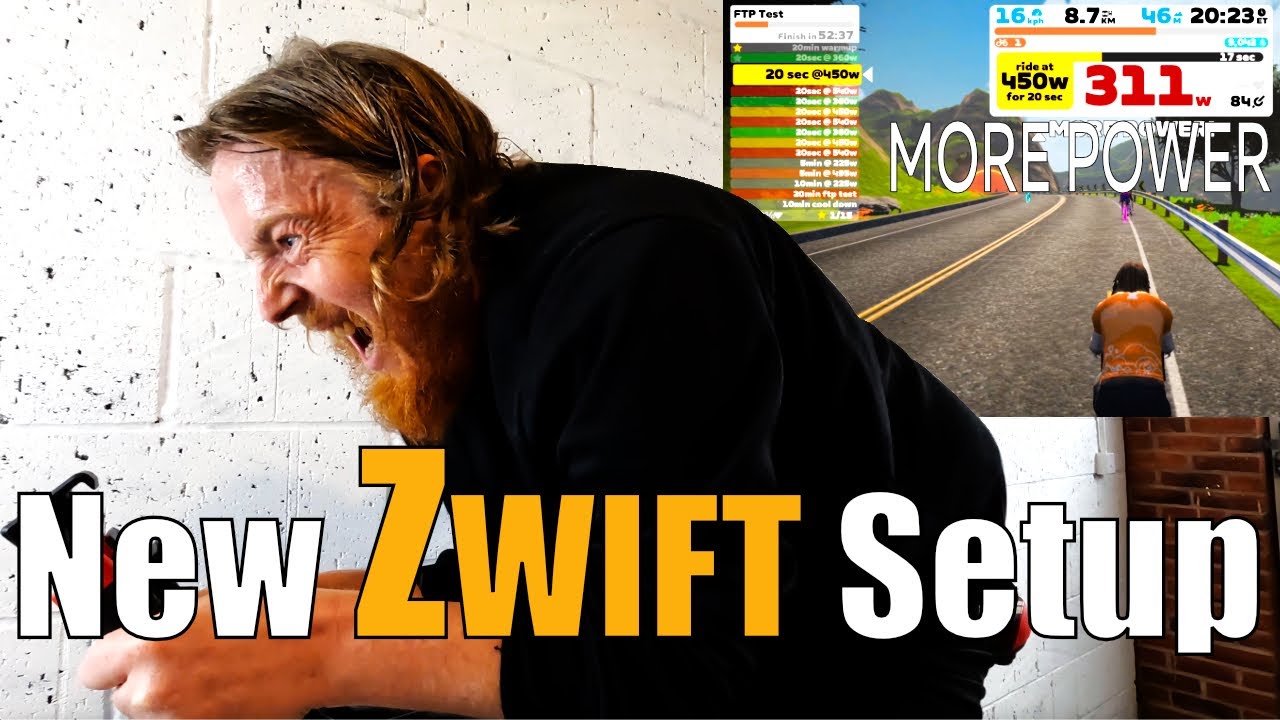
My name is Ryan Condon, and I’ve been making entertaining YouTube videos about my fitness journey for the past six years. Zwifting on my trusty Zwift Ride in my homemade “pain cave” has been a huge part of that journey.
“He’s not fat, he’s big-boned.”
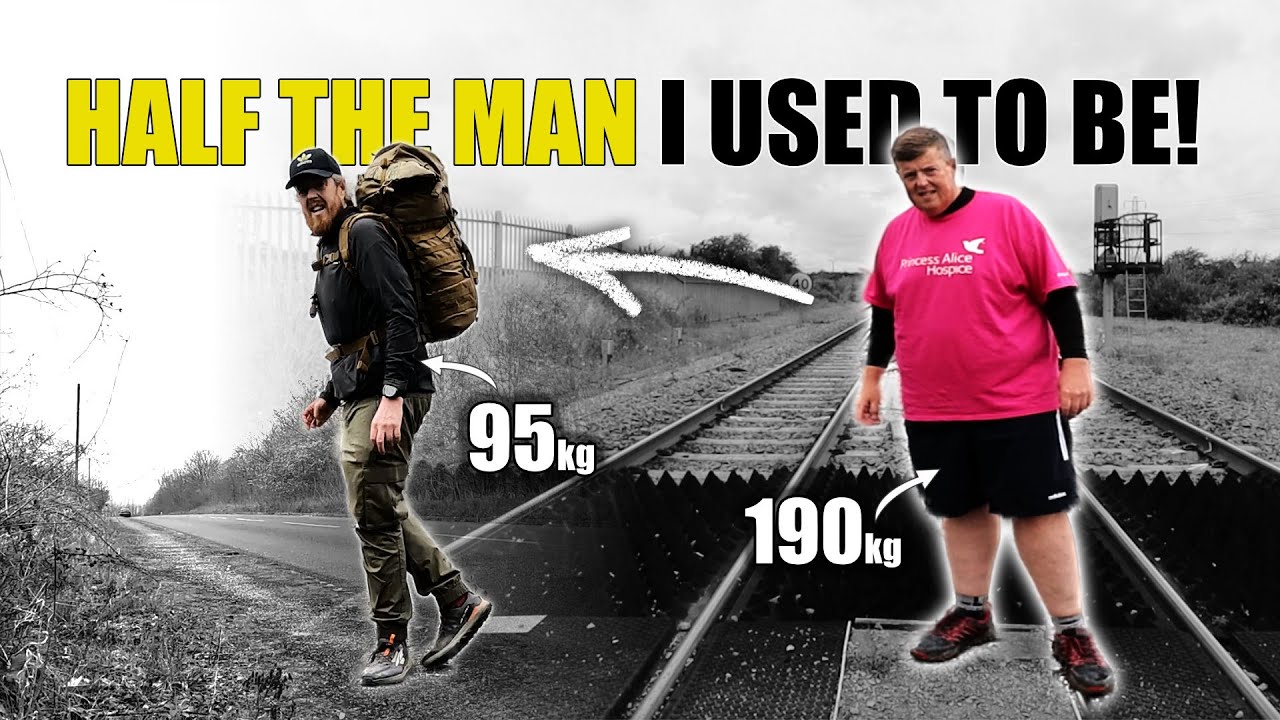
At the end of 2018 and the beginning of 2019, I weighed 190 kg. To put that into perspective, the average UK man in his 40s weighs 83 kg. I was 107 kg heavier than the Joe Bloggs you walk past every day on your local high street.
The physical and mental implications of weighing this much were massive. Being tall (6’2”) had helped me “get away” with being “big”—a term my grandma used to describe me.
“He’s not fat, he’s big-boned,” she’d snap whenever anyone dared mention my disproportionate size in front of her when I was a teenager. Unfortunately for me, I wasn’t anywhere near as confident as she was when dealing with the snide remarks from my schoolmates.
By the age of 38, my knees ached, my energy was non-existent, and my sleep was a joke—I probably averaged three to four hours a night. Depression and anxiety were taking hold, although I didn’t recognise it at the time.
I grew up in a working-class London family; feelings weren’t discussed, and “depression” was something other people had. I was also likely alcohol-dependent by this point. I made a video about this subject (which you can watch here), but in a nutshell, the mental darkness I lived with was amplified by my drinking. At one point, I was even too heavy to weigh myself on standard bathroom scales. That sense of alienation—of being on my own—was staggering.
Half the Man I Used To Be
Fast forward six years: I no longer drink, I’m teetotal, I’m vegan (a story for another time), and I now weigh anywhere between 87–89 kg, depending on which way the wind is blowing or how many croissants I’ve had that day.
I’m literally half the man I used to be, and I’m in the best shape of my life. That 103kg of body fat I lost (as my partner Tracie likes to joke) is more than the weight of an entire adult male.
When I started uploading videos to YouTube, I realised there were almost no fitness influencers catering to bigger men (or bigger people in general). Most assumed you already had a base level of fitness and of course, I didn’t. I just wanted to know:
- How do I start?
- How do I keep moving?
- What can I eat?
- And most importantly… how do I stay motivated?
Because I couldn’t see anyone who looked like me online—unless they were the experiment or the butt of the joke in a MrBeast-style video—I decided to document my own weight-loss journey, with an emphasis on making the videos entertaining, hoping it might inspire others like me… those who knew enough to know that doing something—anything—is better than doing nothing.
I’m not a nutritionist or fitness expert. I simply share what works for me, hoping to inspire others in the way I once wanted to be inspired.
Leveling Up with Zwift
Indoor cycling on Zwift was the extra string to my bow that I was looking for back in 2023. By then, I had already managed to lose 70 kg through walking and then running, getting down to about 120 kg. But my body adapted and my weight loss plateaued, even though I was still exercising and eating sensibly.
It was then that I discovered indoor cycling—specifically Zwift—purely by chance, and it completely revolutionised my fitness and weight-loss progress, helping me lose another 30 kg of body fat.
I very recently crossed the 10,000 km mark for total lifetime distance covered, with well over 113,000 metres climbed. That’s a big benchmark for me.
It’s still “rookie numbers” compared to others on the platform, but I’ve also made and uploaded over 100 Zwift-related videos to my YouTube channel, so I like to think I have some lived experience on the subject.
I’ve also become quite a capable racer, climbing from Category D into Category B. That just means I went from complete beginner to an above-average, pretty good Zwifter at my peak. However, at the end of last year I suffered a sports-related knee injury that kept me from working out and Zwifting for nearly nine weeks. As any Zwifter knows, without regular training you lose your power and endurance much quicker than it takes to gain them.
I’m now back on the road to recovery. I’ve regained about 80% of my pre-injury Zwifting abilities and have managed to get myself back into the upper end of Category C with my ZRS hovering somewhere around 420; however, at my peak, I reached 570, and I’d like to get back there as soon as possible.
The Process and the Pillars
I love running and cycling outside, and nothing will ever replace that vibe. However, when time is scarce or it’s chucking it down and I don’t fancy a Special Forces selection test just to fit in my cardio for the day… Zwift is the answer.
It fits into my plan easily, no matter the weather. If I’ve got everything set up just the way I like it, there should be no barriers—and no barriers means no excuses and of course, no excuses = consistency.
When I started on Zwift for the first time, I didn’t really know what my real power number was, even after several months of consistent riding. This is because we’re programmed to hold back as humans. No one jumps into a fast group ride or race and completely buries themselves the first time they try. It’s counterintuitive to everything we’ve been told to do. So we end up getting dropped—which is fine. It’s all part of the process and that’s the single best piece of advice I can give any new Zwifter: Trust the process! Just jump in feet first and learn through the baptism of fire.
I now have three “pillars” that I try to stick to every day:
- Eat clean, portion-controlled meals — three per day.
For context, I used to eat 4,000–5,000 calories daily. Now I focus on the right quantity of quality food, averaging about 2,000 calories per day. Any less than this and I don’t have the energy to keep going. - Move consistently and do something every day.
I started with walking, and now I run 5 km or cycle 25 km every day as a minimum. If I’m training for an event, this ramps up. - Use motivational tactics to maintain discipline.
I highly recommend reading Atomic Habits by James Clear and The Subtle Art of Not Giving a F*ck by Mark Manson. (There’s a lot I learned from these books, but the two biggest takeaways were how to build strong habits that break bad ones, and the idea that you have a finite number of “f*cks” to give—so choose carefully what you spend them on. Psychological tactics like this massively helped keep me off the sofa and into the pain cave, even when it was hard.)
Obviously, there’s a lot more to this. The nuances are hard to highlight in one article without disappearing down a fitness rabbit hole, but these three pillars are what I think about every day when planning my week ahead.
100 Small Moments
Back in 2019, I started by walking every day for a whole year without a single day off. I even made a video about it:
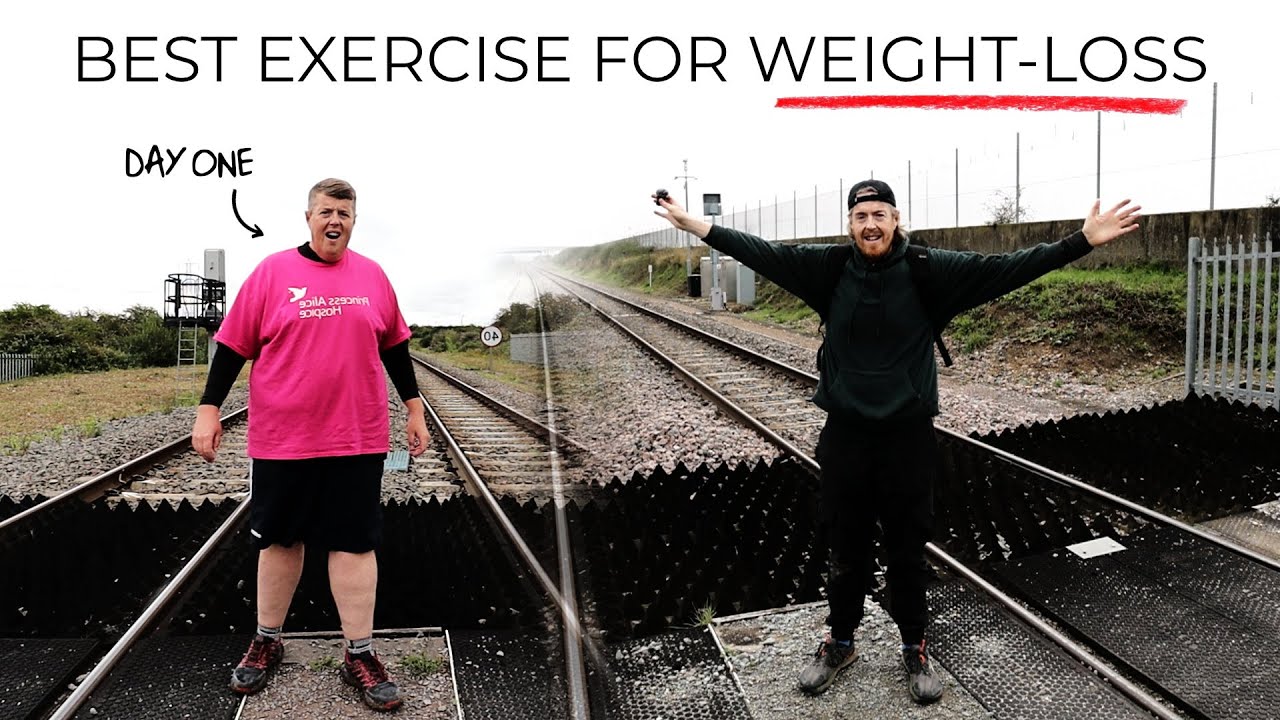
This might be a risky thing to say—especially on a website dedicated to cyclists—but I still consider walking to be the best exercise for weight loss. However, cycling and Zwifting are catching up quickly in my mind.
People often ask if I had a defining wake-up moment.
Honestly, I didn’t.
There wasn’t one big “eureka” moment—there were hundreds of small moments of realisation.
Buying plus-size clothes.
Making excuses at my daughter’s school sports day.
Not being able to fit on a rollercoaster at a theme park.
Just three of many dominoes that had to fall before I finally pulled the trigger and made the change.
A David Goggins quote resonated with me:
“To achieve greatness, one must be willing to be unbalanced for a period of time.”
Back when I was walking 10 miles every day, I was unbalanced—in the best possible way.
My obsession, once directed at my career, was now fuelling my health, fitness, and eventually my family life. But I had to face “40 days and nights in the desert” before I could reset my factory settings. This combination of dietary discipline, physical movement, and psychological commitment transformed my life.
Mindset, willpower, and behaviour change are more important than fad diets or gimmicky exercises.
My motivation has to be personal—losing weight just to look good for a holiday won’t sustain long-term change.
Find your “happy place”—your reason to move forward even when it’s tough.
Don’t sweat the small stuff. I used to get frustrated when things didn’t go to plan. Now I choose what I care about, and when things go wrong I try to adapt instead of reacting.
Celebrate meaningful achievements. Rewards should reinforce progress—not undo it. There is no secret sauce.
“Change happens when the fear of staying the same outweighs the fear of change.”
Believe in yourself.
Be kind to yourself.
Keep moving forward.
Small steps matter. Consistency matters.
Your journey is yours—nobody else’s.
You can watch all of my videos on my YouTube channel: Ryan Condon.



Ryan is awesome. Always appreciate his videos on YouTube and his drive and spirit. Ride on!
Appreciate it Connor. That means a lot!
However and this is a big HOWEVER! Ryan is a legend! His videos are fun, motivating and entertaining!
Keep it up
But and this is a big BUT! Thank you sir!
Very practical advice and something in there for everyone. Keep up the consistency. I always tell people to do something that is repeatable daily. Don’t go over the top, just keep moving forward as you said. Thanks for the time you spend on your videos, and now writing.
That’s how bad habits are changed. Thanks Geoff.
Like anyone, I can watch a good performance or athletic achievement and be filled with admiration, however, it is exceptionally rare when I can look at the totality of what someone has achieved, despite all of their obstacles and be filled with nothing but the thought of respect. Ryan has earned all of the respect that I am capable of giving to anyone. Beyond his physical accomplishments, the other thing that I appreciate about Ryan is that he always comes across in his videos as being completely genuine.
Inspiring stuff Ryan. Been watching your YouTube escapades for a while now as I work back to fitness after being hit by a car while riding IRL in July 2022. Love the fact I can join rides with you and sometimes end up with my avatar on you video 🙂
You should have told the story about how you had a meltdown and deleted your discord. You know, the one that people were relying on as a support network for their own weightloss journey; the one people were literally on their knees pleading with you not to; the one you refused to handover to someone else with a name change 🤔
All’s well that ends well Bob. A great club rose from the ashes immediately afterwards and the real people in their continue to inspire each other day after day. Can’t keep a good community down and all that.
Hi Bob. Pleased you were able to read the article.
Our memories of the Discord channel ending are very different. I may cover that off in an upcoming Q&A video soon, I might use a screenshot of your comment above as a prompt to discuss it, hope you don’t mind.
I feel my discord channel ending is slightly more nuanced than how you describe it here but in a nutshell – I’m a one man band who had zero knowledge of servers and chat rooms when I was asked to start one and it very quickly grew, too fast in my opinion.
As I discussed in the article above, I can make things, like losing weight and getting fit, seem easy (so I’m told). I put on a brave face when I’m suffering as I’m a big believer in positive mental attitude but changing my life around from some very dark places several years ago can occasionally take it’s toll and the Discord server was one of those situations where I found myself (for many different reasons) in a position where I had to choose between keeping other people happy and give up (or alter) my journey, including stopping my weekly YouTube uploads or let people down by calling an end to a good run. It wasn’t an easy option but I choose the latter as I spent 45 years doing the former and that really didn’t work out for me.
As I already said, this is a very quick answer and not the full story… That I’ll maybe save for another time but I wanted to respond to your comment directly.
I’d also add that no one owes you anything Bob. Things come and go, thats life. What does remain controllable is how you choose to feel about things and how you choose to allow them to affect you.
Thanks for the comment.
Ride on!
You might not believe this but I actually do appreciate the time you spent to respond and I do wish you the best is your endeavours. I still enjoy your videos and still find your story impressive and inspiring. In fact I recommend your channel all the time to new zwifter or people looking to lose weight. So this is far from just a hate post.
Let’s be clear you have every right to do whatever you want, like deleting a discord server if it no longer interested you. However, and this is a big however, that doesn’t mean there aren’t consequences to your actions and that your actions don’t effect others positively or negatively.
The point is you had many people saying they would group together to run the server under a new name that wasn’t affiliated with your name or brand so the community and all it’s wonderful fruits could continue. You said no and decided to delete the server on New Years with just a few hours notice. Personally I believe it was ultimately a very cynical move on your part.
That being said, my OVERWHELMING point is this. I don’t care about myself in this story, what I do care about (which surprisingly you apparently don’t) are all those guys and girls using the discord as a support network for their own mental health and weight loss. The Weightloss channel being a particularly good example. Considering you take those two subjects so seriously I really would have thought you would have much MUCH more empathy than you are even showing in your comment here. You didn’t seem to care back then and you don’t seem to care now and that’s clear with your, frankly, kind of patronising “no one owes you anything” spiel. Those people NEEDED the help and the community WAS helping them. Out of everything this made me and others (all long time subscribers) so disappointed because we thought you were kinder and more understanding than that, perhaps a mask off moment for a lot of people unfortunately. Someone’s true character is shown in how they speak to and treat others after all, especially when there is no clear benefit to themselves.
Also let’s be honest you weren’t managing the discord server, the two admins were that worked TIRELESSLY without any thanks.
Literally all you had to do was say “I love you all but I can’t do this anymore here are the keys” and you would have come off like a million bucks.
Whether a video on the matter is worth the effort is entirely up to you. Heck you could even point people towards the new channel (but I know you would never do that haha!). It may give some closure to some but, call me untrusting, it would also give you the opportunity to craft your own version and control the narrative of events in a largely unchallenged environment.
Appreciate the reply and for still enjoying my videos. One of the reasons I make them.
As I said in my initial reply, me deciding to walk away from the Discord server was slightly more nuanced than you give it credit for here. It’s important to highlight that I didn’t delete it, I handed ownership over to the main admin (one of the hardworking chaps you mentioned) as he said he wanted to keep it active… so to be fair – I did do what you described. I also left a long announcement post explaining this including a big section thanking both of the Admins, which I’m sure you probably did read.
Starting the discord server was a learning curve for me, I’ll be honest and say that I bit off more than I could chew, even with the help of two great admins. And on hindsight, I should have intentionally kept it smaller because it grew into something bigger than just a chat room/support group and ironically (in contrast to your post) I had quite a few messages and emails saying that the server wasn’t as fun or as supportive anymore – as the volume of chat had grown and their questions were starting to go unanswered.
Unfortunately, towards the end, it was no longer what you describe it as but I do agree that’s how it started.
The server had been running for well over a year and was a lot of fun initially and as it started to grow, I remember posting announcements for several weeks looking for help, without any success. If I couldn’t find help when it was at its peak (in the earlier days), I had no reason to believe anyone would want to take it on towards the end unless they had ulterior motives like using it as free advertising, spamming, etc (due to how many active users it had). You have to look at it from different angles sometimes.
On your last point, I’d disagree that I try to control the narrative as I’m not sure what narrative you think I’m trying to control other than my own fitness journey. I often say in my videos that I’m not an expert, nutritionist or weight-loss expert. The fact that you’re able to criticise me on a public forum like this is a good example of that. Unfortunately, putting yourself out there on social media, websites like Zwift Insider and YouTube can sometimes be a double-edged sword and not always sunshine and rainbows.
You know what Ryan, I’m going to applaud you for your response to this. You could have ignored it completely to be honest and it would have disappeared into the sands of time but you’ve given some detail here that hasn’t been clear before. That does show a lot of good character on your part and I’m grown up enough to acknowledge that.
The big problem is that, while you did put a message up at the time, it still didn’t give a lot of closure or some of the details you have kindly taken the time to give here. For weeks people were wondering where the discord had gone. Not an ideal situation.
To be honest I still don’t like how it went down, the timing was awful for one and I still think it was a mistake (and mistakes from all sides), but that’s the beauty of opinions isn’t it! I think the fact there is a new thriving club and discord is evidence that there were absolutely people there that wanted to continue the server in good faith with no ulterior motive. I’m really really surprised you have the opposite view.
With clubs people will generally only step up when it comes to a critical point, especially if there is risk of something closing. They did on this occasion but sadly you didn’t seem to trust anyone. I only ever found the discord helpful and never saw questions go unanswered.
There are also additional details I have left out because they were told in confidence. My intention was never to sling mud unfairly and admittedly perhaps my original message was verging on the unfair.
Control the narrative was maybe the wrong phrase. It’s more that it’s easy to, even accidentally, leave out details that may result in a skewer view of things. Ironically maybe what I’ve come acropper of, but at least you can respond whereas YouTube comments get easily buried and people don’t read them tbh.
Perhaps best to leave it here. Good luck in the future.
Such a great story! I really enjoy your videos. Keep them up!
Thanks Joshua!
Started watching Ryan’s YouTube videos about 3 months ago. I absolutely love them! Can’t believe he doesn’t have a bigger audience than he does.
Have been following you since you started your Zwift career.
What an inspiration and motivation. I’ve been on the exact same journey, however and this is a big however, my starting point was a little bit lower so only had to loose around 20 kg. But I managed and at the moment you and I are competing in the same races. And yes I beat you the last time, even though you may not have noticed that we were racing eachother 😂
I’m over the moon by how you just throw your self into IRL challenges, I lack that confidence so I stick to Zwift challenges at most.
Great achievements, great work and great videos. Keep them coming. Kudos to you Ryan. 💪🤘
Nice one Ryan. Anytime someone loses Me in weight I take notice.
Ryan is a legend and highly entertaining on YT. Always fun to see him pop up in a race you are riding, and it brings some extra watts to beat a social media sta r;-)
I just subscribed to your YT and will start watching through your series Ryan! I’m also a big man (6’8″ and at one point eclipsed 400lbs myself), and it sounds like we’ve shared a lot of the experiences that motivated us to lose weight, so I’m curious to see what has worked for you and if there’s anything I’ve missed that would be worth a try. I’m currently down to about 290lbs which a body scan indicates has me at a much improved approx. 20% body fat, so I’d be curious if you have any videos or insight on how you settled on your target weight of 87-89kg?
Ryan is one of my favorite YouTubers and podcast hosts. An absolute LEGEND!
Congratulations on your progress so far. I was a fairly avid walker when I worked downtown, and struggled to maintain it when I shifted to remote work during the pandemic, but rediscovered when I returned to the office. When I got a job that was remote, I worked more walking in than during the pandemic. After I broke my ankle, and couldn’t walk for three months, I started biking. Calorically speaking, walking on the flatness here for an hour does not burn more than an hour of aggressive riding on the bike. However, my wife will walk on her treadmill with the incline bumped to 6-7% and match my good caloric numbers biking, but hers is estimated by the treadmill and mine is validated with heart rate data.
that makes sense though, as walking should be a Z2-Z3 activity, and cycling, like at a race pace, is a Z3-7 kind of activity.
Love your videos Ryan, been watching since you started Zwift. You inspired me to start zwifting in the first place so thanks for that. Great to see you getting more into irl group rides recently too. Keep up the good work!
“and that is a big however” I heard his voice when reading that. Love this guys channel. I’ve watched every upload since I started watching about 3 months ago.
Excellent post Ryan – what a superstar you are. This is a great motivational piece and shows what we can do.