

Late in the evening in an unfinished basement outside St. Louis, Missouri, Scott Richards settles onto his bike and clips in. The room is quiet except for the hum of the trainer and the fan he sometimes forgets to turn on until the ride is already underway. Within seconds, the screen in front of him fills with motion—avatars climbing mountains, spinning through volcanic circuits, chasing route badges and finish lines.
For Richards, the scene is more than a workout. It is a daily reminder of how far he has come, and how much further he plans to go.
“You Don’t See Old Guys That Are Fat”
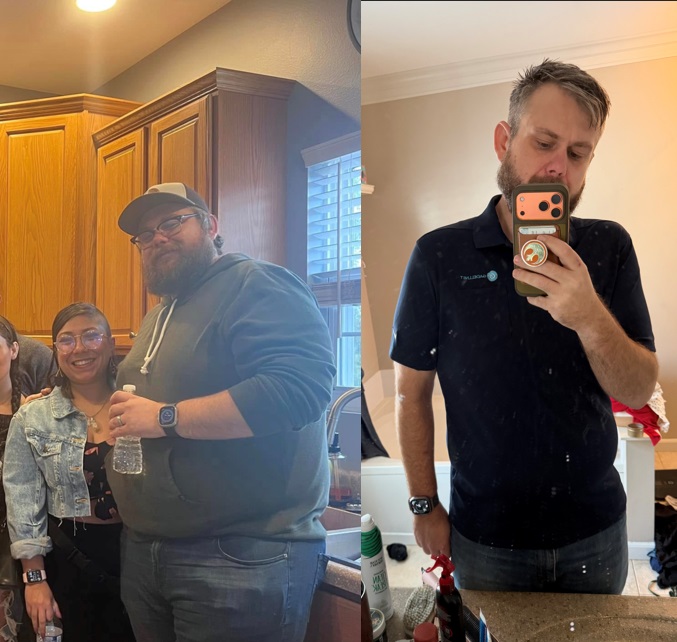
Four years ago, the life he is living today would have felt almost impossible. At the time, Richards weighed more than 330 pounds and was facing a reality that had slowly crept up over years of stress, poor habits, and long workdays. When a doctor told him he was pre-diabetic, the warning landed harder than he expected. He had recently married, and conversations about the future, about longevity, about the possibility of children, suddenly felt more urgent. “You don’t see old guys that are fat,” Richards said. “That really scared me.”
Around that same time, Richards and his close friend Charles Hays made a decision that would alter both of their lives. The two had worked together in a high-stress environment where stress eating had become routine, and both had begun to realize the consequences of those habits. On New Year’s Day 2024, they made a pact to hold each other accountable and start turning their health around. The agreement was simple: take their health seriously and see what was possible if they committed to the process. What followed was anything but ordinary.
The Compound Effect
Like many people facing a major lifestyle change, Richards did not begin with dramatic athletic goals. Instead, he started with manageable steps—hiking, tracking calories, and simply moving his body more often. “I made it work for me,” he said. “Instead of forcing myself to do something I hated, I tried to find things I actually enjoyed.” As the weeks passed, those small decisions began to compound. Weight came off gradually, confidence returned, and the idea of attempting something bigger eventually emerged.
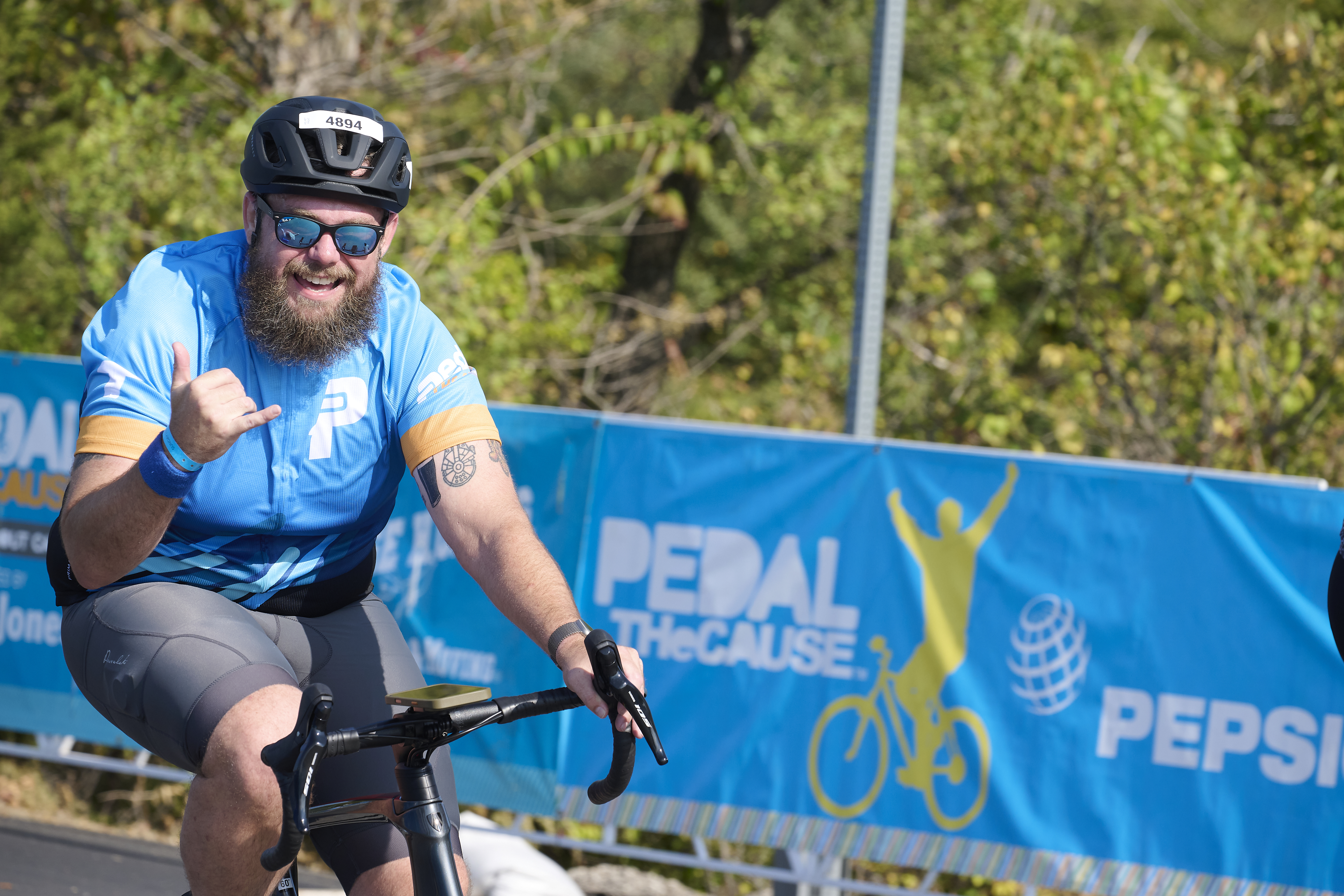
That “something bigger” turned out to be a triathlon. Richards had one advantage that many first-time triathletes lack: he had been a competitive swimmer from age six through eighteen. While swimming felt natural, the other disciplines, particularly running, were far more difficult. Even so, he and Hays committed to the challenge.
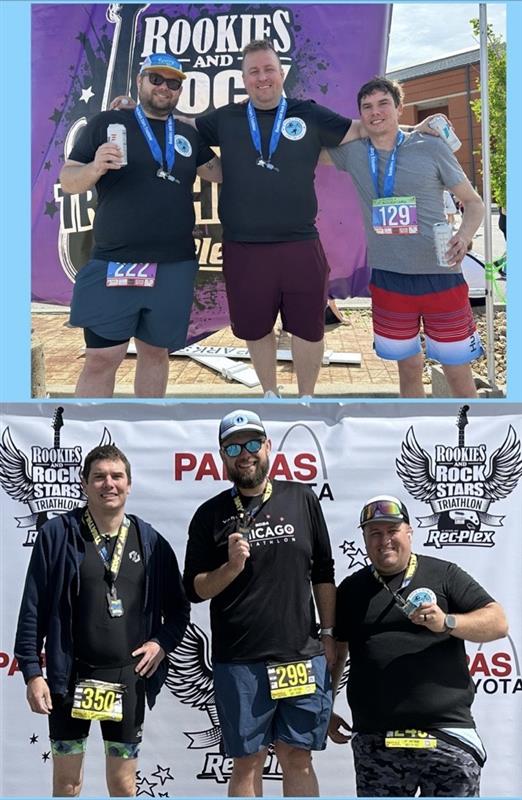
Standing at the start line of their first race, Richards remembers feeling something he had not experienced in years. “We were standing there waiting to start and realized we hadn’t felt that feeling in a long time,” he said. “That feeling that you’re about to compete for the next few hours. It’s going to hurt, but it’s going to be worth it.” Since then, Richards has completed seven triathlons and is currently preparing for a half Ironman later this year.
Winter Regression To Zwifting Obsession
Despite the progress he had made, winter presented a familiar obstacle. After that first season of racing, colder weather arrived in Missouri and outdoor cycling disappeared from his routine. Months passed without riding, and when he finally returned to the bike in the spring, the loss of momentum was obvious. “It felt like I was back to square one again,” he said.
That realization pushed him toward a tool he had been researching for months.
In September 2025, Richards ordered the Zwift Ride bundle and set it up in his basement. What began as a practical way to keep riding through the winter quickly turned into something much more significant. “I became obsessed quickly,” he said with a laugh. The difference, he explained, was immediate. Traditional indoor riding had never appealed to him. Sitting on a stationary bike while watching television felt dull and disconnected from the experience of riding outdoors. Zwift changed that dynamic entirely. “The first time I did Alpe du Zwift, I felt super accomplished,” he said. “It made me look forward to killing myself in a workout.”
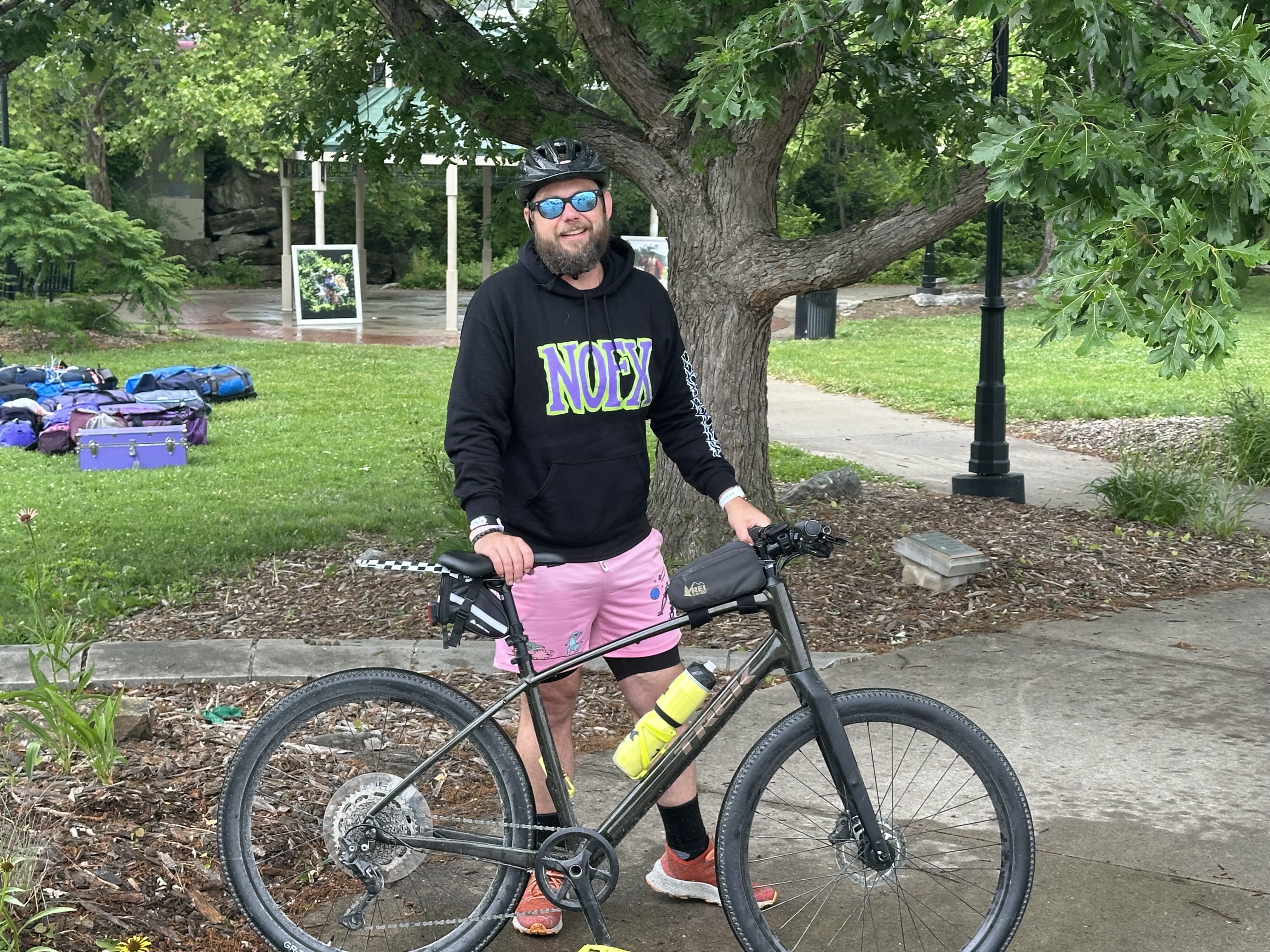
For Richards, the appeal of Zwift extended beyond fitness. As a lifelong gamer, he immediately recognized the structure behind the platform’s design. “I played a lot of RPG games growing up where you level up your character,” he explained. “Zwift scratches that same itch. You’re leveling up, unlocking bikes, getting gear. It’s the perfect way to hook me.” The same mechanics that once kept him playing video games for hours now kept him riding. “I used to be addicted to video games,” he said. “Now I’m addicted to Zwift.”
Community As Motivation
Group rides soon became one of his favorite aspects of the platform. Over time, he began to recognize familiar riders who appeared again and again in the virtual peloton. Conversations in the in-game chat gradually created a sense of connection that surprised him. “It’s wild how you start to see the same people over and over,” he said.
One of his most memorable rides came during the Rapha Festive 500 challenge, when Richards organized a ride that attracted more than 130 participants. Together, the group completed 25 laps of the Volcano Circuit, riding more than 65 miles in a single session. “The first half was a lot of fun,” he said. “The second half was definitely a struggle.” What made the effort special, however, was the support that emerged among riders. “The people pulling the group were telling me, ‘Scott, you need to get up here for the finish.’ That kind of support is what makes it special.”
That sense of community has become a powerful motivator on days when the ride itself feels difficult. Even when fatigue or lack of motivation creeps in, the thought of joining a group ride often brings him back to the bike. “Sometimes I think, ‘I don’t really want to ride tonight,’” he admitted. “But the social side makes it entertaining. It’s better than just sitting on a spin bike.”
Looking Behind/Looking Ahead
The results of that consistency have been remarkable. Since beginning his health journey, Richards has lost more than 116 pounds and now weighs roughly what he did as a teenager. The improvements show up everywhere—in climbing hills that once felt impossible, in average speeds that have increased by several miles per hour, and in the simple reality that everyday life has become easier. “Every aspect of my life is easier,” he said.
The changes have also altered the way he sees himself. “If you told me four years ago that I’d be excited to sweat my butt off in my basement every day, I wouldn’t have believed you,” he said. What began as a weight loss effort has evolved into something closer to a lifestyle. Exercise now functions as a mental reset as much as a physical one. “If I don’t work out for three or four days, I get cranky,” he said. “I never thought I’d be that kind of person.” The effect, he says, feels almost therapeutic. “It’s tough when you’re doing it, but afterwards you feel so good—physically and mentally.”
Richards and Hays now document their ongoing journey through their weekly podcast, 2 Guys 1 Scale, where they talk openly about the ups and downs of trying to lose weight and stay healthy. The podcast began primarily as a way to keep themselves accountable, but over time, it has grown into something more meaningful. Their transparency and frankness resonate deeply with listeners, prompting them to reach out with their own stories of struggle or questions about how to begin fitness journeys of their own. Some friends started hiking more frequently. Others began exercising regularly after watching Richards’ progress. “If I can inspire one person to turn their life around,” he said, “then everything I’ve put into this has been worth it.”

The road ahead remains full of goals. This year alone, Richards plans to complete a half marathon, tackle his first half Ironman in Michigan, and ride Missouri’s 240-mile Katy Trail over several days. Zwift will remain a central part of that preparation, particularly during the cold or rainy months when outdoor riding becomes difficult.
Perhaps the most meaningful change, however, is how he feels about himself and the life he is building. “I love the person I’ve become,” Richards said.
For an athlete who once struggled simply to begin moving, that transformation may be the most powerful achievement of all.



Melissa, thank you for this story, it’s really inspiring!
Thanks for the feedback, Mat! Always appreciate hearing if someone enjoys a story.
This is awesome
Great story. Encouraging and affirming. Ride On!
His story is so inspiring. Kudos and thumbs up to him.
Thanks for having me! Was great talking to you Melissa!
Scott had the assistance of Ozempic on his weight loss journey as well. Please don’t forget to mention that in case anyone wants to follow his regimen. Nothing to be embarrassed about. Weight loss is weight loss but it’s not fair to omit this key fact from the story.
Yes started it around the same time I started zwifting. Still lost 100lbs myself 😘
That’s fantastic! You still put in a ton of work and that’s impressive. Not trying to discredit you. I think the point is just that including that you also took Ozempic gives people a more complete picture of what helped, especially for anyone trying to follow a similar path. No shame in it at all. Congrats on your achievement!
but you absolutely ARE trying to discredit me. I’m very open about it. GLP doesn’t do the work for you, I still work out every day, I’ve still done 7 triathlons, I’ve still done a metric century, I’m still getting better every day.. as opposed to coming at me anonymously go try to better yourself. stay mad 🙂
Yikes, nobody’s mad. The kissy face and “stay mad” combo is doing a lot for someone who thinks I’m the one who’s pressed lol. You might be arguing with someone else in your head there.
And no, this isn’t discrediting you. Discrediting would be saying you didn’t put in the work, which I’ve literally said the opposite of multiple times. You trained, you showed up, you did the races. That’s all yours. Literally said it was impressive, and that still stands.
The point hasn’t changed. If you’re featured in an article about your regimen,leaving out something like Ozempic isn’t exactly giving people the full picture. It doesn’t take anything away from what you did, it just makes the story more accurate for people trying to follow it.
No one said it did the work for you. But acting like it’s irrelevant is a bit like listing triathlons and forgetting to mention the bike.
Congrats again on the 100 lbs and all the races. Just don’t confuse transparency with an attack.
cool story anonymous you got me. didn’t act like it’s irrelevant…. and once again….I lost the vast majority of my weight without any GLPs. has it helped.. sure. I’d be happy to talk about it with you if you didn’t hide behind an anonymous comment. so yes, stay mad. do something about it as opposed to coming after me 🙂
Also, it’s actually better to exercise when taking Ozempic/semaglutide then just sitting on the couch. Less lean muscle loss. So, this was a non-lazy way to do it. A big positive from my perspective.
Hard work, dedication, and inspiring!!! What you have accomplished is amazing!
Hell yeah