

The hardest part of riding a bike, Timia Porter says, isn’t the effort. It’s the beginning. Before a wheel turns, before the pedals move, there is a sequence — clothing, route planning, tire and battery checks, timing, weather, traffic, family logistics. Each decision is small on its own, but together they can become overwhelming.
“One of the biggest things is executive functioning,” Porter explained. “You have to be able to see the steps in your head and not feel overwhelmed by them.” Porter lives with ADHD, and for her, those “steps” aren’t casual considerations. They are potential roadblocks. The difference between twenty steps and eight can determine whether she rides at all. “When I think about going outside, there can be twenty different steps involved,” she said. “On Zwift, it’s maybe eight. I’m going to choose the eight.”
That choice has changed her life.
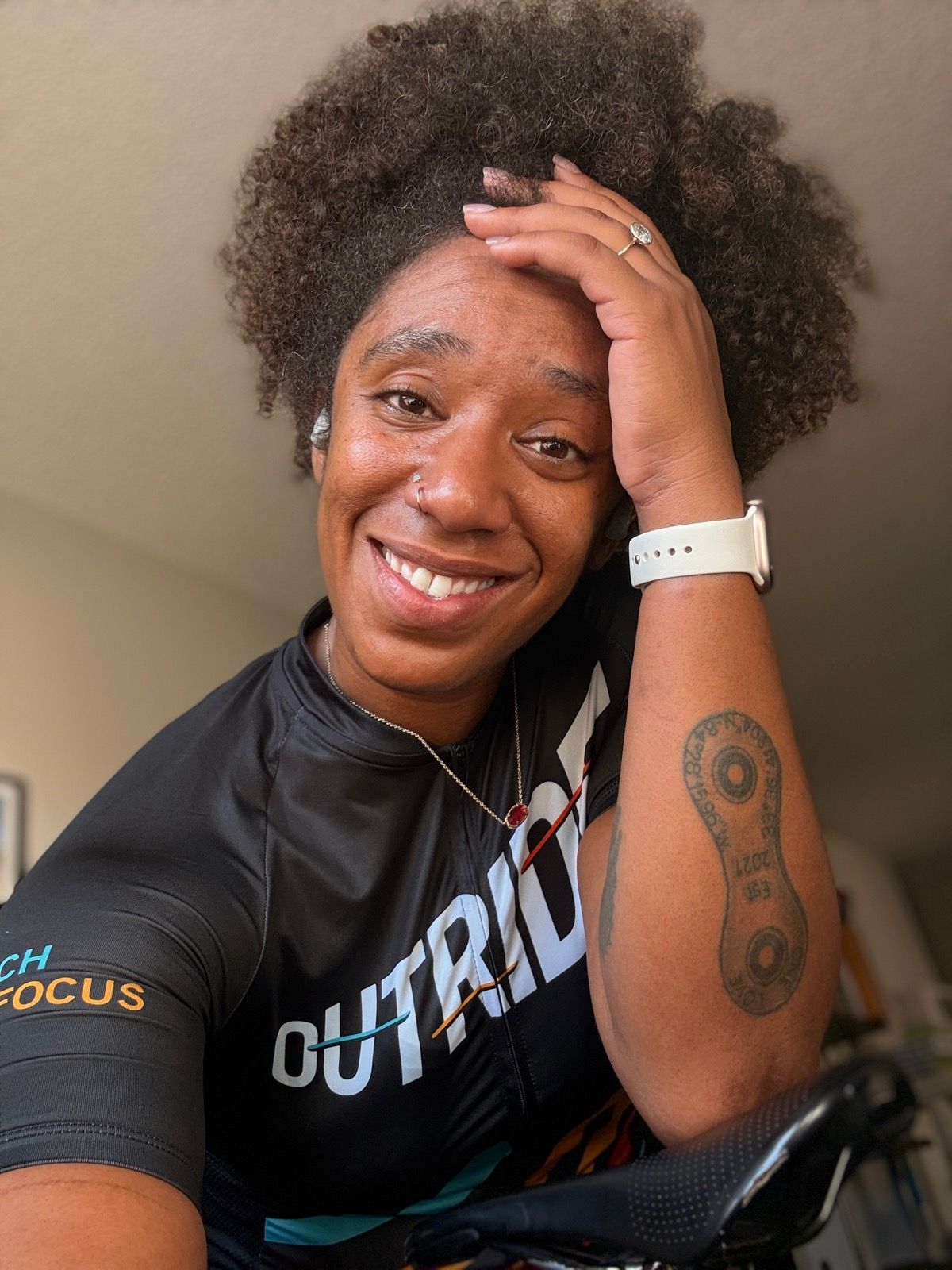
Porter, a U.S. Air Force veteran and mother of a pre-teen daughter, came to cycling during the COVID shutdown. Access to soccer, her longtime sport, disappeared overnight. At the same time, she was navigating a difficult and abusive relationship. Cycling became both movement and refuge. “It gave me an escape,” she said. She began outdoors, but Zwift entered her world the way it does for many riders: weather, convenience, practicality. What she didn’t expect was how quickly the platform would become something deeper. “Little did I know Zwift was going to come in handy on days that were mentally and emotionally challenging as well,” she said. “That has been the saving grace.”
The saving grace, she explains, is friction removal. Outside riding carries invisible stressors: traffic, flats, detours, timing pressure. As a mom, that last one matters. A ride isn’t just miles; it’s a calculation. How far can she go? Will she be back in time? What if something delays her? “Sometimes I find myself rushing back home,” she said. “With riding inside, it gives me more flexibility.” Inside, the uncertainty shrinks. There are no stoplights interrupting intervals, no wind gusts disrupting cadence targets, no animals darting across the road mid-sprint. Training becomes precise. “When you’re outside, something always interrupts the workout,” she said with a laugh. “On Zwift, I have complete control. I can check every box my coach gives me.”
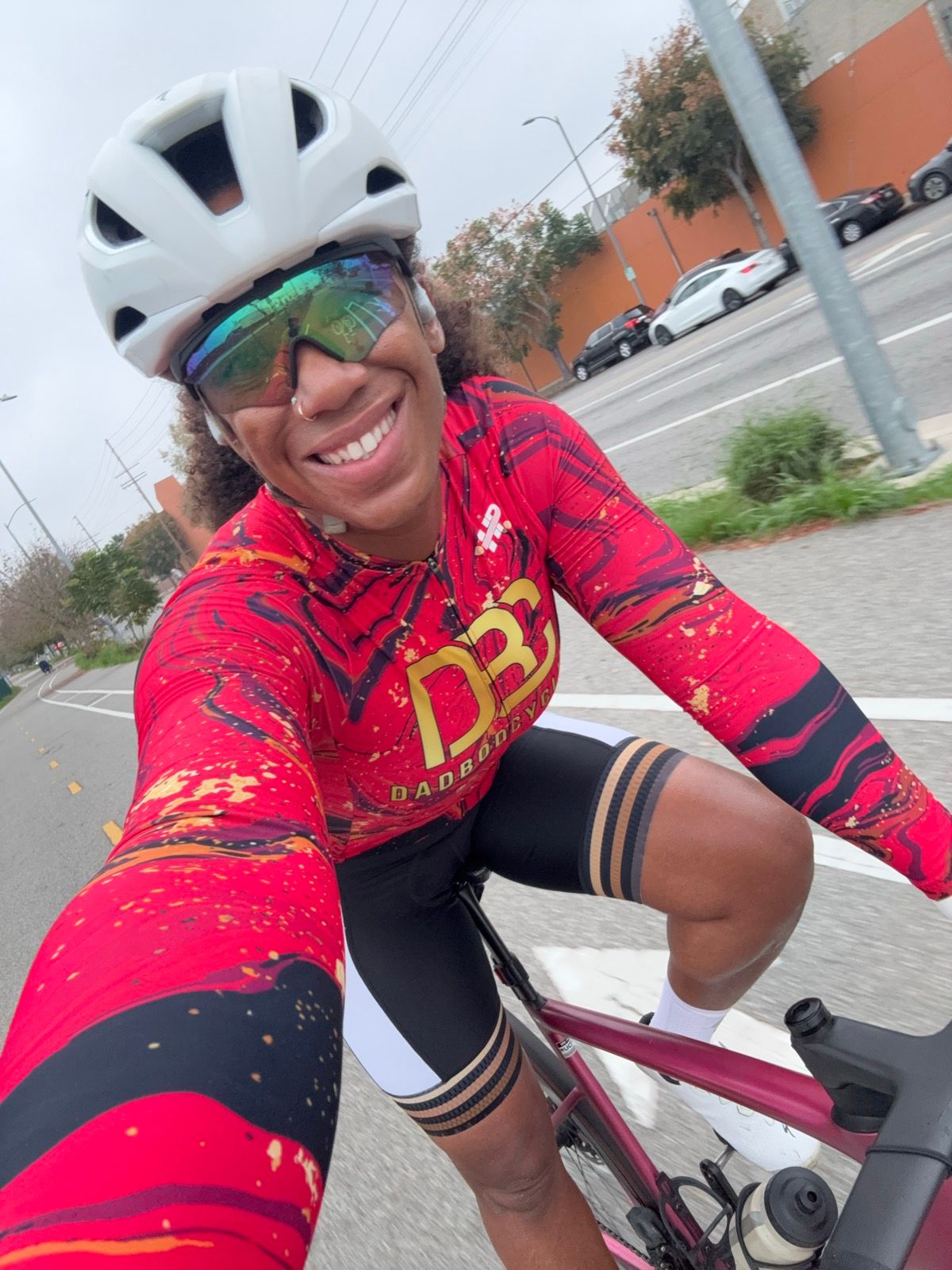
Porter races criteriums — fast, technical, aggressive events she compares to NASCAR. The margins are thin and the stakes high. For that kind of racing, training specificity matters. Zwift allows her to hit power numbers, cadence assignments, and sprint targets without compromise. Yet the numbers, she insists, are only part of the story. The emotional impact is harder to quantify.
There have been days when depression pressed so heavily that leaving the house felt impossible. On those days, the bike a few feet away becomes a negotiation. “If I could just get on Zwift,” she tells herself. “Just get on.” She describes it like crawling through a desert, desperate for a drop of water. Instead of calling out “water,” she calls out something else. “Zwift, Zwift, Zwift.” Sometimes the ride lasts thirty minutes. Sometimes longer. More than once, she has recorded herself afterward — overwhelmed, crying, a cathartic experience. “I didn’t realize how much I needed that,” she said. “It’s like therapy. Except I didn’t have to talk to anyone.” She shares that with honesty and vulnerability.
Physical movement provides dopamine. The sense of accomplishment that comes by checking off a workout provides dopamine. Combined, they create momentum. “When I ride in the morning, I feel like I’ve already won the day,” she said. “I get two hits of dopamine — one from the workout and one from checking it off my list. And that momentum transfers into everything else.” For someone navigating ADHD, that transfer matters. It means the energy doesn’t dissipate. It compounds.
Zwift also does something more subtle: it offers community without performance pressure. “Human beings need community,” Porter said. “If you’ve ever seen Cast Away, he makes a friend out of a volleyball. We need connection.” For her, in-person social settings can sometimes bring anxiety — overthinking conversations, worrying about saying the wrong thing, replaying interactions afterward. Zwift removes that layer. “We’re just here riding a bike in virtual reality,” she said. “How can I offend you?” It’s a simple observation, but a profound one. On Zwift, connection doesn’t require small talk mastery or perfect social timing. It requires showing up and pedaling.
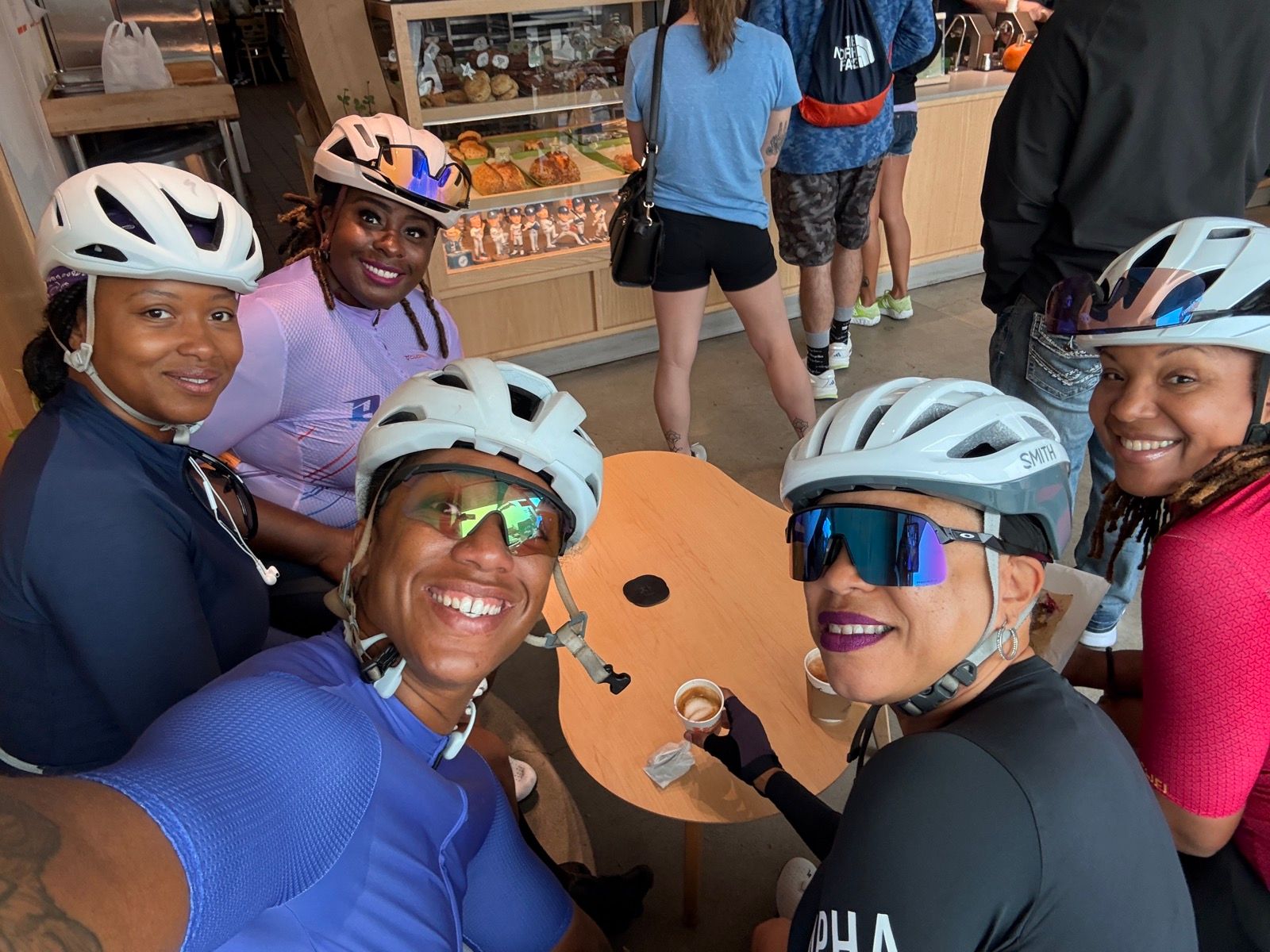
Relationships form both ways. Some begin outdoors and continue virtually. Others start through Instagram, Strava, or Zwift meetups and grow into real friendships. Accountability partners encourage each other. Group rides provide structure during dark winter months when seasonal depression hits hardest. “It’s so good for maintaining connections,” she said, “and we can build a strong bond and connection, whether we meet in person in the future or we never meet in person.” She also appreciates the way the platform makes metrics engaging rather than intimidating. The graphs are clear. The feedback immediate. Achievements visible. “With my ADHD, things need to be clear as a fifth grader,” she said. “Flashcard simple. It needs to be super clean cut and easy to decipher. If it’s too much, my brain just goes blind.” Zwift, for her, strikes that balance. The science and analytics are there, but they’re digestible and progress feels tangible.
At the same time, the platform accommodates different levels of seriousness. It serves the competitive racer chasing performance gains and the casual rider just looking for a fun way to move with friends. “It provides something for the serious and the not-so-serious cyclist,” she said. Her online identity — @theecarbonqueen — captures that blend of strength and playfulness. The name came after a particularly strong outdoor ride when her fiancé jokingly called her a “carbon princess.” “Princess? I’m too grown for that,” she recalled telling him. “I’m a queen.” The name stuck, not as a branding strategy, but as a declaration. She knows what she’s capable of.
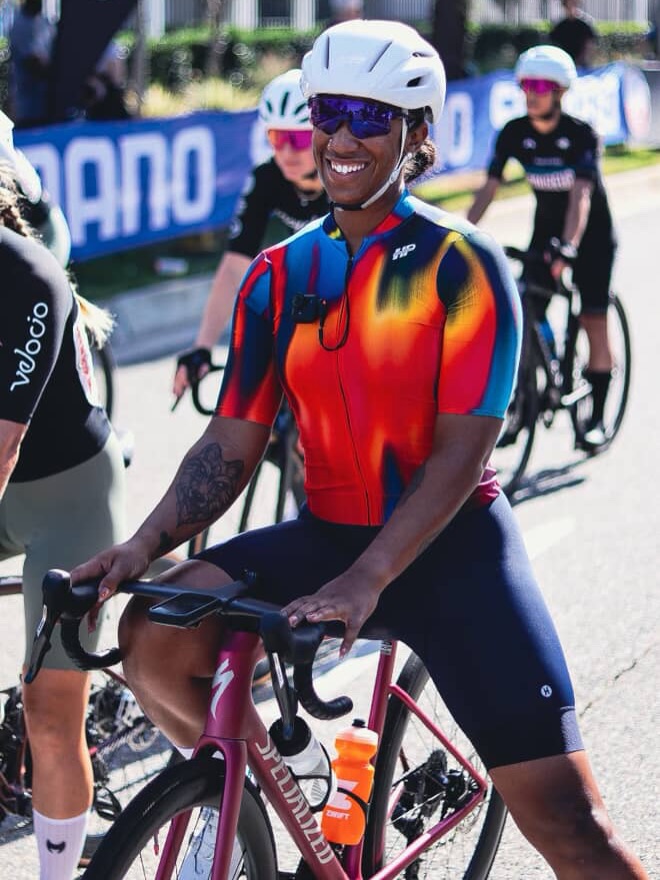
What Porter wishes more people understood about ADHD extends beyond cycling. It comes down to expectations. “Our expectations of people come from what we’re good at,” she said. If something takes another person five minutes, it might take her an hour, or more, depending on distractions and mental bandwidth. “Don’t take the things that I drop as a personal thing,” she said. “It’s not you.” Her advice is simple and radical at once: get curious. Lead with compassion. Release rigid expectations. It’s advice that applies on and off the bike.
To outsiders, Zwift can look like a game. For Porter, it is access — to movement, to precision training, to community, to emotional reset. It is structure when her thoughts feel scattered. It is control when life feels unpredictable. It is connection without pressure. Most of all, it is eight steps instead of twenty — and sometimes, eight steps are enough.


First, thank you to Timia for her service to our country! Her story is very inspirational and motivational….finding a way to get it done and thrive despite the circumstances and challenges.
i relate to Timias experiences but from a slightly different perspective. My wife suffers from depression and anxiety and I have to time my outdoor rides carefully. Riding on Zwift has allowed me to remain fit without putting my other half through the anxiety spiral over winter.